Haradinaj accuses Kurti of energy failure: Where are thermal power plants and strategic investments?
 a few seconds ago
 (6 years ago)
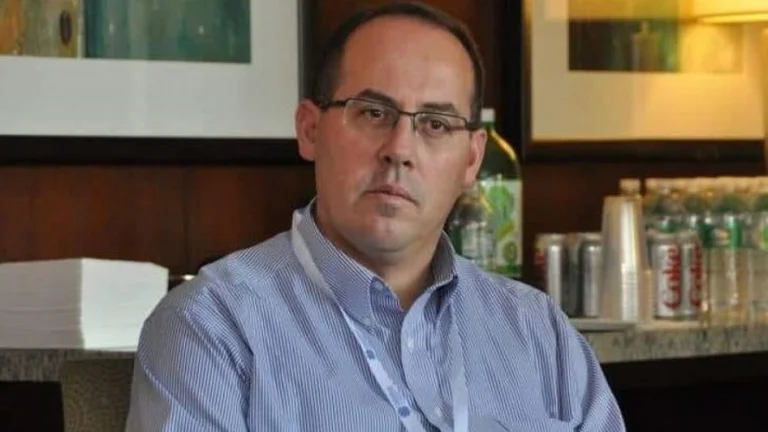
Microbiologist Lul Raka says testing capacities in Kosovo must be doubled. He, in an interview for Radio Free Europe, said that up to 300 people should be tested daily in the order of priorities. How many tests are being done and are they in line with recommendations from the World Health Organization (OBSH)? Lul Raka: Testing [...]
Microbiologist Lul Raka says testing capacities in Kosovo must be doubled.
He, in an interview for Radio Free Europe, said that up to 300 people should be tested daily in the order of priorities.
How many tests are being done and are they in line with recommendations from the World Health Organization (OBSH)?
Lul Raka: The exact and timely laboratory testing is one of eight pillars of response to the public health system in management of COVID-19 [v.j. Coronervirus ' disease.
International institutions, with which we have daily cooperation, like O The ECDC [European Centre for Disease Prevention and Control] recommends testing as many people as possible. But, at the time of pandemic, international standards and reality on the ground are often far apart.
In today's world, there are very few countries that resemble South Korea, Japan, or Singapore. Today, the world faces limited resources in all the links of the pandemic response, including laboratory capacity. The lack of tests and reactors hinders the adequate response to the epidemic.
In Kosovo, nearly 1,100 tests have been conducted so far, in which 94 positive cases with COVID-19 have been confirmed.
Do you think more tests should be done?
Lul Raka: Yeah. We already have a new container of 7,000 tests and I think that test capacities have to double. It's good to test 200-300 people a day, in priority order.
In tracking contacts, according to recent studies, to control the spread of the epidemic, at least 70% of nearby contacts must be traced. That figure is variable, but in the events of gathering people, that number can be three - story. The average people to track as close contact is 36. That figure is often challenging to achieve.
Who should be the priority in testing?
Lul Raka: Instructions for testing priorities are also provided by international institutions. The priorities for testing are hospitalized or community patients with acute respiratory infection, health staff, the elderly and chronically ill people with symptoms and all the close contacts of a patient with COVID-19.
However, each country can adapt these standards according to its epidemiological situation and test other cases, depending on its capacity. Like. in our country, as additional access to diagnosis, there may be people who have stayed at gatherings, who are considered to be super-discreet events of the virus (dasms, extensive family visits, calls to the lehons, MPs from 12 hours to one place and so on). Another group tested in the world is emergency public service workers (copies, suppliers, bakers, etc.). )
Has the failure of sufficient tests contributed to a small number of cases?
Lul Raka: Because of limited resources, many countries in the world test only the serious cases of hospitalised or community patients. This affects lowering the number of confirmed cases. This does not mean, however, that the incidence of the disease is in decline in the community, but rather tells us the tip of the iceberg.
Can we use rapid tests to increase diagnostic capacity?
Lul Raka: Yeah, we can use it. Every day there are new and advanced tests that help with rapid diagnosis and can be done anywhere. Testing at home, or at a health care point, early identifies the positive case, isolates the patient where he is, causes no visits to health institutions or the eventual infection of health workers.
Over the last three days, we have seen reports of rapid tests by prestigious companies such as Abbott and Bosch, which are molecular tests with accuracy of 95%. There are also a lot of other fast tests, using anti-bodys, but their accuracy is about 30-80%. Quick tests, especially molecular ones, are an option that should be considered anyway.
Can a person be touched twice by this disease?
Lul Raka: I don't think so. This may be related to mistakes during laboratory tests. If the patient is released from the hospital with two consecutive negative tests, he does not get sick again.
In this case, does this virus create immunity?
Lul Raka: Since this is a new virus, no one in the world is immune to it and it can touch anyone. But we have learned from other pandemic diseases that to talk about immunity, it has to be at least six months to investigate the immune response of the affected population. We have learned from experience that someone who has experienced the disease is not again affected (at least for the next one or two years). But until then I hope we have a vaccine that will protect us all.
Should people in quarantine be tested at the dorm in Pristina?
Lul Raka: There have already been positive cases from travelers who came from abroad. Otherwise, if the possibilities allow (now allow), those who are quarantined and never tested should be tested on the last day of their stay.
For the moment, Kosovo's curve compared with the countries of the region is more flat. How will the next thing flow?
Lul Raka: Let's hope it's like that, and don't even get up. But the most significant comparison between different countries takes place after each of them has reached the number of 100 confirmed cases.
Now, the curve line will draw the virus. It would be ideal that this curve does not exceed the institutional capacity to manage serious cases that need intensive care. The result will also be the reflection of what we have all done together: the state, health institutions and the people in the application of advice.
Will time affect the spread of the virus?
Lul Raka: This is the new virus, and we don't know how it's going to behave in time of temperature increase. But we do know that it is a wrapped virus and is sensitive to the outside environment, including UV rays. At the same time, many respiratory viruses that begin in late autumn usually fade into spring and summer.
Finally, I want to highlight a final announcement from O The U.S., which claims that the virus is not in the air and that the main route of spread remains spreading through spray and contact with the environment where there are viruses.
The message to readers?
Lul Raka: You stay home because this is the best and cheapest weapon against the virus.
 3 hours ago