3 minutes ago
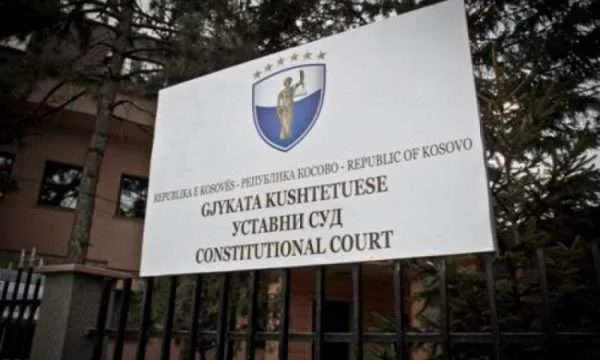
The Constitution's full commitment to Kurti's anti-unconstitutional decision: Government Can't Limit No Right
Periskopi(6 years ago)
(6 years ago)In the act published today, the Constitutional Court ruled that: I. T DEATHHING acceptable demand; 2 / 1 HOPE since Decision No. The Government of the Republic of Kosovo, March 23, 2020, is not compatible with Article 55 [Constantial Rights and Freedoms] of the Constitution in relation to Article 35 [Freedom of the]
In the act published today, the Constitutional Court ruled that:
I. T DEATHHING acceptable demand;
2 / 1 T IT IS now that decision no. 0115 of the Government of the Republic of Kosovo, March 23, 2020, is not compatible with Article 55. [Confirmation of Constitutional Rights and Freedoms] regarding articles 35 [Freedom of Movement], 36 [United Rights] and 43 [Freedom of Rally] and Article 8 (right of Private and Family Life), 11 (Freedom of Gathering and Association) of KEDNJ and Article 2 (Freedom of Movement) Protocol No. 4 KEDNJ;
3 / 1 BE CONSTTAYS that article 56 [Basic Rights and Freedoms during the Extensive State] The constitution is not applicable in concrete circumstances because it has nothing to do with “smangie” from fundamental rights and freedoms;
6 / 1 T IN THE CONSTTAY that, based on Article 55 [Cultural Rights and Freedoms] of the Constitution, limiting fundamental rights and freedoms can be done by law only “of the Republic of Kosovo”;
V. T Um... HOPE Invalid, in accordance with Article 116.3 of the Constitution, the decision mentioned at point II of this device, from the day of the entry into force of this act;
The Court also clarified that Government Can't to limit any fundamental rights and freedoms through decisions, if a proper right limit is not provided by the Parliament's law.
Total prejudice:
2. Actual
Subject: KO 54/20
Foreground: President of the Republic of Kosovo
The subject of the demand issue was the assessment of the constitutionality of the no decision. 0115 of the Government of the Republic of Kosovo, of March 23, 2020, for which the pre-launcher claimed he was not in agreement with the articles: 21 [the general independences], 22 [direct implementation of international agreements and instruments], 35 [Freedom of movement], 43 [Freedom of the rally], 55 [Religion of fundamental rights and freedoms] and 56 [the fundamental rights and freedoms during the state of the Kosovo Republic of Kosovo Constitution, with the 2 [Lyria of the Protocol] movement. 4 of the European Convention for Human Rights, with Article 13 of the Universal Declaration of Human Rights, as well as Article 12 of the International Pact for Civil and Political Rights. The applicant also asked the Constitutional Court to impose temporary measures for the immediate suspension of the rejected verdict, until the final deployment on the part of the Court, arguing that setting the same, “is in public interest and avoids the risks and irreparable damages”.
Request was based on subparagraph 1 of Article 113's paragraph 2 [Juridication and authorized parties] and in Article 2 Article 116 [the judiciary's effect of decisions] of the Constitution, in articles 22, 27, 29 and 30 of Law No. 03 L-121 for the Constitutional Court, as well as rules 32, 56 and 57 of the Constitutional Court's work regulation.
Below are the conclusions of the Court and the decision by the examination session held on March 31, 2020:
Finals
1. As a preliminary case, the Court in this Act clarified that it is not its role to assess whether measures taken by the Government to prevent and fight COVID-19 are adequate and appropriate. Moreover, the Court points out that the need to take measures and their necessity has not been contested by any party in this case. Determining policies about public health does not enter the Constitutional Court's competencies and authorisations. On public health issues, the Constitutional Court itself refers to and obeys relevant health and professional institutions at the state and world level.2. The constitutional issue involving this Act is compliance with the constitution of the government's controversial decision, whether, respectively, the government has limited fundamental rights and freedoms guaranteed with the Constitutions in accordance with law or beyond legally defined authorisations. In this context, in terms of assessment whether the restrictions made at the level of the entire Republic of Kosovo through the government's controversial decision are determined by law, the Court is focused on the assessment of authorisations defined through provisions 41 and 44 of Law No. 02/ L-109 for Combating and Prevention of Influencing Diseases and Article 12 (1.11) and 89 of Law No. 04/L-125 to Health.
3. In this regard, the Court considered: (i) the predeceiver's request and the claims presented in this request; (ii) comments submitted by the Government and other interested parties; (ii) the judicial practice of the GEDNJ, and specifically, general principles about the application of the “criteria defined by law” in terms of limiting fundamental rights and freedoms; and (v) the practice of its Constitutional Court.
4. Given the revised reviews and assessments, the Court, unanimously, decided to announce the KO54/20 requirement acceptable for review on credit since, under concrete circumstances, all conditions of compliance with the Constitution have been met, the Law for Constitutional Court and the work regulation.5. The Court also unanimously ruled that the verdict [r. The March 23, 2020, issue of Government is not compatible with Article 55 [Religion of Constitutional Rights and Freedoms] of the Constitution on Article 35 [Freedom of Movement], 36 [right for privacy], 43 [Freedom of the Constitution], and with Article 2 (Freedom of Movement) Protocol No. 4, Article 8 (right to Private and Family Life) and Article 11 (EEDNJ's Association and Gathering Freedom).
6. The court found that the restrictions contained in the government's controversial decision pertaining to fundamental constitutional rights and freedoms above, are not “defined by law”, so it contradicts guarantees containing articles 35, 36 and 43 of the Constitution regarding the respective provisions of KEDNJ, and with Article 55 of the Constitution, which in its first paragraph clearly stipulates that fundamental rights and freedoms guaranteed with the constitution can be limited by law.
7. The court highlighted the fact that the government's controversial decision refers to implementing two higher laws authorising the Ministry of Health to take certain measures in those laws with the aim of preventing and combating infectious diseases. However, the Court found that the higher laws did not authorize the Government to limit the rights and constitutional freedoms defined with articles 35, 36 and 43 of the Constitution at the level of the entire Republic of Kosovo and for all citizens of the Republic of Kosovo without exception.
8. In this regard, the Court found that restrictions pronounced through the controversial decision: (i) regarding freedom of movement and gathering defined through provisions 35 and 43 of the Constitution exceed the limits allowed through the higher law adopted by the Parliament; and (i) related to the “collections of all private and public environments, opened or closed, against aspects of the right guaranteed through the 36th Constitution, are not based on any predestination based on any other law or elsewhere.
9. The court clarified that the government cannot limit any fundamental rights and freedoms through decisions if a restriction of proper law is not envisioned by Parliament law. The government can only implement a Parliament law restricting a fundamental right and freedom, and only to the specific extent it has authorized the Assembly through the proper law.10. Regarding the claims of the petition for violations of Article 56 [The Foundation Rights and Freedoms during the Foreign Status] of the Constitution, the Court found that this article is not applicable in concrete circumstances, because the same is applicable only after the announcement of the extraordinary situation.11. However, regarding the non-recognition of the contested parties, the president and the Government, about the understanding of the constitutional terms “definition” and “smangie” that figures in the articles 55 and 56 of the Constitution, the Court clarified that “definition of human rights and freedoms can only be made by law “by” of the constitution, but this does not mean that “%x> of rights can only be done through the statement of the Out of the State. The court also explained that the term “definition” used in Article 55 of the Constitution implies the fact that the Parliament has the right to limit fundamental rights and freedoms, through the law, but only as long as it is necessary in an open and democratic society, to fulfill the goal for which restriction is allowed. In contrast, “definition” implies an easier degree of intervention, and this can be done without the announcement of extraordinary situation; meanwhile “smangia” implies a more serious degree of intervention because it can't be done without the state of emergency being declared.12. As for the provisional requirement, the Court found that following the court's unanimous decision to decide on the overall merits of the case and to issue this act, the same remains unobjected.
13. Based on articles 116.3 of the Constitution, 20.5 The Law for Constitutional Court and the 60 (5) rule of the Labour Order, the Court, dated April 13, 2020, as the date of the act's entry into force, respectively.
14. The court has set a different date of its act into effect, respectively, April 13, 2020, except for and considering: (i) the circumstances created with the proclamation of the COVIID pandemic-19 on a global level; (ii) relevant recommendations of health institutions at the state and world level; (ii) potentially harmful to public health as a result of the immediate abolition of restrictions determined through the Government's decision; and (iv) protection of health and public interest until the implementation of this Akjudi from the relevant institutions of the Republic of Kosovo.
15. During this time period and in the sense of Article 55 of the Constitution regarding “definition of constitutional rights and freedoms, relevant institutions of the Republic of Kosovo, and primarily the Parliament, must take the necessary measures to ensure that the necessary restrictions of fundamental rights and freedoms in order to maintain public health are made in accordance with the Constitution and this Act.
16. In the end, the Court also points out that the Ministry of Health, the Government, respectively, continues to be authorized to make decisions in order to prevent and combat pandemic as authorized through Law No. 02/ L-109 for Combating and Prevention of Influencing Diseases and Law No. 04/L-125 to Health.
PI THESE ARSYE
The Constitutional Court, in accordance with articles 113.2 (1) and 116 of the Constitution, in articles 20 and 59 (2) of the work order, on March 31, 2020, one third i VANDOS. DEARING acceptable demand; 2 / 1 T IT IS now that decision no. The Government of the Republic of Kosovo, March 23, 2020, does not comply with Article 55 [Religion of Constitutional Rights and Freedoms] of the Constitution on Article 35 [Freedom of Movement], 36 [Public Rights] and 43 [Freedom of Rally] and Article 8 (Right of Private and Family Life), 11 (Freedom of Gathering and Association) of KEDN and Article 2 (Freedom of the Protocol) No. 4 KEDNJ; 3 / 1 BE CONSTTAYS that article 56 [Basic Rights and Freedoms during the Extensive State] The constitution is not applicable in concrete circumstances because it has nothing to do with “smangie” from fundamental rights and freedoms; 6 / 1 T Um... CONSTATIONS that, based on Article 55 [Relief of Constitutional Rights and Freedoms], limiting fundamental rights and freedoms can be done by law only “of the Republic of Kosovo” T EARLY invalid, in accordance with Article 116.3 of the Constitution, the decision stated at point 2 of this device, from the day of the entry into force of this Act; 6 / 15 Tʹ U n A UNDER this Act on the sides; 6 / 15 This bias, in accordance with Article 116.3 of the Constitution, Article 20.5 of the Law and the 60 (5) rule of the work order, comes into force on April 13, 2020; and
V 3 / 1 PUBLISH this Act in the Official Journal, in accordance with Article 20.4 of the Law.