7 minutes ago
Kurti Government Voted Today
Periskopi(6 years ago)
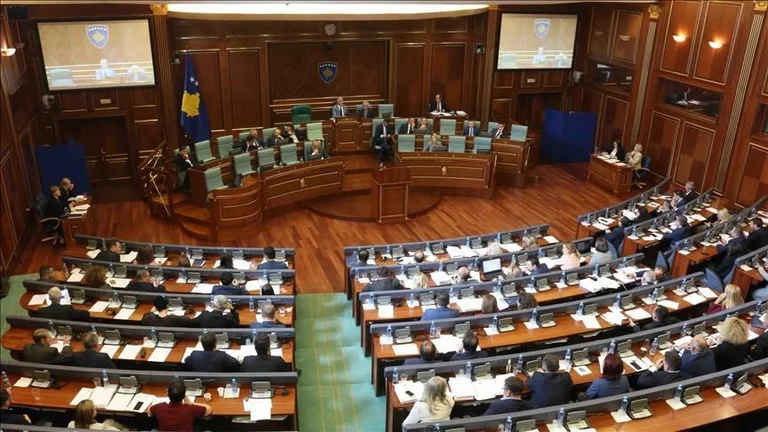
(6 years ago)MPs from the 7th Parliament of Kosovo will gather today to vote on the coalition government Vetevendosje-Democratic Command of Kosovo, which was reached after four months of negotiations. The Vetevendosje Movement and the Democratic League of Kosovo, the two parties that received the most votes in early national elections of 6 [...]
The Vetevendosje Movement and the Democratic League of Kosovo -- the two parties that received the most votes in the October 6th national snap elections -- have reached agreement on forming the new government, ending the political stalemate due to disagreements over the division of office.
These two parties have agreed that the new government will have 15 ministries, prompting each to lead with six ministries, the prime minister's post to Vetevendosje, the LDK's chief parliament, while three ministries will meet minorities.
As for the president's post, which has been the hot topic of until now negotiations, LVV and LDK have decided that this issue will remain to be discussed later.
In the October elections, the Vetevendosje Movement won 29 mandates, while the Democratic League of Kosovo 28.
Kosovo's government is considered elected if it gets the majority of votes of all Kosovo Parliament deputies, which should at least have 61 votes.
Kosovo's constitution envisions other procedures if the government does not get the most necessary votes.
“If the proposed composition of the Government does not get the most necessary votes, the president of the Republic of Kosovo, within ten days he appoints the other candidate under the same procedure. If not the second time the government is elected, then Kosovo's president announces the elections, which should be held no later than 40 (40) days from the day of their proclamation”, the Constitution said.
It is also pointed out that members of the government after their election vow before the Assembly. However, the text of the oath is regulated by law.
The constitution has also seen ministries and minority representation.
“In Government will be at least one minister from the Serbian community and a minister from some other non-g majority community in Kosovo. If there are more than twelve ministers. The government will also have a third minister, who represents one of Kosovo's non- majority communities. There will be at least two deputy ministers from the Kosovo Serb community and two deputy ministers from other non- majority communities in Kosovo. If there are more than twelve ministers, the government will also have a third deputy minister, who represents the Serb community, and another deputy minister, who represents one of the other no majority communities in Kosovo. The election of these ministers and deputy ministers will be decided after consultation with parties, with coalitions or groups representing communities that are not majority in Kosovo. If candidates are appointed outside Kosovo's Parliamentary deputies, for these ministers and deputy ministers are required formal approval of most of the Parliament's deputies, who belong to parties, coalitions, civic initiatives and independent candidates, who have been declared to represent the community in question. The prime minister, deputy prime ministers and government ministers can be elected by Kosovo Assembly deputies or qualified persons, who are not Parliament deputies. The incompatibility of Government members regarding their functions is regulated by law”, the Constitution says.