12 minutes ago
Away from international subjectivity
Periskopi(6 years ago)
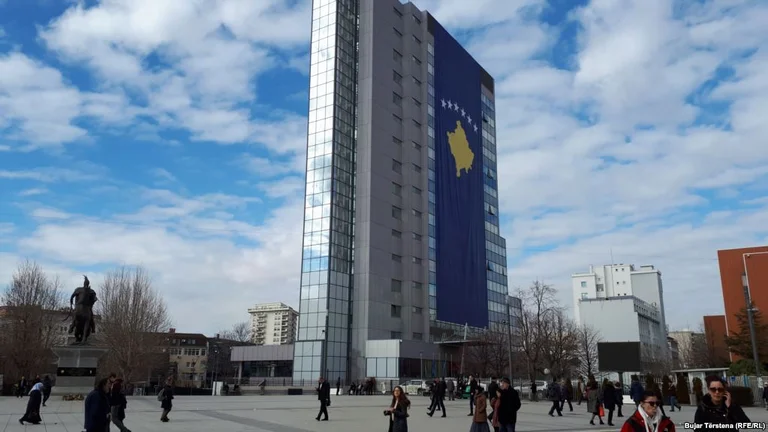
(6 years ago)Kosovo is marking the 12th anniversary of its declaration of independence, but it has not yet managed to round its international subjectivity, and that fact has influenced and continues to affect the domestic situation and the manner of leadership of the country, as well as the functioning of the state itself, assess publicists and politicians from [...]
Publicist and historian Jusuf Bujowi tells Radio Free Europe that the main act marking the round of international subjectivity, membership in the United Nations Organisation (OKB), for Kosovo remains the challenge.
A formal factor, we can say, is very important, is that Kosovo is not a member of the UN. That's what matters because it would gain another international legitimacy. The procedure and the road are known (for membership). The approval of most of the countries is required, and in addition the approval of all Security Council members, where Russia and China have vetoes and at the same time may present their objections. In my opinion, the biggest problem affecting all this issue and problems, is that Kosovo, on the inside, has political problems”, Bujowi said.
According to him, Kosovo's political leaders, in general, have not met the goals for state-building and consolidation of the state.
Politologist Ramush Tahiri tells Radio Free Europe, which continuing problems have hampered and preventing the closure of Kosovo's citizenship and its international subjectivity.
Unfortunately, Kosovo has not managed to approach Euro-Atlantic integrations and has failed to round its international subjectivity, as well as in some form sovereignty and territorial integrity, because the border with Serbia, in the international segment, still has administrative limits and not the state border, regardless of its inefficiency. Kosovo has failed to become a member of the United Nations and has failed to have a direct mechanism for membership in the European Union”, Tahiri said.
He added that Kosovo has failed to obtain either visa liberalisation or has failed to gain recognition from five European Union countries. Within the region, according to him, Kosovo continues not to recognise Serbia and Bosnia and Herzegovina. All these obstacles, in rounding up Kosovo's subjectivity, as Tahiri says, are being used by Serbia for dialogue with Kosovo to present as dialogue on issues of the latter's status. However, according to him, much of the responsibility is placed on Kosovo's own political leaders for the whole situation.
Publicist Bujovi says Kosovo's internal functionality for years has marked impasses as well as suffering and continues to suffer from ignorance, but also abuses of political leaders.
I think it's the three that affect here, so, functioning, opportunity and organisation of the state from within. All these factors influence the state of Kosovo to lose its credibility or be on the agenda of accession of other countries, which have not recognised the state of Kosovo. There is great doubt that the political factor, over the years, has not been in line with the task of rounding up the consolidation of the state of Kosovo from within. This, for me, is a huge problem”, said Bujowi.
Politologist Tahiri says the inability to round up international subjectivity also affects the country's internal functionality. Consequently, according to him, Kosovo's political leadership makes it closed, but also immune to international control mechanisms.
This makes authoritarian leadership because it does not correspond to international conventions or to international mechanisms in relations between states, as well as to a kind of responsibility. It also makes it a guide, which has major political and ideological statements, while it would have to be pragmatic and practical in implementing law and rules”, Tahiri said.
He added that the dysfunctional state, as a result of its non-rounding international subjectivity, is uncertain even of foreign investment.
Kosovo has declared its independence on February 17th 2008, and so far, according to the Kosovo Ministry of Foreign Affairs official website, it has recognised 116 countries. However, Serbia's authorities have declared that so far they have secured at least 15 withdrawals or freezes of Kosovo recognitions from certain countries.
Publicist Bujov and politicalologist Tahiri have stressed that the international community, including the United States of America and the European Union, have failed to wrap up the Kosovo issue. On the contrary, according to them, Serbia's appetites have already increased for NATO's intervention of Serb targets in 1999 to present as a kind of mistake and that the Kosovo issue must be reevaluated once again, which endangers stability and peace in the region.