4 minutes ago
GAP: Kosovars head for number of working visa applications and equipment in Germany
Periskopi(6 years ago)
(6 years ago)The GAP Institute, in co-operation with the German Organisation Expert Council of German Foundations on Integration and Migration (SVR), has organised a discussion table in Berlin, where the joint report, titled “The Kosovo Labour Force Emigration in Germany”, was presented. The report estimates the positive and negative effects of migration on both countries' economies. Data [...]
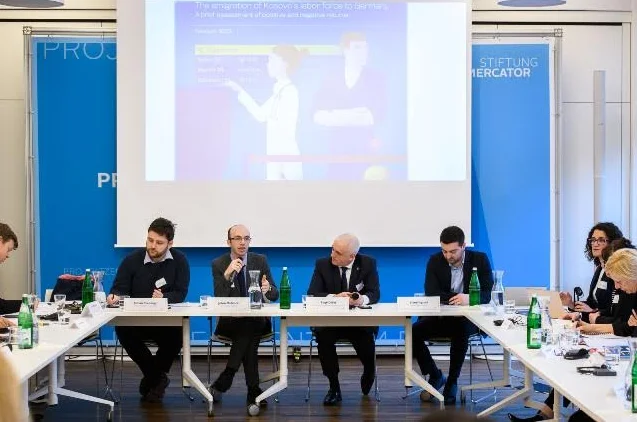
The GAP Institute, in co-operation with the German Organisation Expert Council of German Foundations on Integration and Migration (SVR), has organised a discussion table in Berlin, where the joint report, titled “The Kosovo Labour Force Emigration in Germany”, was presented.
The report estimates the positive and negative effects of migration on both countries' economies. Official data shows that Kosovo citizens take the lead in the number of working visa applications and equipment compared to other countries in the region. During 2016-2018, of the six Western Balkan states, there have been a total of 204,638 working contracts, out of which about 80% have been approved. But only 40% of them are equipped with working visas, where 24% of them, or 15,824, have been for Kosovars. The report also provides data on sectors and professions in which Kosovo citizens have managed to provide working visas, where construction, hotel and care services head, while professions with the least successful applications are the finance, insurance and education sector. The report also reflects the potential for even greater migration following the introduction of Germany's new migration law in March 2020. Comparing free jobs in each sector of the German labour market with current employment trends in Kosovo, the GAP Institute has also made projections on the risks of migration of Kosovo professionals in the years to come.
The report has been welcomed by those present for the first time in public discussions not only that data has been provided on the number of workers from Western Balkan countries but also analysed the harmful effects posed by this migration wave.
In his address, Kosovo's ambassador to Germany, Mr. Be that Cufaj cited the rapid integration of Kosovo's citizens into the labour market in Germany, without even putting aside some of the barriers that are being worked to be overcome as recognition of patent drivers. Analyst from the German European Stability Initiative (ESI), Mr. Adnan Cerigagic spoke of migration as a common phenomenon for the entire region, with emphasis on his country of origin Bosnia and Herzegovina. Mr. Jan Schweider, from partner SVR organisation, said Germany's labour force migration rules give priority to Balkan citizens, but the German government must also analyse the economic and socio-cultural consequences of Kosovo and the region before the immigration rule continues beyond 2020. Representatives of Germany's Ministry of Foreign Affairs, Mrs. Christiane Hullmann said her country's goal is not only to attract qualified people from Kosovo but also to help Kosovo be an attractive country for its citizens. Meanwhile, Mr. Helge Tolksdorf, representative of Germany's Ministry of Economy, cited the case of the technology camp and innovation in Prizren as an example of German commitment to creating jobs in Kosovo. Representatives from the German Builders' Union, Germany's Employment Agency, German Business associations, representatives of various German foundations, and analysts from the research organisation also participated.