8 minutes ago
Even without “Economic recovery” Hoti rushes to shut Kosovo down completely
Periskopi(6 years ago)
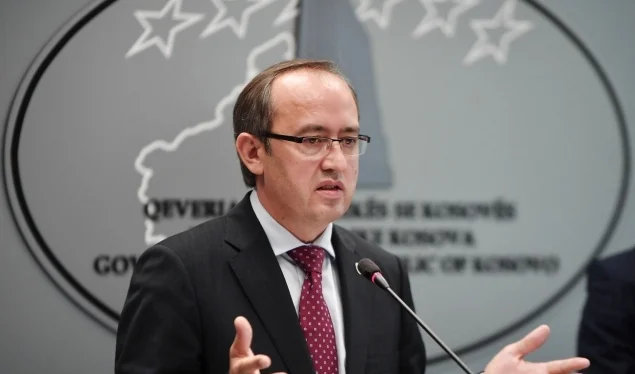
(6 years ago)Kosovo Prime Minister Avdullah Hoti warns that Kosovo is again heading towards total closure, due to the worsening epidemic situation. In an interview for Radio Free Europe, the executive head said the new measures are expected to take effect within two days. He said he understands business concerns, but [...]
He said he understands business concerns, but that primary is <x0). Public health conservation”
In this interview, Prime Minister Hoti also sharply rejected calls for interruption of dialogue with Serbia.
There are two solutions: either we can keep the country isolated and complain in Pristina with press statements, in press conferences, or we go to Brussels and sit at the table of dialogue and defend Kosovo's state interests. I've chosen this second”, he ordered.
He added that developments related to the Specialised Chambers should be put aside and not be linked to other processes.
Kosovo ready in <x0) hospital capacity reduction”
Radio Free Europe: Mr. Prime Minister, at the time we're talking, the country is facing pandemic, we're seeing increased cases, as well as other measures. Is total closure going on again?
Avdullah Hoti: The situation is really heavy, too heavy. The number of new cases is too high, and we are ready to limit the capacities we have in our hospitals. We are obliged to take steps that are beautifully drastic. We have taken some measures so far, a little stricter measures last weekend, and now we are preparing the measures I believe in for two days because we are conducting some necessary consultations within different organisations, with businesses, with different economic Comedies, with different groups affecting these measures, but we are obliged to take measures.
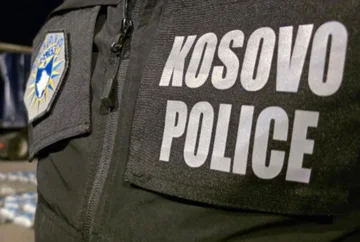
Kosovo police, checking cars at the time when restrictions on movement were in force. Picture from the archive.
We're following protocols that have implemented other countries, but we're in a more difficult situation because of limited capabilities in hospitals, to accommodate all those in need of hospital service.
It has to be said that for years there has been no increased capacity in hospitals and despite the preparation we've made with increased capacity for testing, or the involvement of hospitals in the region and the primary Family Medicine Centers, even with the growth of employees in health institutions, it is still impossible to deal with the situation. Hence, we are forced to move toward extremes, including total closure.
Radio Free Europe: It could be one thing, because we're seeing businesses oppose total closure. They say they can't survive. It means, as prime minister of the country, do you see that there is a way that could make all parties happy?
Avdullah Hoti: Now, of course, the priority is the lives of citizens, public health. Also, I believe that we are also showing proper care for business activity so that businesses, citizens, people can survive, their income for families and survival, but, above all, health is.
We're trying to keep consulting for the measures we take. At the same time, in terms of capacity, let's help businesses through difficult times, and we've helped you very little.
So far there are 270m euros that we have distributed in various forms to businesses, including this last sum two weeks ago, of 60m euros that we distributed to businesses based on the number of workers. And for next year, we've already seen the Fund for economic recovery. It's not the kind of arrangement we're willing to make. We're trying to balance things into decision-making, but putting public health as a priority.
“Whoever requires shut-down of the dialog is very wrong”
Radio Free Europe: Prime Minister, Republika President Vjosa Osmani's acting exercise, has called for a break in dialogue with Serbia. Likewise, your partner in the coalition government from the Alliance for the Future of Kosovo has called for a halt to dialogue because of recent developments, as far as the Special Court is concerned. What is the position of the government, what will happen?
Avdullah Hoti: The developments associated with specialized rooms should be put aside in the sense of not connecting them to these other processes. There's another process going on with these specialized rooms. Unfortunately, the high state and political figures are involved in that process, but the government is functioning and the state vows we have, we're on its way. Whoever has such an attitude that should stop the dialogue process is very wrong. Dialogue should never be used for narrow purposes, as some are doing. The process of dialogue and the participation of Kosovo in the dialogue in Brussels is not done for Serbia's interests, but is done for the interests of Kosovo, the empowering of Kosovo's citizenship.
There are two solutions: either we can keep the country isolated and complain in Pristina with press statements, at press conferences, or we go to Brussels and sit at the table of dialogue and defend Kosovo's state interests.
I chose this second. Those politicians who chose this first, for a while you know where they took the country. So far and we've had to work very hard, very difficult nonpopulistic decisions, to show that we are a loanable government, that we are a god in the country, open, pro-European, that we know how to protect Kosovo's state interests and we have no hesitation to sit on the table of dialogue because we have clear principles and we know why we're going to that negotiating table.
“
Radio Free Europe: Will the government have your power to survive and further the dialogue process and keep the coalition unified?
Avdullah Hoti: I believe one thing is clear, as far as the dialogue process is concerned, I have full constitutional competencies to advance this process and I will not leave the country isolated. Let anyone on the political scene complain, Kosovo will not remain isolated as long as I am prime minister.
Radio Free Europe: So, are you saying that dialogue has no alternative and that you will continue talks with the Serbian leadership to reach agreement on normalising reports with Serbia?
Avdullah Hoti: Dialogue should not cease because it is not in Kosovo's interest. I believe that we serve Kosovo's citizenship best, even those in Specialised Chambers, showing state maturity for all processes, including the dialogue process.
No vote for president, new agreement or election needed
Radio Free Europe: Speaking of important processes that you need support, do you see the need for the current coalition to expand to advance these processes?
Avdullah Hoti: We are now facing a new situation where the president (v.j. Hashim Thaci has resigned. I think it's a sensitive time after he just quit. Now, they've started processes in the Special Chambers, so at an appropriate time, we'll sit down and see if we can reach the consensus we need to overcome this situation. The constitutional aspect is clear. Now, political parties must sit together to find solutions for the country's president, or agree to new elections. It is clear that with the votes this ruling coalition has, it cannot elect the country's new president, so an agreement is needed beyond this ruling coalition. What this deal will look like is too early to talk about because we're not yet discussing.
Radio Free Europe: Today you were part of the summit for the Western Balkans under the Berlin Process, and as a conclusion it turned out that you have, however, reconciled together with leaders of other states to establish a common regional market. What are Kosovo's advantages in this common market?
Avdullah Hoti: In a way we have had a regional market, through CEFTA the region has functioned as a market in many ways, we have had many barriers and we still have many barrieres, which are mainly of non-tariff nature and are due to the political problems we have in this case between Kosovo and Serbia countries, but Kosovo with Bosnia and Herzegovina.
I believe the declaration we have signed and the vows we have taken today enable us to overcome most barriers and economically integrate countries in the region. This is beneficial for all countries, including Kosovo, because it's different when you have access to a market that has many more consumers to function and sell products. But, above all, it greatly affects attracting investments, increasing competitiveness and preparing this market for EU integration. What is very important for us is that this market does not replace the common market with the EU, but increases economic integration among countries.
I have given our remarks today, as governments, like Kosovo, for this process because we have a situation that is uneven among the countries of the region, in the sense that some of the countries of the region, except that we are becoming together and have certain trade arrangements with EU countries, some countries in the region, such as Serbia, have trade deals with countries of birth, with China, Russia and other countries. Through those agreements, those countries penetrate the region's market. And I am glad that they were taken into account by the European Union as remarks coming from the Government of the Republic of Kosovo. But, as a matter of fact, I have very positive expectations because it has become a very big step towards unifying markets, increasing competition, and so on.