25 minutes ago
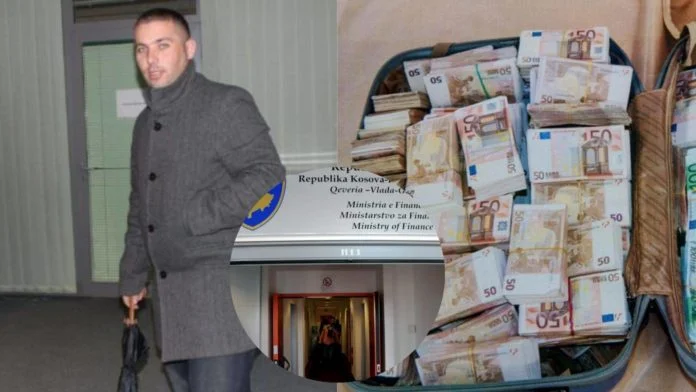
What did Labinot Gruda, suspected of stealing two million euros from Kosovo treasury, say in court?
Periskopi(6 years ago)
(6 years ago)The suspect for illegal transaction over 2m euros from the Kosovo Treasury, Labinot Gruda. has stated in court that he feels completely innocent and that claims about this amount of money “have nothing to do with him. “I have always fulfilled my obligations according to the workspace description and never [...]
The suspect for illegal transaction over 2m euros from the Kosovo Treasury, Labinot Gruda. has stated in court that he feels completely innocent and that claims about this amount of money “have nothing to do with him.
I've always fulfilled my obligations according to the workspace description and I've never exceeded those”, he said.
So stated Labinot Gruda during the hearing held Thursday at the Pristina Foundation Court, after which the detention measure was imposed for a month on the prosecutor's request. This statement was quoted in the court's ruling, in which Free Europe Radio has had access.
The court says Gruda is suspected of carrying out the criminal act “misusing official position or authority”.
According to the prosecutor's statement in the case, Labinot Gruda on October 9th between 12:11 and 12:19 from his office in the Kosovo Treasury, “creating different User-a (counter) as the User-of-the-workers of the Ministry of infrastructure and using the same ones illegally, has implemented four transactions worth 2,07,995 in the company's bank account The LDA Group) Sh.p.k. actions that have caused damage to the Republic of Kosovo budget”.
Treasury worker Gruda, however, has declared it impossible to conduct the transaction from 12:11 to 12:19, respectively.
“If we take the real way to execute a transaction, it must go through the hands of at least five officials, to get all relevant signatures or approvals, which cannot be achieved in the 8 minute” deadline, he said.
People who accepted “tools have left Kosovo”
In the Constitutional Court's decision in Pristina, the State Prosecutor during the hearing also writes that “persons who were carrying the tools, only to have left Kosovo's territory and are not accessible to judicial organs, while the means from the account have been withdrawn or sent to other accounts”.
The prosecution said it bases the request for detention of Gruda because there is danger that the suspect wants” to eliminate, hide, change or forge evidence or traces of criminal acts, as well as prevent the successful course of influential criminal procedure in witnesses, injuries or participants”.
The suspect's defender, Veton Rrecaj during the hearing, countering the detention measure, has stated that “is missing the essential condition, reasonable doubt that the individual-person protection has taken incriminating action in the direction of the criminal act, which is suspected of”.
According to lawyer Rrecaj, Gruda at the office in Thesar worked with 13 other people, adding that he remains with the investigative body in the future to prove the suspicion, respectively, the action his client has undertaken to transfer these vehicles to a private company.
According to the lawyer, the suspect during the detention in the police has used his right to defend in silence for reasons has been “s concerned and shaken by these completely groundless allegations”.
Labinot Gruda, a Treasury worker, has been arrested on October 20th, until two other people owned by the private company to which the transfer has been made are on the run.
Kosovo Government Finance Minister Hykmete Bajrami during a report Thursday before the Parliamentary Commission for Public Finance Supervision said transfer of over 2m euros from Kosovo's Treasury to a private company account has been realised through cyber crime.
“This is an economic crime committed through deep cyber crime, where unauthorized access has been made, beyond legal authorisations, becoming misuse of official duty and passwords (words)”, Bajrami said.
Who has the right to transfer money to Thesar?
Kosovo's treasury, operating under the Ministry of Finance, is responsible for managing the funds of the Republic of Kosovo.
According to the Ministry of Finance, the money transfer is done through Kosovo's Financial Management Information System, known for the SIMF February.
In this system, in addition to Treasury workers, access to it also has employees and other budgetary organisations, which are assigned by relevant organisations. Those who make money transfers are first trained and certified for this.
The SIMFK system user, as he accepts the Treasury approved request for access to this system, makes the recording, assigns user ID, password, functional class and security group.
The identification number and password are provided only to user. The functional classes that are 33 of these define access to certain user functions, according to its responsibilities.
Of these classes, access to all system functions and modules can only include the head of the Internal Management and Control Division and functional analysts, as well as an alternative official with the authorization of deputy operating director.
In the next grade, officials of budget organisations, property registration officials, competent officials for shopping requirements, and so forth.
But all these officials have different codes and passwords to carry out transfers. And in Thesar's pay division, only Treasury workers have rights.
Persons responsible for implementing transfers are constantly monitored and controlled by other officials.
Every transfer, at the end of the day, is verified, mainly when transfer involves a large sum of money. Monitoring these money transfers makes another department, which then completes the payment file of all budgetary organisations.