Haradinaj accuses Kurti of energy failure: Where are thermal power plants and strategic investments?
 7 minutes ago
 (6 years ago)
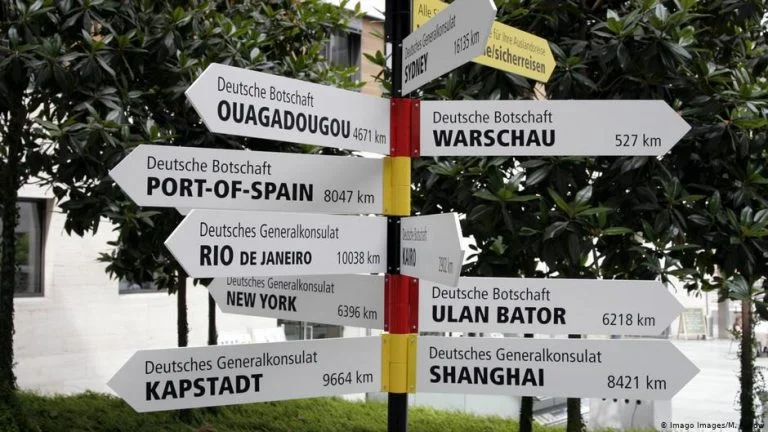
More and more Germans are leaving their country for work or pleasure. Most are skilled workforce, so experts have turned on alarm lights. But many return. In the past 10 years, an average of 180,000 Germans have left Germany a year and have gone to other countries. [...]
More and more Germans are leaving their country for work or pleasure. Most are skilled workforce, so experts have turned on alarm lights. But many return.
In the past 10 years, an average of 180,000 Germans have left Germany a year and have gone to other countries. As of the year, an average of 129,000 German citizens have returned.
These are the first results of recent studies, where it says 3/4 of the displaced are highly qualified. Most of them live only a certain time outside Germany.
But if statistical data is looked at, about 51,000 Germans leave Germany on average a year to never come back.
Andreas Ette, director of the research group at the Federal Population Research Institute, says that all movements - including the arrival and not just the departure of qualified forces from Germany - should be viewed. Bilance is positive.
Werner Eichhorst, from the Future Institute and Work (IZA): “cannot say that an average of 51,000 people are leaving Germany annually and that this is the cause of lack of labor. ” When we realize that there are about 45 million people in Germany on the job market, then 51,000 is a much lower rate than 1%.
Gabriel Febermayor, chairman of the Institute for Economics in Kiel, has the most critical attitude: “in the last 10 years we have lost more than half a million workers, of which 3/4 are highly qualified. This is not good news for an economy like German.” Comings from other countries can't completely close this gap, because they're not always qualified enough.
Return Bids
What must Germany do to motivate these people to return to their homeland? Werner Eichhorst says it also depends on competition and enterprise policy.
Qualified “Qualified people can choose jobs, depending on where they have a better perspective and higher salary, but that depends on the family circle and quality of life.” This is about child care or the housing situation. Eichhorst thinks politics should make sure not only enterprises but also employers have good conditions.
Febermayr claims that the financial aspect plays a crucial role.
There are high taxes and expenses in Germany, as well as the income left for those with high qualifications are relatively low.” Economic experts propose that the model of certain Scandinavian countries be taken and at least reduced social security data for people who want to return. A similar pattern can be used for income taxes.
But experts say working conditions should also be improved. “Prospects for progress in other countries are greater. Your chances are bigger to make a name in the field where you work because the conditions are better too. Germany should also enable this.” As a positive example, Felebermayr also mentions Switzerland. The universities there have become much more attractive to foreign professors in the last 1015 years, because there is more investment in studies. “This can also be done in Germany. ”
Security and Waiting Culture
Eichhorst also believes that high schools in Germany are not very good employers.
Work safety isn't too high. Universitys are often awarded contracts with limited time for three months. More permanent jobs must be provided for the academic field, Eichhorst thinks.
Otherwise many Germans will leave the country because of a lack of security. But there are better conditions in Germany on the matter of security and the rule of law, which is important for family planning.
Enterprises can be more attractive, says Eichhorst. The subx0> the people that recently moved to other countries, certainly want to go back out of Germany.” Experiences with a semester abroad during studies, travel experiences, or exchanges of students stimulate the desire for these people to go abroad again. “After these knowledge people are interested in raising the level of bids in German enterprises.” German employers should try to keep the absolves or persons with high qualifications.
But people who have been in another country have also gathered good experiences, trained for work, and informed themselves of other cultures abroad that may be very important for a country's personal career and economy, Eichhorst claims. This is a profit for everyone.
 4 hours ago