12 minutes ago
We were sure that we would all die”, stories conveyed by the French newspaper Recak
Periskopi(6 years ago)
(6 years ago)“Careful mother, they'll kill”, was the last words of Halim Beqiri, 12. A bullet hit him behind the neck. There was blood in his mouth. I was two meters away. Serbs fired from all sides. I couldn't get closer. They killed my husband. He was near our son”, confessed his mother Emma [...]
So Azan then launched an article dedicated to Recak's massacre, titled “we were sure that we would all die”, and also brought the confession of Azem, a man about 40th for the massacre in Recak.
“Burrat split into several groups. At least 29 people were sent over the village. They told us we would be taken to the police station. But shots were heard from far and wide. The rest of the group was sent to the stream. Serbian police expected them to kill them. On Saturday, the bodies of these 20 men were still on top of each other in the position that had been killed. They had been executed closely. A death prepared and executed in cold blood. At 5:00, Serbs withdrew. Survivors began to move. One of the village's first houses near the mosque was that of Banu Azem Kamber, 62 years old. His headless corpse was right next to his house. His brother, Bedriu, 55, was looking for his head. Villagers later found”, went on to confess Azem.
And in the next article, entitled “Sacre of Recak, the confession of a key witness”, journalist Pierre Azan, brings testimony to an OSCE observer, whom the journalist then presented by Mike.
“Around 15:45, Serbian forces left the village and we decided to enter Recak. A dozen civilians were there in a state of shock. One of them extended something to us, one of my men took it. Suddenly we found out it was a skull. Our translator explained that this man had just found his brother's corpse, with its head broken. We saw a body. The bullet was on his head, and the whole skull was broken. The villagers told us that some 20 men had been arrested. A woman told us that the men were sent for execution”, the OSCE observer confessed at the time.
The journalist went on to confess that they returned to Recak the following morning, and that afternoon General William Walker, chief of the OSCE Mission, who returned to Pristina at a media conference, said that “accused Serbian police and military forces of being responsible for this massacre. A few days ago, The KLA freed eight Serb soldiers. We expected a measure of reciprocity. What do we have instead? Murder of 40 innocent civilians. I want to know who gave the order. They must be brought to justice. I'm not a lawyer, but, according to me, there's been a crime against humanisation”, Walker said.
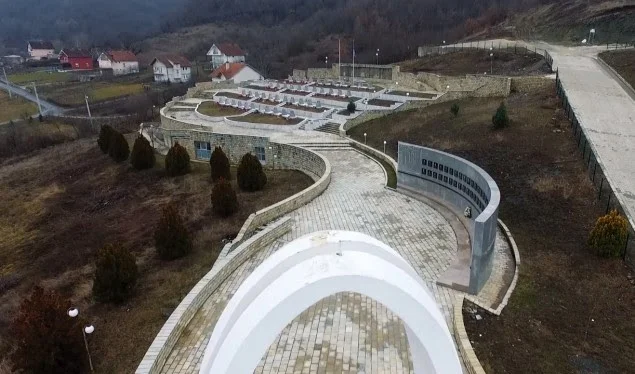
On January 15, 1999, on this fateful day, a woman was murdered and brutally slaughtered and 45 unarmed Albanians, including one.
Serbia's government at its extraordinary meeting, January 17, 1999, declared Walker “nograta”, and gave him a 48-hour deadline to leave Yugoslavia.
The massacre sparked successive reactions of the international community, which proposed a Kosovo conference and ended with NATO intervention.