14 minutes ago
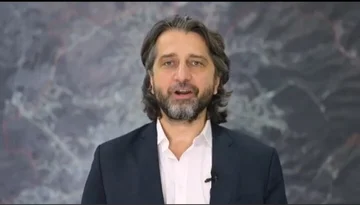
Former American ambassador: In dialogue, everyone, including Bill Clinton.

Periskopi(7 years ago)
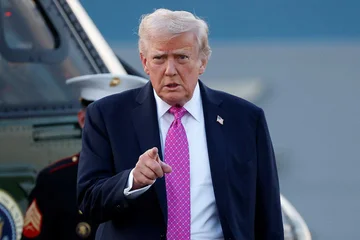
(7 years ago)US President Donald Trump is interested in helping Belgrade and Pristina about dialogue, says former American Ambassador to Serbia Cameron Munter. Former American diplomat in Serbia, is of the opinion that in parallel with quiet talks and diplomacy, under the circumstances of talks such as these between Kosovo and Serbia, there is also a certain silent diplomatic need [...]
You're back in Belgrade. What mission do you have now?
Munter: Under the Dialogue in the Balkans (one topic) of the West East Institute, we have launched a series of talks this year, and another will be held very soon in December. We're trying to evolve as many people as possible, especially in terms of reports between Europe and America. America now has a new envoy, Matt Palmer, and also the European Union has a new commissioner for foreign policy, Kosovo has elections on 6 October, in one word, new people, new ideas. We want to get everybody together and talk. That's also the goal of my return here, making people talk in this form of dialogue and learning what's going on.
What do you expect from this kind of dialogue?
Munter: I think it gives people who work in this form of conversation. We will continue it, not only do we make a noisy public debate, but through a quiet dialogue, get answers to some big questions involving the Kosovo issue and Serbia, or about what the future of Bosnia, Northern Macedonia is, or if I'm allowed to call it some business diplomacy and see how we can address some issues. The issue that we believe in our institute, including me, is that regional problems cannot be solved by a single state, and that's what our board member at the Institute, businessman John Jovanovic, says. Thus, the involvement of politicians, economists for regional issues is needed. We have ideas that seem too ambitious to show to others and we want to see how they are being accepted by political leaders. President Vuciq and Mr. Dachyq, have shown quite acceptance in these ideas.
Have you had any discussion with Vucinqi about the possibility of continuing dialogue already stalled between Belgrade and Pristina?
Munter: As long as this dialogue has stalled, we have not talked about what happened last week, but we have talked more about the plans and the perspective of dialogue between Kosovo and Serbia and about what kind of dialogue we will have in December, maybe we can resolve some issues. Of course, we still do not know who will now be on the side of Kosovo (who politicians will represent Kosovo in dialogue, v.j), but we do know that President Vuciq is interested in continuing this dialogue. We're worried that they're already starting to look like some things, which, like, didn't happen 10 years ago, when I was an ambassador here. The thing is, we have an interested China here, as well as Turkey, as well as Russia coming up with a variety of different ideas. We want to make sure that we understand each of them's position because we're dealing with a long-term issue.
Did Vuciqi show them any plans for Kosovo?
Munter: No, the way we discussed Vucinciqi was not of that nature, so to say this is our plan, but we discussed in that spirit what is the right solution. We have discussed long-term problems, such as common problems dealing with growth of the economy, transformation of the economy, demographic problem that creates a division of people in the region.
Do you think Matthew Palmer could unblock Pristina's talks, Belgrade?
Munter: I think he can help.
The situation seems very complicated, there are many interested in dialogue. Is Berlin official and Paris already part of it?
Munter: Not just them. Brussels is also. But we want all of them to evolve into dialogue because anyone who believes that it can help dialogue can evolve. I think Palmer, is a person who knows good about the region and his new position as U.S. envoy, I think he's going to be focused on the talks, including the position of the American government. I don't think Palmer's gonna put his finger somewhere and say that's how the problem is solved, but I think that's a very good solution in this case.
What do you think of the new appointee as National Security Adviser in Trump Administration after John Bolton left. His role in dialogue?
Munter: It's hard to talk because I don't know Mr. O'Brien very well, but he's different from Bolton. Bolton has a long history of work at the National Security Council. O'Brien on the other hand, he doesn't have such an experience, but he has a pretty good reputation with his work of people and teams added here that has the trust of American President Trump, which is a very important thing. As far as I know, and my knowledge is based on what I read every day in the media, President Trump is interested in helping here (for dialogue, v.j). We know this from Bolton's statements and Trump from different meetings with many leaders, and they are clear indications that he (Trump) is interested in dialogue. From an American point of view, there's an American government focus on the talks, but I personally think this focus is not enough. They should focus on working with people, on economic reforms and work a little harder in the future of the economy. This is because what we want in this region for the countries of this region to live in peace with their neighbours is to work on democratic reforms. You can only sign a piece of paper, you need a little more work and I personally think America can do more work here. I think here, more people must be involved in different fields.
In an interview for N1, you have mentioned that Belgrade and Pristina have needed a secret diplomat. What's going on behind the curtains?
Munter: When we look at it, it's a degree that clearly looks and a more silent diplomacy. When people see that something is a little more secret, they think it's because there's a plan, but I don't work for any government and I don't know any secret plans. But I believe she needs a little more silent conversations.
US Senators were in Belgrade last week and said Vuciq is ready for an agreement with Kosovo. What do you think of that?
Munter: I was not part of those meetings, and I don't know exactly what Vuciq said, but on translation basis, Vucinq is willing to speak, but not sign. However, this is good, because we have people in Kosovo who are ready for talks. I think Vuciq is also ready for talks, because he is aware that Serbia's future is inseparable to Kosovo's future. None can go anywhere without the other.
Do you know if former US President Bill Clinton has been involved in the talks since Serbia offered $2m for its foundation?
Munter: There are a lot of people who can get involved in the dialogue, and even former President Bill Clinton would be the ideal person to get involved in these talks, but I don't know anything about it.
What do you think of official ideas that circulate from political leadership that Kosovo and Albania could make up Greater Albania?
Munter: When I was a diplomat, we have been against forming Greater Albania because we believe that citizens of Kosovo and Albania should be part of the European Union, as Albanians live in northern Macedonia.
When we spoke last time, you have stated that you do not know exactly what Trump administration wants for the Balkans. Do you know now?
Munter: There are dozens of reasons to prove that the Trump administration encourages dialogue and delegation of a special envoy, shows this interest. I also think President Trump wants a victory in foreign policy. I don't know if he's aware enough of what the situation is like in the region, but I know it would be a victory in his domestic policy by marking this (dialogun) as a foreign policy success.. / Translate: P ERISCOPI/