5 minutes ago
Did the tax affect the increase in smuggling in the northern part of Kosovo?

Periskopi(7 years ago)
(7 years ago)The Kosovo Police Operation in northern and southern Mitrovica, which resulted in the ban of several police officials and citizens as suspects of crime and smuggling, contradicts previous statements by institutional officials, that following the introduction of a 100 per cent tax on imports from Serbia and Bosnia and Herzegovina, the level of [...]
Precautions implementation started six months ago. During the first months of the market tax implementation, no lack of products from these countries has been observed, while senior institutions and representatives of competent institutions, claimed that new goods imported from these countries were not entering illegally.
The Adriatic Stvileci, spokesman in Kosovo Customs, acknowledges smuggling has developed, but not in large size.
In a conversation for Radio Free Europe, he says that if there is a comparison to the pre-tax application phase, when smuggling of goods is done in higher value, after November it has been noted that smuggling has developed with lower value products.
So, November 21, 2018 (when Government imposed 100 percent tax), Dogana has taken all actions to implement the government's decision. First we've established the measure that has increased control capacity at all border points. Our anti-smuggling teams have increased activity by operating 24 hours in all areas where it allegedly smuggled into the Mitrovica region in particular. The anti-muggled unit has so far undertaken 1050 planned activities in areas where we think there is risk, and have resulted in the discovery of smuggled goods with over 250 cases of”, Stavileci said.
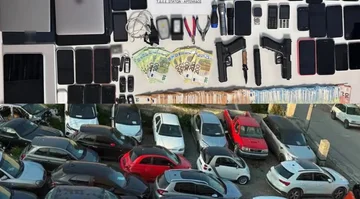
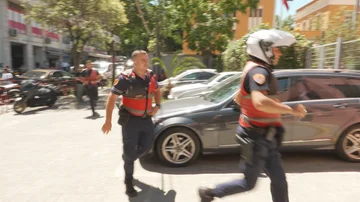
Kosovo police have conducted an operation in northern and south of Mitrovica on Tuesday, which has resulted in the ban on 19 police officials and some citizens.
As Kosovo Special Prosecutor and Kosovo Police officials have announced, police action was aimed at combating crime and smuggling. This operation has included several different regions, including Zvecan municipalities, Zubin Potok, Leposavic, Mitrovica North, Mitrovica South, Skenderaj and Drenas.
Naim Gashi, an expert on economic issues, thinks the authorities' claim that he has not smuggled is unrealistic. He says that for 20 years it has been smuggled into luxury goods in northern Kosovo. And after the tax is imposed, Gashi estimates that whenever there is an increase in the customs excise, then the tendency of smugglers to smuggle goods increases.
I don't have a clue if there was an increase. But I can say that with the very establishment of trade barriers for Serbia, then the interest of smugglers has also increased, and their profit has been greater. For the very fact that if they cross the border, then they have to pay 100 percent of the tax on Serbia's products”.
The fact is that even after the tax was imposed a large portion of goods from Serbia has been seen in Kosovo stores, and this shows that their prices have not been doubled compared to the fiscal policies Kosovo has imposed on Serbia and Bosnia's” products, Gashi points out.
On the other hand, the Adriatic Stavileci mentions border crossings considered more favourable for contractors.
“Some parts on Kosovo territory are estimated to have greater risk in terms of Customs. Normally, the northern part of Mitrovica, which is the problem of smuggling, has political issues. But, on the rest of us have the border to the White Land, in the part of Gjilan as well as the border point of Vermica related to Albania, the Stavileci is presented as problematic.
Even Kosovo Tax Administration General Director Ilir Murtezaj, in an interview for Radio Free Europe, has said there are no indicators showing there is an increase in tax evasion in the northern part of Kosovo, even though he acknowledges that in that part of Kosovo it is not a satisfactory situation.