7 minutes ago
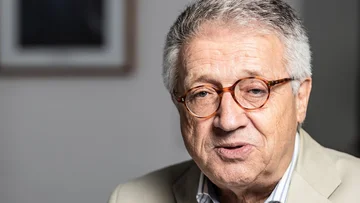
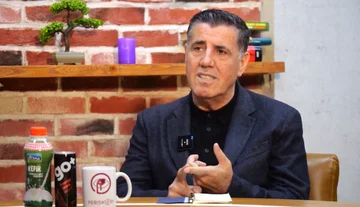
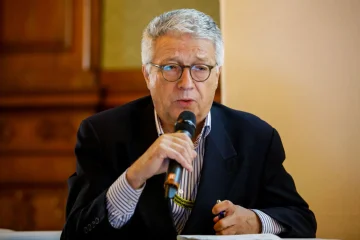
Reagon Fadil Lepaya after his mention in the case of Glauk Konjufca and his relationship to ShIK

Periskopi(7 years ago)
(7 years ago)The recent controversy over the case of Glauk Konjufca and the Kosovo Information Service has spread to the social network “Facebook” -- an old writing on reforms “3D” that says he had proposed them for the Democratic Party of Kosovo -- reports Periscopi. Lepaja é that is also said to have [...]
The laptop, which is also said to have been at SHIK, wrote that the program he was articulating meant de-ilitarization, de- The de-delicisation and de-delicisation of this party.
He says the failure of this programme had also prompted his departure from this party, and politics in general.
“... therefore, in the early post-war years, faced with these phenomena, which is being “med at “citizenship and democracy, in party and society, as members in the highest body of this party, and as a “mercicrat” also, I had articulated a program, appointed only for my needs as my “3D<6>, which meant de- SHIK-isation and de-delicisation of the PDK as the precondition of its citizenship, as the precondition of its democratisation and with its entire Kosovo society. The failure of this reform project also led to my departure from this party and from politics in general... ”, said among other things in the part of the writing it has distributed.
Full Lepaja scripture:
Starting with the title, the reader's curiosity will still fall on reform “3D”, in terms of the urgent need for technological modernisation of this party. However, this may include former barolettes for (no matter how) technology and network use, which were directed by its senior leaders, but in fact, the latest technology does not express the true meaning of the needed reform in this party. In terms of technology, they may even be advanced in relation to other parties, but what still holds them hostage is its cemented structure, from which they are not yet being released, nor by generation change.
From its founding down to today, this party, with ups and downs and downs, has conveyed some characteristics that at first seemed to be one's priority and someone's structural problems. Meritocracy, based on its foundations, even today's selection of quadros and made its political orientation, already dependent on narrow group interests by losing a large share of contact with the electorate and becoming the third ruling party in parliament.
The party's backlog, issued by war, originally made the wide base of activists, former members of secret organisations from the 80s and 90s, mostly of the numerous members of the former Kosovo People's Movement, but also various political organisations and groups, who had mostly spent the Yugoslav prison school in addition to that of the disincentive activities. Taught to fight the state and authority, much of it was never disciplined and put into the service of citizenship and citizenship, but it remained ever engaged in narrow network of leaders who, in much of them, rivaled each other.
Taught by organisation, accustomed to agitation and powerful links, this layer had nevertheless developed its power network even in pre-war legal organisations such as the LDK or other smaller parties and had often confronted and even confronted the former structures of the province, which after leaving Kosovo's political and institutional scene were re-organised in the form of the political party, which continued to be the largest, thanks to its involvement in the former resistance movement.
This category was meritive even for the first military cores during the 1980s and the 1990s, but rivalled in the 1990s with the effort to form the security institutions of the Republic of Kosovo, which had ended with the imprisonment of a large part of them.
Shortly before the war this category emerged from the LDK, and we find the same first, immediately after the war, and eventually added members and leaders of the former KLA currently demilitarised with the signing of the chairman of the Interim Government, at the same time as the first PDK chairman.
The first war hidden in this party was thus among the members of the former resistance movement, which were organized around leaders of several generations and between war commanders who were guarding their military structure in the party at all levels, only now that the uniforms had changed them with strips and white socks.
What Mr. Thaci, the undisputed leader, was his skill to manipulate with their groups and leaders, structured it The PDK with a powerful networking, primarily operational, based on the networks mentioned above, adds those of the Co-ordination Government institutions, such as the Ministry of Internal Affairs and SHIK, the KPC, which was actually not only PDK instruments at all times in relation to other parties that were being raised or formed from the beginning, but also in proportion to internal groups in the PDK.
As much as they were worth as instruments to rule the state, they were worth ruling the state party, which functioned as such, and ruled with Kosovo even when it was not in power at all, even when it lost the elections, in some cases.
This structure of the party, and in fact of the Kosovar society, had brought its militarism, its eligisation, and in fact, to legitimise this semi-landest rulership had brought to “the party's” and the whole of Kosovo.
This had led those who wanted citizenship to be built instead of militaristism, to unrightful Satanicism, and often to be unable to separate the truth from fear, region, and whole structures.
Trying to escape from this militant and police rule, which was sold as democracy, all for citizenship and democratisation, fell into a non-progressional fight against security institutions and in contempt and no patience for an entire region as it was in this case Drenica, even though the same phenomenon and structure seemed to be in the regions where there had been powerful combative organisation like in Dukagjin, Llap and in case even in Feriz.
Therefore, in the early post-war years, faced with these phenomena, which are replaying “x1> citizenship and democracy, in parties and society, as members in the highest body of this party, and as a “mercrat” as well, I had designed a program, designed only for my needs as “3D<5>, which meant de- SHIK-isation and de-delicisation of the PDK as the precondition of its citizenship, as the precondition of its democratisation and with its entire Kosovo society. The failure of this reform project also led to my leaving this party and politics in general.
The line of reforms in the PDK was very fragile, because the “mers”, for the most part, had settled somewhere in party and state structures, at national and local levels, so their idealism had replaced it with deserved “interests, and with protection of war values rather than protection of citizens and state interests.
After two decades of peace, these categories had been disfigured to an unknown extent, becoming local or national or businessman at all levels, so it can hardly be recognized among those past meritocracy, even though their personal and group history continues to remain sufficient reason to be in power.
Economic power and inculcatation in state institutions are also kept in power.
Until Mr. Thaci was the leader of this party, he skillfully manipulated with groups and political and regional lines and especially with their leaders and commanders. The shift to the PDK leader brought turbulence to the established barracks. Block Header The PDK instead of thaquo logic “divides and sundo”, “turgo and fish”, etc., is barely dealing with the slogan “undo”, because even within this party roads are divided and lead in opposite directions. Often, differences inside The PDK is bigger than other parties.
Reforms promised after shifts to the PDK leader have been and will remain impossible without reform “3D”, that is, deilitarisation of The PDK, its de SHIK-isation and, above all, saw a de-drenicisation of it, so changing its understanding, like a Drenica party that is imposed on others.
Here it comes to the punctuation and PDK sharing point with the Democratic League of Kosovo, which is of historical rather than programor nature. If it were only in the program, The PDK and LDK could freely merge into a party, but the legacy, structuralisation and historical memory, keeps them divided, even in spite of the hard-pressed PDK's efforts and influence in the LDK.