10 minutes ago
Fatmir Limaj also leaves Haradinaj alone: It's time to remove the tax.

Periskopi(7 years ago)
(7 years ago)The tax on Serbian goods is the chief language of political articulation in Kosovo. Internationals continue to step up pressure on Pristina to force it to lift the fee, which considers the main obstacle to Kosovo-Serbia dialogue. The government and Prime Minister Haradinaj have not changed their stance, stressing that the condition is recognition from Serbia. But according to Deputy Prime Minister Fatmir Limaj already [...]
The government and Prime Minister Haradinaj have not changed their stance, stressing that the condition is recognition from Serbia.
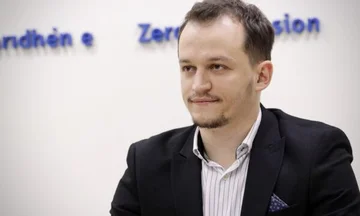
But according to Deputy Prime Minister Fatmir Limaj, it is now time for the tax to be removed and talked between the two countries after it achieved some of its goal.
In an interview for “Vision Plus”, Limaj also said Serbia should recognise reality and recognise Kosovo as an independent state.
Below in full interviews:
Mr. Limaj, hello. Why does Pristina not withdraw from the tax when both Brussels and Washington strongly seek it removed?
We have long since clarified it to our friends and partners both in Brussels and Washington, the reason why it has forced us to place the tax on Serbia and also the official position of the Republic of Kosovo; that the tax itself cannot be lifted unless the reasons for the tax is stopped. We expect Serbia to sit down and negotiate on the tax issue, which would imply Serbia would stop certain actions and meet certain Kosovo conditions and requirements. Which has now continued to bring obstacles to the Republic of Kosovo through non-tariff actions or barriers. On the one hand and then its diplomatic aggression against the Republic of Kosovo. There are some conditions we expect Serbia to meet and then enable Kosovo to address this issue and give it the opportunity to move on. It is in the interest of our two countries that we seriously approach the negotiation issue. If negotiations or conditional dialogue are initiated then no one can guarantee and ensure that one of the parties does not set new conditions on the way. Such a dialogue or conditioning is not in any country's interest because it is not serious.
Mr. Limaj a few days ago you claimed the tax lost its political goal. That means you're already against it?
In our opinion it is now clear that we as coalition partners have different views on this subject. First, I believe it is clear, and my position is that the tax does not automatically remove without the fulfillment of certain conditions from Serbia as set out at the outset. When we first put the tax on some of us... there are some reasons that forced us to set the tax and that we expect Serbia to meet Kosovo's requirements. We now have signals from Serbia that it is ready to meet some of Kosovo's demands. Political decisions are not permanent. They must be treated at a certain stage to assess whether the target has been achieved or not? We believe that we are already in a phase where we believe we have achieved tax targets and can come to a conclusion where Serbia meets the conditions and thus make a temporary suspension of this tax on the condition that Serbia will meet Kosovo's requirements.
You are the head of the delegation for dialogue with Serbia. When will the next round of talks be, and can it be held when the tax is still in force?
We like Kosovo are ready because we have now made serious steps in this direction, we have demonstrated our will and seriousness as institutions reminding us that several months ago Kosovo has had a kind of confusion about the question of dialogue; there have been different opinions about Kosovo's positions, and therefore has come to the construction of the state delegation. Recently we have adopted the platform, and now Kosovo is as it were and has turned the question of dialogue with Serbia into a binary. We expect Serbia to reflect as soon as possible and sit at the negotiating table.
Prime Minister Ramush Haradinaj has repeatedly addressed criticism of the European Union, and especially to Moghrin diplomacy chief. How do you see Brussels' commitment in relation to dialogue between Pristina and Belgrade?
We understand Brussels' role. Brussels is interested and has set the Kosovo-Serbia dialogue issue as a priority. Of course we haven't been happy with the dynamics that have happened for years. For these seven years of Kosovo's readiness that has not been rewarded with commitment and evolution in dialogue. For the past seven years, Kosovo has unfortunately benefited nothing from this dialogue. Neither on the road to European integration nor on the implementation of agreements reached in Brussels. And in this process you have to sit at the table and appreciate the whole process that happened in the past. Unfortunately, Kosovo follows to be the only country in Europe where its citizens continue to be isolated. Although the Commission has recommended that Kosovo have fulfilled the conditions, the European Parliament has voted for visa liberalisation twice, we still remain the only isolated country in Europe. And I don't believe anyone would expect other positions from Kosovo. Kosovo, its citizens and the state are energized with the treatment that has been done to this country so far by the EU.
Mr. Limaj, I have one last question. Do you believe that now is the time for reaching the final agreement and when it can be finalised?
We believe it is in the interest of both our countries to accept reality and to move towards European integration. I believe it is in Serbia's interest to finally know the reality. The reality that surrounds him. It is the only country in this part of Europe that does not recognise Kosovo's reality. All other allies around Serbia have recognised this reality and recognised Kosovo as a state. The sooner Serbia recognises this reality, the more it will realise that it is mostly serving it itself. Serbia is at the last moment where it must take the bold political step to recognise the reality and the new state of Kosovo. And so as two nations like two peoples, we march towards our strategic interests. Continued this situation mostly hurts the Serbian state. Serbian citizens continue to live out of reality about Kosovo, and not rarely do Belgrade politics use Kosovo's reality for domestic political needs. I believe it's already time and we're even late to sit down and take the bold step. The bold step is today to recognize reality as it has been with the agreement between Greece and Macedonia, and Serbia must take these steps. And eventually this part of the Balkans moves towards European integration and closes this as I can call the last open topic in this part of the world.