4 minutes ago
Is our civilization close to collapse?

Periskopi(7 years ago)
(7 years ago)Collusion expert Luke Kemp, has declared that by studying the history of civilizations, he understands what great danger we face today. And even worse, the signs are just getting worse than the big Civilizations were not killed. They killed themselves. So the historian Arnold Toynbee concluded in his 12 - volume work. It was an exploration [...]
Major civilians were not killed. They killed themselves.
So the historian Arnold Toynbee concluded in his 12 - volume work. It was an extensive exploration of the rise and fall of 28 different civilizations.
He was right in some ways: civilisations are often responsible for their decline. However, their self - destruction is often assisted.
The Roman Empire, for example, was the victim of many diseases, including overfishing, climate change, environmental degradation and bad leadership. But he kneeled when Rome was destroyed by Visigoths in 410 and vandals in 455.
Kolapsy is often quick and greatness seems to have no immunity to it. The Roman Empire covered 4.4 million square miles [4.4 million sq km]. After five years, it dropped to only 2. By 476 there was none left.
Our deep past is marked with constant failures. As part of my research on the Center for Environmental Risk Studies at Cambridge University, I'm trying to figure out why collapses occur along the autopsy of history. What can the rise and fall of historical civilizations tell us about ourselves? What are the forces that accelerate or postpone a possible collapse? And do we see such traits today?
The first way past civilizations can be seen is by comparing their life expectancy. This may be difficult because there is no strict definition of civilization, nor a comprehensive database of their births and deaths.
On the following graph, I have compared the life span of some past civilizations, which I define as a society of agriculture, many cities, military domination in their geographic regions, and an ongoing political structure. By giving this definition, all empires are civilizations, but not all civilizations are empires. The data has been attracted by two studies in the rise and fall of the empires [for 3,000,000 BC and 600 BC prior to Christ 600 BC], and a study on ancient civilizations.
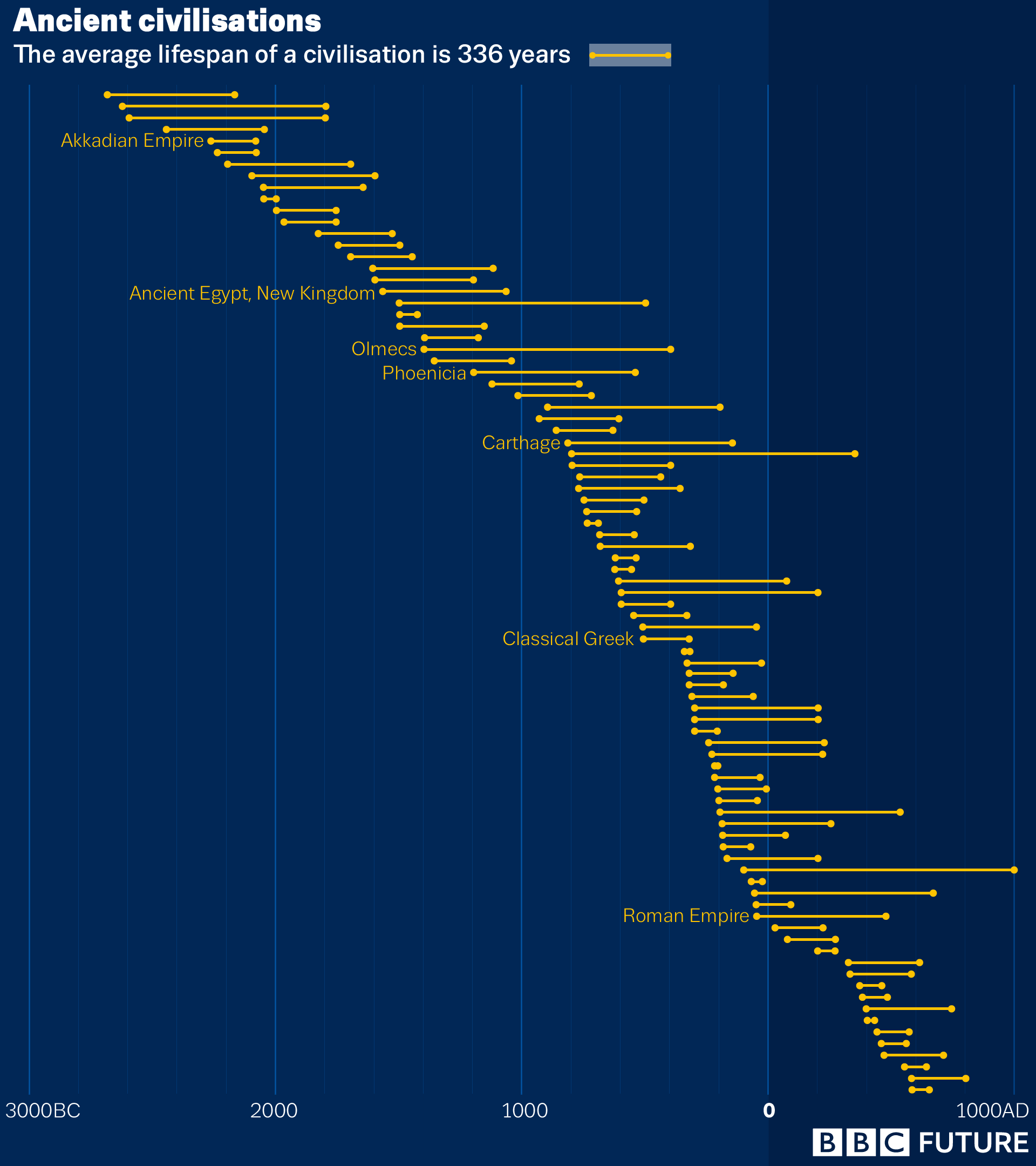
GRAFIK
Kolapsi can be defined as a progressive and constant loss of population, identity and socioeconomic complexity. Public services break down and political order explodes until the government loses control of its monopoly of violence.
Virtually, all past civilizations have had this destiny. Some recovered or were transformed, as did the Chinese and Egyptians. Others were permanently collapsed, such as the fate of the Eastern Island. Sometimes cities in the episode of collapse have revived, such as the case with Rome. In other cases, such as the Maya ruins, they remain abandoned as mausoleums for incoming tourists.
What can this tell us about the future of modern global civilizations? Are the teaching of agrarian empires applicable to the 18th century of industrial capitalism?
I'd argue that they are. The societies of the past and the present are only complex systems composed by people and technology. The theory of normal “axidents” suggests that complex technology systems regularly provide space for failure. So collapse can be a normal phenomenon for civilizations, regardless of size or level achieved.
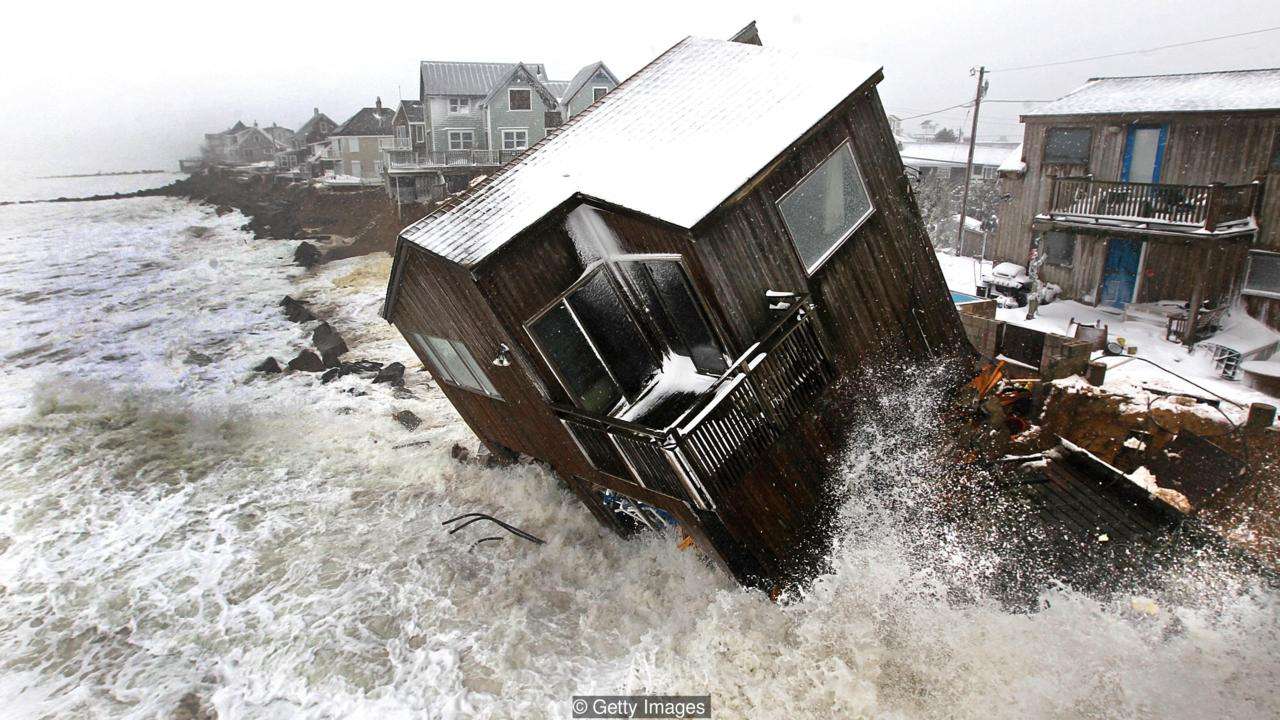
We can be technologically more advanced. But that doesn't make us believe that we are immune to the threats our ancestors faced. The acquired technology skills can offer new and unpredictable challenges.
And while our level may be global, collapse seems to occur even in procrastinative empires but also in new kingdoms. There is no reason to believe that size is a shield to the extinction of society. The globalized economic system is, if nothing, then make the crises spread at lightning speed.
If the fate of past civilizations can be a guide to our future, what does it say? One method is to examine the trends that precede historical collapses and see how they reveal themselves today.
Until there is no accepted theory of why collapses occur, historians, anthropologists and others have proposed various explanations, including:
Climate change: When climate stability changes, the results can be devastating, resulting in starvation and desertification. The Kolapsy of Anasazi, the Tiwanaku civilization, the Akkadian, the Maya, and the Roman Empire, and many others have coincided with unexpected climate changes, usually drought.
Environmental degradation: Kolapsy can occur when societies exceed the capacity they can maintain in their environment. The theory about ecological collapse, which has been subject to best-seller books, tells of the destruction of forests, water pollution, degradation of land or loss of biodiversity.
Inequality and oligarchy: Wealth and political inequality can be the central central drivers of social degradation, as can be oligarchy and centralising power among leaders. This not only causes social anxiety, but it undermines society's ability to respond to ecological, social and economic problems.
These are among many others. We will fight collapse unless we advance blindly. We are doomed for such fate unless we want to hear from the past. /Periscopi