11 minutes ago
Visa liberalisation and Interpol are forgotten: These are Kosovo policy priorities for 2019

Periskopi(7 years ago)
(7 years ago)Economic development, the fight against corruption and advances in the European integration process are highlighted as the priorities of Kosovo's 2019 policy. Along with these priorities, the end of the negotiations process with Serbia is seen as a separate goal. Kosovo Deputy Prime Minister Fatmir Limaj told Radio Free Europe that the Kosovo Government's commitment during 2019 will [...]
Economic development, the fight against corruption and advances in the European integration process are highlighted as the priorities of Kosovo's 2019 policy. Along with these priorities, the end of the negotiations process with Serbia is seen as a separate goal.
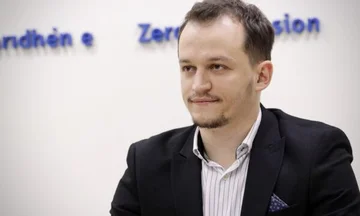
Kosovo Deputy Prime Minister Fatmir Limaj told Radio Free Europe, that the commitment of the Government of Kosovo during 2019 will be focused on priorities and goals which in 2018 failed to realise.
Our “engagement will be in the direction of intensifying in the country's economic development, advancing European integrations, further consolidation of citizenship and increasing prosperity, such as our internal reforms aimed at boosting citizen welfare. These should be some of our” targets, Limaj said.
On the other hand, representatives of opposition political parties say the priority should be elections and the formation of new institutions, which, according to the opposition, would guarantee legitimacy in government.
Ismet Beqiri, from the Democratic League of Kosovo, says new institutions, which would then have the country's economic development priorities, should first be formed.
“Kosovo's main priority and main need and citizens has been precisely the creation of stable and reliable institutions. This means that the country's priority should be new institutions. New institutions with legitimacy and then even earlier that we've offered the opportunity to work and talk to all those who want the country's good”.
The large “The issues must be, economic development and fighting organised crime and corruption - rule of law. Normal to work too hard for visa liberalisation, but not to give the “date, Beqiri said.
On the other hand, political analyst Imer Mushkolaj says that governments in Kosovo have already created a working routine and, year-on-year, hold priorities, failing to achieve them. Mushkolaj says challenges and problems in Kosovo continue to be great.
“Take into account that the problems in Kosovo are many, of course, that even priorities are many or are planned to be many to be solved. But that is not usually the case. Economic development remains the top priority for which the country's institutions have not done enough or done very little consistently. In the meantime, we have not seen visible progress in other important areas, such as reducing unemployment and developing the education sector and improving conditions in health”, says Mushkolaj.
Mushkolaj considers that Kosovo institutions should deal with foreign policy issues.
“Institutions should not forget even the priorities related to strengthening the state of Kosovo, in the sense of international subjectivity, and here entered the fulfillment of the obligations emerging from the European agenda and, of course, other issues related to representation and strengthening of Kosovo's largest”, Mushkolaj said.
Early in 2018, the Government of Kosovo had presented its government programme, with economic development as its top priority.
Meanwhile, as three main goals for 2018, there was Kosovo membership in INTERPOL, visa liberalisation and the formation of the Kosovo Army.
Of these three goals, the year was completed with the realization of the goal of starting the transformation of the Kosovo Security Force into the Army. While membership in INTERPOL and visa liberalisation are now held as priorities for years to come.