14 minutes ago
President, opposition position united towards crisis

Periskopi(8 years ago)
(8 years ago)Kosovo institutions are sinking into a deep institutional crisis, from which they can hardly get out for a long time. So say connoisseurs and political developments and representatives of nongovernmental organisations. Naim Rashit, director of the Balkan Policy Group in Kosovo, talking about Radio Free Europe, points out that [...]
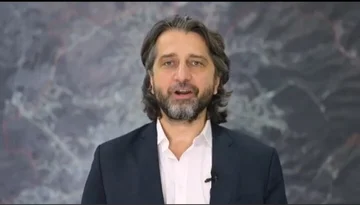
Naim Rashit, director of the Balkan Policy Group in Kosovo, speaking of Radio Free Europe, stresses that the crisis Kosovo is in and that could expand, could have long-term consequences for the construction state.
The “is a signal of a deep crisis, which can have long-term consequences not only short-term consequences and consequences which will be even difficult to manage. I think that if there isn't a co-ordination in the next two months how to manage the dialogue process with Serbia and other processes of reforms and political relations, we'll have a tense situation and a situation where we're only when we're always and more thinking about the electoral agenda, than with the agenda of important topics, for which we have to prepare and exceed the”, Rashi said.
Even analyst Albert Krasniqi from the Kosovo Democratic Institute considers that their institutions and leaders, together with political leaders, are sending Kosovo towards a deep crisis.
New elections seen as option
He says close co-ordination between the entire political spectrum is needed to prevent this evil for Kosovo.
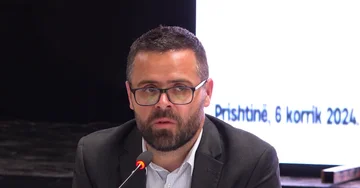
“appears to be heading towards a deepening crisis, unless the ruling parties reflect, to realise opposition demands. The Assembly will be paralyzed, unable to make decisions in its current composition. Even protests called by Vetevendosje may increase pressure on the government. So elections are an option that should be considered seriously. In this political establishment, no major decisions can be made, nor can Kosovo do well in the dialogue process with Serbia, without having a co-ordination between the” institutions, Krasniqi said.
Rashit voiced the opinion that the problem lies within the ruling coalition, within the opposition political parties, and also between the ruling coalition and the opposition.
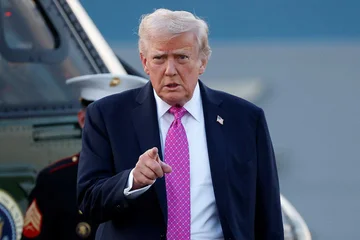
“are three types of problems, including the very sensitive relationship of all acts of acts with the president (Hashim Thaci). This complex of bad relations is making coordination very difficult. I think that again initiatives should come from the government and the ruling parties, which should come with a serious offer for opposition parties, to work on topics that are beyond the government agenda”, Rashi said.
Krasniqi thinks there is nothing positive for now except a new election process, which may change the situation.
If we rely on the behaviour of political parties so far, no major process has been able to push forward without paying for the election price. The same was the case with the demarcation. The same political acts only changed attitudes after the elections. So it can very easily happen even now that in this composition in this tension and polarisation of the political scene, it is very difficult to imagine a consensus and to see all sides working together. Thus, the elections may be an opportunity to make a reconfiguration of the” political scene, Krasniqi said, among other things.
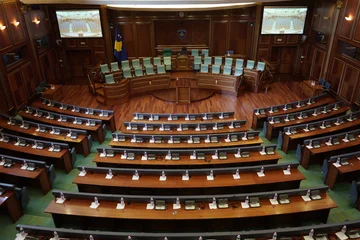
The decision-making blockade in the Parliament has started since the beginning of this institution's mandate. But recently, divisions seem to have greatly paralyzed the highest legislature in Kosovo.
Right here in the Kosovo Assembly, the ruling parties demand that the Parliament appoint the negotiating team for dialogue with Serbia proposed by the Government, while the opposition seeks the adoption of a resolution regarding President Hashim Thaci's commitments for the inclusion of “the exchange of territories” or “border correction” in the dialogue between Kosovo and Serbia.
Albanian political parties, both from power and opposition, have failed to establish a communication and co-ordination of work with MPs from the Serbian List, whose votes would, in many cases, be crucial to decision-making.
The proximity of this List to Belgrade's official policy keeps Albanian political subjects at bay. The Kosovo Assembly's sixth legislature is constantly facing a lack of quorum.