7 minutes ago
A murder was a cause for restructuring the border between Holland and Belgium

Periskopi(8 years ago)
(8 years ago)President Hashim Thaci has said today that under the dialogue process, Kosovo and Serbia have full support from the relevant international decision-making factor to reach peaceful agreements, not excluding the border correction option in any way. According to Thaci, if it will succeed in this [...]
President Hashim Thaci has said today that under the dialogue process, Kosovo and Serbia have full support from the relevant international decision-making factor to reach peaceful agreements, not excluding the border correction option in any way.
According to Thaci, if it succeeds in this effort, the case of border correction between Kosovo and Serbia presents no precedent under any circumstances. And then he said that a relevant example of border correction occurred in 2016, between Holland and Belgium.
These two countries have managed to correct their border peacefully “without having to hit even one single bullet”.
But how did the Netherlands and Belgium settle the issue of borders?
In 2016 the border correction agreement had been reached between these countries after a series of negotiations were expected to trigger conflicts and tensions in Europe. However, the two countries had shown that they can manage disputes in a way that “conducted”, as described in international media.
However, states did not benefit equally from the exchange of territorial space.
The Netherlands won the most from the deal, taking about 25 hectares from Belgium. Belgium took about five hectares from its neighbour.
The deal was considered significant because it took place on a continent that historically had numerous conflicts because of territories.
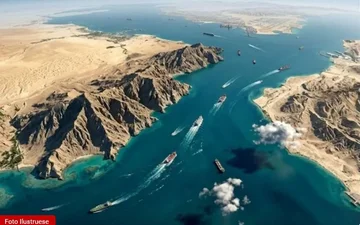
The correction of the border between the Netherlands and Belgium occurred because of the arrangements made on the Meuse River, which runs along the border between the two countries for navigation purposes in the 1960s without setting aside the Belgian location, “Presque de L allal” and “Prejqu·le d eyysden<3>, which in Dutch means “the River”>.
This meant that Dutch police had no jurisdiction over the land, while Belgian police did not have easy access and that the area became illegal, especially for trafficking, sexual abuse, and drug smuggling.
The catalyst of the changes had become a corpse that had been discovered on earth in 2012. She was reported to the Dutch authorities, but then she came up to be a case for Belgian police. The difficulties posed to investigate the suspicious death, because Dutch police had no jurisdiction over the land and that Belgian limited access prompted negotiations on access to land of both states.
In June 2016, an agreement was reached and signed. The border now runs smoothly along the river, with the small Dutch territory of Presqu e Petit-Gravier given to Belgium.
The negotiations were “proved that borders could be redirected peacefully”.