4 minutes ago
NATO reacts to Trump for Montenegro: Attack on each member is attack on Alliance

Periskopi(8 years ago)
(8 years ago)The North Atlantic Alliance has reacted after comments by Donald Trump, who cast doubt on the need for Montenegro's defence. In response to President Trump, a senior official NATO told CNN that the treaty the alliance has signed is unconditional and does not play a ball, [...]
The North Atlantic Alliance has reacted after comments by Donald Trump, who cast doubt on the need for Montenegro's defence. In response to President Trump, a senior official NATO told CNN that the treaty the alliance has signed is unconditional and does not play the ball, thus reconfirming the motto “the attack on a NATO member state is an attack on all members of the Alliance”, sanctioned in Article 5 of the Treaty.
Our “Klausola of collective defense, Article 5, is unconditionally and clothed with iron, which means that an attack on one is an attack on everyone. President Trump has made it clear that the US is fully committed to NATO and our Alliance is stronger than ever.”
Article 5, which is a defence, aims to prevent potential opponents from attacks on NATO members. During the Cold War, the Soviet Union was the main concern, but in recent years Russia's aggressive actions in Eastern Europe have been the focus of attention. Ukraine and Georgia, the two countries Russia has occupied in the last decade, are not NATO members.
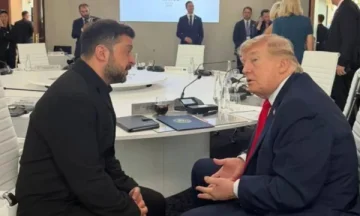
In a television interview, the US president raised questions about the United States' commitment to protecting the small Balkan state in case of offensive.
“designer Fox Nese”, Tucker Carlson asked Trump: “Why does my son have to go to Montenegro to protect that country from attacks” and the president replied: “The same question I put on and I myself”.
The journalist then tells him: “Now, it's not like I'm against Montenegro. . or Albania...”
Trump replies: “not, but they are very aggressive people. And it can get even bigger and here's your Third World War. And this is unfair”.
Montenegro is the 29th and youngest member of the military alliance, which joined June 2017.
According to official data, it pays for protection of around 1.66% of GDP and with a population of only 620 000, contributes to Afghanistan's struggle with more troops per capita than the United States of America.