9 minutes ago
Why is the EU afraid to liberalise visas for Kosovo?

Periskopi(8 years ago)
(8 years ago)The large number of unemployed youth and fears of another migration effort towards European Union countries, according to analysts, can be seen as the obstacles Kosovo has to implement its visa liberalisation goal. Analysts say that in EU member states, especially those countries intended to go [...]
Analysts say that in EU member states, especially those countries intended to go to Kosovo citizens in search of a better job and life, fears are greater than liberalisation could be misused.
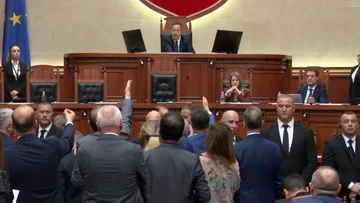
Kosovo has been awaiting a recommendation for visa liberalisation by the European Commission for three weeks.
Following ratification of border demarcation with Montenegro and presentation of results in fighting organised crime and corruption, Kosovo institutions and political leaders had voiced optimism that the European Union would issue positive recommendations.
But such a decision has not yet been made in Brussels.
Taulant Kryeziu, connoisseur of European integration issues, told Radio Free Europe that there are some issues that have influenced this European Union reluctance in the case of visa liberalisation for Kosovo.
The reason why I see little chance this year to move freely to EU countries is our justice system, which has not shown commitment and will to deal with fighting organised crime and corruption of high profiles. The second, there is an unpositive climate within the European Union's powerful countries on the issue of migration”.
“We have seen the concerns that the Italian populist government has, with what is being called the burden of immigrants and what it requires is that this burden of migrants be shared within all EU member states, and not to be accommodated only one country. The problems that have followed Chancellor Angela Merkel with her conservative coalition partner, who has also called for closure of the”, Kryeziu points out.
These elements, Kryeziu adds, will produce delays in the political decision-making on the part of the European Union in the case of visa liberalisation for Kosovo.
Meanwhile, European Integration Issues analyst Jehona Lusshak tells Sadriu about Radio Free Europe that fear of migration is mutual, both for the European Union and for Kosovo.
There are many reasons, some dealing with European Union internal policies. They are currently getting ready for future elections and there are various political calculations of political parties within EU institutions. They are calculating the penalisation they may have, if they support visa liberalisation for Kosovo”.
The “Frika that may be for Kosovo is a failure to control migration. If Kosovo is to face, but the EU with a new wave of migration from Kosovo then will be seen as very problematic and very influential in the upcoming European Union elections, since migration is a very problematic policy and currently”, says Lushaku-Sadriu.
Otherwise, by the end of 2014 and early 2015, using the border between Serbia and Hungary, thousands of Kosovo citizens were illegally headed for European Union countries.
The huge wave of migration of citizens from Kosovo had forced authorities in Hungary, Serbia, Austria and Germany to strengthen border controls to prevent illegal passage.