15 minutes ago
Locked in Home and Forgotten by the State

Periskopi(8 years ago)
(8 years ago)Mracoraj Ganimes about 40s, is a housemaker and unemployed. He lives in the village of Mraz in the municipality of Rahovec, and the likelihood that it will be employed is almost zero. Not because it is incapable of working, but that the state views it as such. 2016 data on unemployment from the Agency [...]
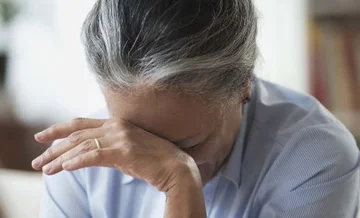
Mracoraj Ganimes about 40s, is a housemaker and unemployed. He lives in the village of Mraz in the municipality of Rahovec, and the likelihood that it will be employed is almost zero. Not because it is incapable of working, but that the state views it as such.
The 2016 data on unemployment by the Kosovo Statistics Agency shows that 31.8 percent of women in Kosovo are unemployed, but that number is much more.
The fact that the state does not view them as job seekers, for home to the village of Rahovec, Ganimet Mracoraj shows that her country and people at its helm do not treat them as equal citizens. Although she doesn't have any higher education, she sees herself fit to work.
The same situation is with most women in her village.
I have the same way that most women in our village need a job that would be paid to us, and with that income, I could meet the terms of the children. Most women in our village are housewives, and they do all kinds of domestic work, and for that, we have no will for the jobs we do because nobody pays us for the jobs we do during the day. So why do we want someone to get us a job, that's not what nobody's doing? Our politicians keep filling their own pockets and not taking an interest in their own people, I don't know, it's very difficult”, Ghana has confessed.
Being unemployed and thus without income, women housewives in Kosovo are dependent on men so they cannot be job seekers, and the state does not go to them.
At the Ministry of Social Affairs and Affairs, Musa Demiri recognizes that they have no data on the number of unemployed housewives.
Demiri has said the ministry in question goes to confirm existing legislation, treating only those cases presented in employment services as job seekers.
“We convert existing legislation by treating only those cases presented in employment services as job seekers. So those that presented as jobseekers in the employment services in the Republic of Kosovo are treated the same as any other job seekers, while for the families and the category of absolute students we have no database”, Demiri has said.
While analyst for Gender Affairs Ilirjana Banjska has said that Kosovo has government strategies intended to address the issue of women's integration into the labour market, but implementation of these strategies continues to be weak.
Kosovo has government strategies aimed at various forms to address this topic, but implementation continues to be weak”, Iliriana Banjska said.
Banjska has said that women represent a large percentage of the population who are inactive in the labour market, with about 80 percent, and according to her, the reason for such high percentages is the obligations women have in their homes, which have remained as women's work because of their culture and printing traditions.
“Arsyet, more important why women represent a large percentage of the population that are inactive in the labour market (80%), are the obligations that have to care for at home and that you have remained as “the work of women” because of the culture and traditions of oppression (the care of children, the elderly, the housework, etc). One of the options that the state should take into account when drafting strategy in this regard is to raise the number of kindergartens for children”, Djind Affairs analyst Ilirjana Banjska has said.
Banjska another reason for women who are not integrated in the Kosovo labour market is also the tendency to discriminate against the Kosovo woman during the employment process, which is mostly happening at the reproductive age because businesses see recreation and leukemia as a major burden.
“Arsyet, why a large percentage of women may be unemployed, is the tendency to discriminate against women (especially at the reproductive age) in the employment process, is huge for reasons businesses view firing leukemia as a huge burden. So there are different forms that we can address this problem. Establishment of a parental permit, where even a father can get a pay birth permit, can reduce the burden of women, change cultural norms in care, and minimize discrimination against women in the employment process because during the interview, the employer knows that the same as the woman and husband in the future may require this drop of the birth<1>, IliranaBanjska has ended.