14 minutes ago
Hoti calls Thaci's biography an order

Periskopi(8 years ago)
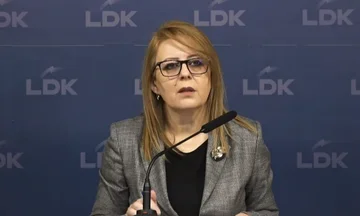
(8 years ago)The head of the Democratic League of Kosovo Parliamentary Group, Avdullah Hoti, has called the biography of President Hashim Thaci, which was published last month. Hoti follows by saying the late President Ibrahim Rugova had been the first leader to have formed alliances with the most powerful world democracies, and [...]
Hoti follows by saying the late President Ibrahim Rugova had been the first leader to have formed alliances with the most powerful world democracies, and the only one who had dared to lead the people when Serbia had planned to eradicate uncontained peoples.
He also said efforts, according to him, are in vain, to downplay Rugova's role and his peaceful resistance.
The following can be read of Hoti's complete reaction:
Historical facts are not altered by ordered biographies. Being a visionary leader is a gift, cultivated throughout life based primarily on high ethical principles. Such was Kosovo's chieftain and the architect of independence, Dr. Ibrahim Rugova.
The time when Rugova stood before the people of Kosovo was ominous for the peoples of the former Yugoslavia. Milosevic and the Serbian Academy of Sciences had compiled the plan for Greater Serbia and the extermination of people not subject. That world Rugova was the only one who had the courage to lead the people.
At the time the wars in Croatia and Bosnia began, Rugova chose peaceful resistance until we were militarily strengthened. By this resistance, he made the international arena feel fair for injustices committed to the people of Kosovo.
Rugova is the first leader to establish alliances with the most powerful world democracies. “I have been honored to support his war and the people of Kosovo for peace and freedom,” had declared President Clinton. Other world leaders called it “Gandi of the Balkans”, which, with active peaceful resistance and liberation struggle, brought the Conference of Rambouilles, NATO bombings, Kosovo's freedom and independence.
Efforts to downplay Rugova's role and peaceful resistance through ordered biographies are in vain. In its lifetime, the people of Kosovo gave mass, non-resistable support so far, the Rugovian policy in all elections, before and after the war. Friendships created by Rugova today tend to consolidate the state of Kosovo in the international arena. Rugova did not make politics either from Albania or Switzerland. He experienced the slaughter of occupation with his people.
The historical facts are not bought with money. Rugova has never paid millions of taxpayers for improving his image, because he did not need as a peaceful manship that was, visionary and invincible.
Attempting to negate the role of the Transylvanian peaceful resistance to Kosovo citizenship is futile. This may be an attempt only of those who never passed Rugova's shadow. Rugova remains the brighter figure of Kosovo's people's efforts for freedom, independence and democracy. He could freely be compared to figures of national rebirth that he had studied with passion and whose example he followed.