16 minutes ago
D4D: Even after 10 years of independence, unemployment and corruption main problems in Kosovo

Periskopi(8 years ago)
(8 years ago)The Democracy Institute for Development (D4D) in co-operation with the Heinrich Böll Foundation, as part of co-operation to address key challenges in the consolidation of the state of Kosovo today launched the “work. Genesis plus ten: Reviewing Kosovo's first decade of citizenship”. Participants in the labour launch were representatives of political parties, senior institutional officials, [...]
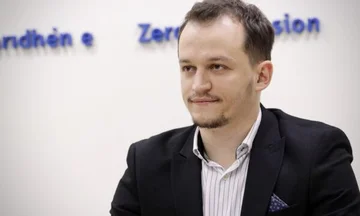
Participants in the labour launch were representatives of political parties, senior institutional officials, representatives of civil society, as well as other important acts. While part of today's panel were Gersi Gashi, policy researcher in D4D, Simon Ilsel, HBF head, regional office in Serbia, Montenegro, Kosovo (HBF), Nita Luci, professor, Pristina University (UP), Naim Rashi, executive director, Balkan Group (BPRG), and Bekim Baliqi, professor, Pristina University (UP).
The aim of the work is to revis the first decade as an independent state and to be a guide for democratic reforms towards consolidation as a state. Gersie Gashi, policy researcher from the D4D Institute, stressed that this research divided into four chapters tries to provide an informed critical assessment of the first decade of Kosovo's citizenship covering the institutional, power domain, as well as the discoursive one. The work shows that the main problems of Kosovo citizens, even after 10 years of independence, continue to be unemployment and corruption. Furthermore, research reflects that 62% of Kosovo's citizens have not tried to influence and do not think they can influence policymaking or decision making processes, where in this regard even key acts agreed that more work should be done in addressing challenges, as well as in finding mechanisms in order to reduce this large percentage in number.
The discussion also focused on the survey presented at the end of the work, with Creras Bekim Baliqi, professor of the University of Pristina, specified that there is a clear displacement in the context of the work in the midst of what policymakers' intentions in Kosovo are, in relation to the needs of the country's citizens.
The topics, such as the starting and completion of the transition process for Kosovo, and even the lack of political capacities that have directly influenced Kosovo's economic and political development, the topics highlighted by Nita Luci, professor at Pristina University, as well as Naim Rashit, executive director, the Balkan Group (BPRG), also attracted attention.
At the end of the discussion, Simon Ilse, from the Heinrich Böll Foundation, said it is necessary to have society's furniture, as well as political parties, in order to have literal transformation and consolidation of the state.