5 minutes ago
20 years of war, 1647 people still missing

Periskopi(8 years ago)
(8 years ago)Some 20 years have passed since the armed conflict in Kosovo, but about 1647 families are still waiting for answers to their loved ones who have disappeared over the 1998-1999 events and their consequences. To help them find rest, the Pristina delegation and the Belgrade delegation [...]
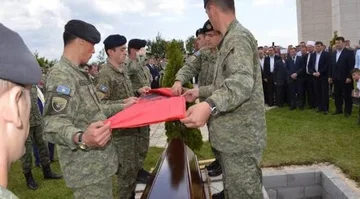
Some 20 years have passed since the armed conflict in Kosovo, but about 1647 families are still waiting for answers to their loved ones who have disappeared over the 1998-1999 events and their consequences. To help them find relief, the Pristina delegation and Belgrade's, today, at the 40th session of the Working Group for Missing Persons in connection with events in Kosovo in Belgrade, approved the procedures for the Handover of Mortore Remains to facilitate the process of understanding what happened to their loved ones.
The session was chaired by the International Committee of the Red Cross (KNKK) in attendance of family members of the missing and representatives of the international community.
After praising the activities that have been held since the last session, participants discussed the next steps Pristina and Belgrade must undertake during the remaining months of 2018, in hopes that some families will be allowed to receive answers to the fate of their missing loved ones.
Today, after 20 years, out of 6057 people who have been reported to the KNKK as missing persons in connection with the armed conflict in Kosovo and its aftermath, 1647 remain missing. Their family lives in confusion, not knowing what happened to their loved ones and being unable to bury them with dignity, heal wounds, and continue their lives.
The leader of the Working Group, Fabienne Bourdier of the KNKK, said: “Only seven cases were resolved in 2018. The KNKK is concerned about the slow pace of progress in resolving this issue, which should be treated as completely humanitarian. Waiting for answers to their missing loved ones, many, unfortunately, have changed their lives without rest. We hope that the adoption of the procedure for delivery of Mortore waste from the Belgrade and Pristina delegation will prove useful for the entire process”.
Since the founding of the Work Group in 2004, The KNKK, as a neutral mediator, has investigated national and international archives in an effort to get information that would lead to new cemetery locations, so as to whiteen the fate of as many missing persons as possible and family members could be helped to resolve their administrative and legal issues.
According to international humanitarian law, families have the right to know what happened to their loved ones, while states are obliged to give them answers and support.