21 minutes ago
The new phase of Kosovo-Serbia dialogue will bring new agreements?

Periskopi(9 years ago)
(9 years ago)The new phase of political dialogue between Kosovo and Serbia, according to connoisseurs of political developments, is supposed to be concluded with new agreements on normalising relations between the two states, as the inevitable condition for their membership in the European Union. Taking into account the new political dimension the Brussels dialogue is receiving, Kosovo [...]
Taking into account the new political dimension Brussels' dialogue, Kosovo and Serbia are installing a new form of negotiations at the level of presidents.
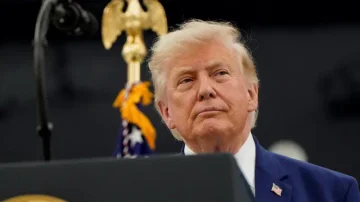
In this context, Kosovo President Hashim Thaci and Serbia President Aleksandar Vuciq have held a relief meeting Monday from the European Union's High Representative, Federica Moghrini, after which it was announced that the two statesmen had agreed to open a new phase of negotiations leading to normalisation and reconciliation.
Politologist Ramush Tahiri, speaking of Radio Free Europe, says the presidential summit between Kosovo and Serbia shows the two countries' commitment to full normalisation of relations.
“was an informal meeting mediated by the European Union High Representative Federica Moghrini, but aims to show both Kosovo and Serbia's commitment to continuing dialogue until the full normalisation of the” relations.
“Ration at the level of presidents also means affirmation of new positions or old figures in new positions of two personalities considered key on both sides, so Hashim Thaci and Aleksandar Vuciq, and is supposed to make the dialogue concrete, and agreements that can be reached that can normalise relations and overcome issues that were under consideration”, Tahiri says.
Tahiri considers dialogue between presidents can build the platform and principles of dialogue, but that real dialogue is regulated only between the concrete ministries and the governments of the two states.
The true and sustainable relations, in line with the Constitution and the law, are made only between ministries and the state's bilateral agreements”, Tahiri points out.
The normalisation of relations between Kosovo and Serbia is a condition for both states to advance on the path to European integration.
Kosovo has already signed a Stabilisation and Association Agreement with the EU, while Serbia has opened chapters of membership negotiations.
Political analysts expect that in the coming weeks and months, the agenda of dialogue between Kosovo and Serbia will be much more intense.
Avni Mazrek, the connoisseur of political circumstances and European Law professor, speaking of Radio Free Europe, says that in order for the open and uncompleted issues of these two states to move towards normalisation of reports, encouraged by the EU, the dialogue agenda will be much more intense.
“Knowing that the European Union's enlargement policy currently consists only in the context of EU enlargement in the Western Balkans area, then we will have a more intense agenda of the EU in relation to this” policy.
The central “ide of the whole dialogue is the normalisation of relations between Serbia and Kosovo, and the normalisation of these two countries' reports means closing these countries' open issues. These two countries still have open and unkempt issues and very problematic issues, but that these issues should be seen as issues that will find solutions, in the context of walking these two countries towards EU membership”, Mazrek points out.
Mazrek adds that there has been marginalisation of this topic as a result of many issues that have taken place regarding the EU and around it, but according to him, despite these declines and ups, EU enlargement policy remains one of the top priorities of this union.
Meanwhile, the fact that Vuciq and Thaci, after the meeting in Brussels, have been talking about reconciliation between Kosovo and Serbia, Dusan Janjic, from the Forum for Ethnic Relations, does not see it as very important.
In a world where conflicts rule, he says, reconciliation is not taken seriously.
“Painting is not a topic. The topic is normalising the solutions to citizens' vital problems, while one of these vital problems is solving the issue of missing victims. But parallel to dialogue in Brussels. Compliance is only here for complications, reconciliation is only here for bribery”.
There is something else that they may have thought about, and that is that normalising relations with Kosovo -- which means normalising relations with Kosovo Albanians -- should be viewed in a broad context of strengthening the co-operation of Albanians and Serbs in the region”, Janjiq points out.
Dialogue between Kosovo and Serbia on technical issues began in March 2011, for the first time after Kosovo's declaration of independence in 2008.
Among the first agreements has been that of integrated border management or free movement.
Kosovo and Serbia had already reached the first agreement on normalising relations in April 2013, which envisions the formation of the Serb majority municipalities' association.