16 minutes ago
Depressed Journey to Freedom of Srebrenica Survivors

Periskopi(9 years ago)
(9 years ago)Thousands of Bosnian men and boys were killed in forests around Srebrenica in 1995 while trying to flee Bosnian Serb forces, but some survived walking for days, avoiding ambushes and minefields. Abdusamed Djozic, a former member of the Bosniak Army's 28th Division, was one of several thousand [...]
Thousands of Bosnian men and boys were killed in forests around Srebrenica in 1995 while trying to flee Bosnian Serb forces, but some survived walking for days, avoiding ambushes and minefields.
Abdusad Djozic, a former member of the Bosniak Army's 28th Division, was one of several thousand Bosnian civilians and soldiers who survived the genocide in Srebrenica by fleeing into the woods in the Bosnian-controlled town of Tuzla, as Bosnian Serb forces entered the UN-protected zone in July 1995.
Djozic told BIRN that he was in a row of Bosniaks running away, who fled about 11 July 22:00 from the village of Susnjari near Srebrenica, heading northwest towards Konjevic Polje.
Djozic said only a small part of the men were soldiers, while most were older men and boys, along with some women. They realised that the UN peacekeepers' base in Potocari near Srebrenica would not serve to be protected by Bosnian Serb forces coming.
Exhausted, hungry and scared some injured fugitives wandered into the woods for days.
Djozic first encountered Serb forces in the village of Kamenica, not far from Srebrenica. He said about 1,000 people were killed in the country, while many others surrendered.
They released some kind of mental gas. People started hallucinating. They didn't know who they were. They just gave up,” remembers Djozic.
However, the pillar of fugitives went on. Near a hill called Crni vrh (Black Lady), Djozic said Bosniaks faced a tank.
Very many were killed... A six-year-old died in my arms,” said Djozic, who managed to save a woman who was wounded in the chest.
As he began to think that no one would survive, a storm began, and the men from Srebrenica exploited the distraction to go on,” said Djozic.
But as they approached the village of Baljkovica, Djozic was wounded.
We walked into a treeless country and encountered an obus, which began shooting directly at the crowd. I saw men falling down as if they were plaster pigeons,” he remembers.
He was shot and rescued by another Bosniak who pulled him into the forest and threw him into a hole in the ground.
Djozic then had to save himself, for the man who saved him was immediately killed.
Several other men helped him in a nearby house where he met the doctor from Srebrenica, Ilyaz Pilav, who bandaged him.
After finally arriving in Tuzla, Djozic spent more than two months in the hospital recovering from his injuries.
Deadly Search
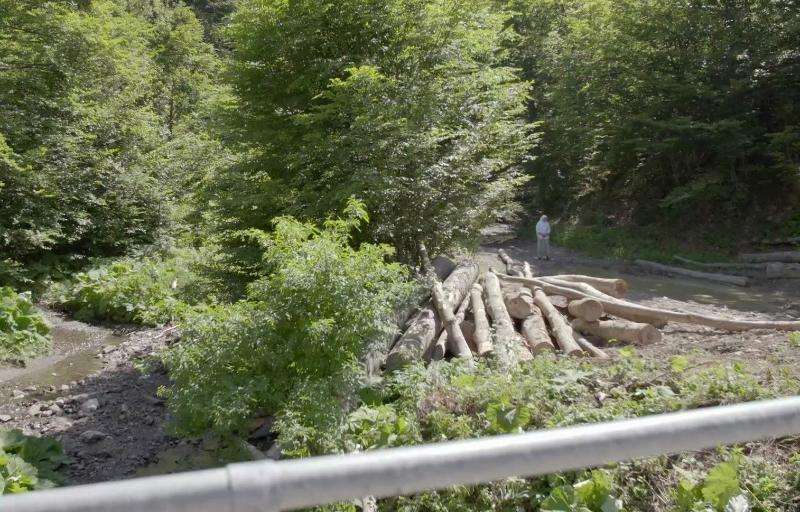
Muhamed Omerovic was at the helm of the range of people with whom Djozic was located as men and boys walked for a whole week, seeking refuge.
Every day we heard that 100, 200 or more people were killed. We learned that our brothers or cousins were dead,” remembers Omerovic.
He claimed Bosnian Serb forces stole UN peacekeepers' uniforms in Konjevic Polje and urged people to surrender by offering false promises that they would lead to Tuzla.
Omerovic said he did not trust the soldiers and that he escaped overnight and rested during the day. He did not know how many people without dying in the woods.
After arriving in Tuzla, he recalls, some people returned to the forest to find their loved ones.
My cousin arrived in Tuzla and heard that his son, são, had succeeded. He went back to find her. Meanwhile, his son arrived, but his father never returned,” said Omerovic.
Hasan Hodzicu returned five times after finding Srebrenica survivors. When he went out to find the last group of Bosniaks who had spent more than 20 days in the forest, he said that the fugitives started running away from him after they trusted no one.
They were tired. Their legs hurt,” said Hodzic, who managed to bring them to safety.
Up to 15,000 men and boys fled Srebrenica in July 1995 and about 3,000 of them were killed while trying to escape, while thousands of others gave up in the middle of the street and surrendered to Bosnian Serb forces, only to be executed later in several different locations near the town of Zvornik.
The war crimes tribunal in The Hague and local courts in Bosnia and Herzegovina ruled that these massacres constituted genocide.
At the Srebrenica Memorial Centre in Potocari are the graves of 6,504 victims, while more than 2,000 have yet to be found.