11 minutes ago
Those missing 18 years after the end of Kosovo war

Periskopi(8 years ago)
(8 years ago)Even 18 years after the end of the last war in Kosovo, 1,654 people are considered undiscovered. Representatives of Kosovo institutions and family of missing persons consider that failure to follow the fate of the missing is taking place because of the neglect of local and international authorities to pressure Serbia. Bajram Kerkin, chairman [...]
Bajram Qerkeyni, chairman of the Co-ordination Council of Family Associations of Undiscovered Persons, simultaneously chairman of the Resource Centre for Missing Persons, tells Radio Free Europe, that commitments in this direction have not been lacking even this year, but that the results are few.
He says that for solving this problem, the political will of local and international institutions has been consistently lacking:
The main setting for whiteening the fate of the found is in Serbia. But, Serbia should push off the international factor, the least fault is not even the Kosovo leaders, who are not pushing the process sufficiently”.
Otherwise, now 18 years old, Shaip Ramabaja, from the village of Hyvali in Pristina's municipality, is seeking news for his son, the 27-year-old Union, missing from April 22nd 1999.
Ramaba is disappointed with the work the competent authorities have done to whiteen the fate of the undiscovered.
“has suffered, is separated from the family. I'd like to find him the way he is and not bring him back alive. Let's find out, even know where to turn, once to his grave. I haven't opened up and I can't open up [line for condolences]. That's how we're lost”, Ramabaja says.
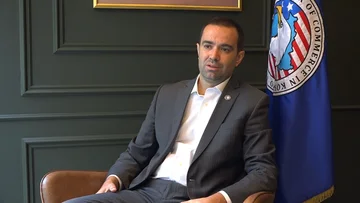
The chairman of the Government Commission for Undiscovered Persons, Prenk Lokaj, says the issue of the dead continues to remain a concern for their families.
He says the obligation and responsibility of institutions remain to work harder in this direction.
The find, which is also a member of the Kosovo delegation in the joint group for the missing between Kosovo and Serbia, considers that the European Union should be more persistent and force the state of Serbia to point to the location of the mass cemetery.
“We are very convinced and believe there are still mass graves in Serbia. However, the Serbian side must be more transparent, it has the data, it has the information, it has the names of people who have been engaged in jobs and assigned tasks at the time of the war, in particular for cleaning the ground”, says the Voice for Radio Free Europe.
It has been warned that in the next phase of dialogue in Brussels, between Kosovo and Serbia, with the European Union's mediation, the Kosovo team will demand that the question of whitewashing the fate of missing persons during the war be one of the topics of discussion.
In contrast, about 2,500 people have been identified by the various cemetery in Kosovo and Serbia, while unidentified at the Institute of Legal Medicine in Pristina, there are 400 pieces of mortore remains.