5 minutes ago
Kouchner: Serbia soon in the EU, for Kosovo I regret is distant reality

Periskopi(8 years ago)
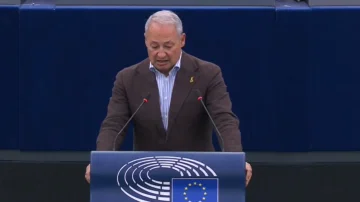
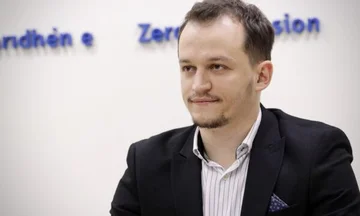
(8 years ago)Former French Foreign Minister Bernard Kouchner has made an editorial in Euoobserver, where he talks about European Union enlargement. He writes that Serbia and Montenegro are on the verge of EU membership, while calling for Brussels to support Albania as well. In his writing, Kouchner hits the PD too hard, which, [...]
Former French Foreign Minister Bernard Kouchner has made an editorial in Euoobserver, where he talks about European Union enlargement.
He writes that Serbia and Montenegro are on the verge of EU membership, while calling for Brussels to support Albania as well.
In his writing, Kouchner hits hard even the DP, which, according to him, has worked against Albania's membership in B
Sadly, the EU- perhaps inspired by Juncker's scepticism has kept other countries in the region in the slow lane, including the most enthusiastic countries for membership.
Take Albania: Polls show that 80 per cent of the population want to join the EU. This does not mean that the country is qualified for membership. But when there is a great consensus for membership, history teaches us that the required institutional and political reforms are easier to implement.
In fact, this is proving true in Albania. For over a year, the opposition Democratic Party fought strongly against the particular aspects of the reform package the EU urged the Socialist Party government.
The result? Prime Minister Edi Rama returned to power with a clear majority.
It is a mandate that must ensure continued progress towards meeting EU standards.
But the opposition continues to resist reforms, as the chaotic scenes recently testified in the Albanian parliament, where the Democrats in the minority tried to block the appointment of a general prosecutor.
In other words, now that reforms are at an advanced stage, this is exactly the wrong moment for the EU to keep Albania at the next end. It's time to send a strong message to Albanian voters that their support for reforms and the EU has an impact on”writes the former French Foreign Minister.
Complete Scripture
The door to the EU has opened at least three years after it was completely closed by European Commission President Jean-Claude Juncker, who said no enlargement of the EU would occur during his five-year term, writes Bernard Kouchner, former French Foreign Affairs and Europe minister, also former UN special envoy for Kosovo for Euobserver.
For whatever reason, overcoming crises, an improvement in the continent's economy, Brexit Juncker now feels like it's time to take a long look outside and give the accession cards.
But only two. And among those who look forward to EU entry, these two are not.
Integration remains a controversial topic for both Serbia and Montenegro, currently considered the first two candidate countries to enter the next round of enlargement.
Their leaders deserve great appreciation for the progress made, but the sad truth is that there are other countries, in the Western Balkans, who deserve our EU entry to the same degree, and essentially much more enthusiastic about this union.
There are rumours in Brussels that Montenegro and Serbia are the main candidates because they are more likely to change floors and approach Moscow
Personally, I don't believe that much. Besides rockets and oil, Russia has very little to offer. But even if it is true, it is not enough reason to approve of entry while others are denied it.
The EU is not a cult formed to prevent Russia's ambitions. It is a union of nations with their personal ambitions, with common values, shared culture and a perception of how future prosperity and peace are achieved.
The nations that share these values belong together and should be given any incentive to do so.
I am not questioning that the main candidates do not belong to the EU.
It's something else.
Both are already on the verge of negotiating, and Montenegro in particular has moved well in this process. <
What you regret is that the EU, probably inspired by Juncker's earlier scepticism, has kept other countries in the region in the slow lane, including those most enthusiastic to join.
Look at Albania: Polls consistently show that over 80 per cent of its citizens want EU membership. But in itself, that does not qualify the country for Union membership. But when there is a broad consensus for membership, history tells us that required institutional and political reforms for membership are much easier to implement.
In fact, Albania is showing that this is true. For more than a year, the opposition Democratic Party fought furiously against the particular aspects of the reform package the EU has asked the Socialist Party government.
CAPIRIA
The result? Prime Minister Edi Rama's Socialists returned to power last June with a clean majority.
It is a mandate that should ensure progress towards meeting EU standards, especially in five areas Brussels has specified as preconditions for formal negotiations: reform in administration, human rights, fighting corruption, reform in the justice system and fighting organised crime.
But, the opposition is still resisting implementation of these reforms, as evidenced by some shocking pre-anticipating scenes of chaos and confusion in the Albanian Parliament, when Democrats in the minority tried to block the appointment of the new general prosecutor.
Albanians should not be surprised that their politicians are fighting each other”, the US Embassy's ancient announcement says. ” This means that finally reform in justice is being implemented”. And it adds: ” The general prosecutor who refused to investigate the politicians left”.
In other words, with these reforms at the advanced stage, this is exactly the wrong moment for the EU to hold Albania at the end of the line. It is time to send a strong signal to Albanian voters that their support for reforms and for the EU already has an impact.
Similarly, a clear majority of Macedonians (54 per cent) seek EU membership, compared to 26 per cent in Serbia.
True, their dispute with Greece over the use of the name, which Athens insists applies to one of its provinces, continues to pose a problem. But, given the push for a quick entry into Union, I think Macedonian authorities will find a solution.
And then there is the Republic of Kosovo, where I have once been the UN Special Representative.
COMM SOVA
A large part of Kosovars -- 90 percent, a very high figure -- want their country to enter the EU. I regret that their desires will become reality soon, as Serbia and five current EU members refuse to recognise Kosovo's legitimacy.
But even at this point, the EU should be more active in promoting Cyprus, Greece, Romania, Slovakia, Spain, as well as Serbia to acknowledge Kosovo's inevitable sovereignty.
It's an example of how big resources “of soft power” can produce significant results if implemented.
I have the feeling that Brussels until recently has deliberately ignored the Western Balkans. There may be a distraction: Ukraine, migration challenge, unemployment, Greece and recently Brex and Catalonia.
Humor seems to be changing. “If we want more stability in our area, then we should also maintain a reliable enlargement perspective for the Western Balkans”, Juncker said in his statement to the union in September.
New France President Emmanuel Macron said at the same time, that” EU Must Open for Balkan Countries
Membership in the EU is part of the solution for the Balkan lack of stability and its long history of interethnic conflict.
Last month, Albanian Prime Minister Edi Rama made a clear warning: “Balkan in general, and Albania in particular will make progress,” said at a meeting in Brussels, “but, if the prospect of EU membership fades or turns into illusion, then things can get for bad”. /Theme/