15 minutes ago
Kosovo's youth aim to leave their homeland

Periskopi(8 years ago)
(8 years ago)Kosovo's departure of young people has no stopping. Kosovo, a small Balkan country of 1.8 million people and with the average age of the youngest population in Europe, faces a high unemployment rate, but also a lack of perspective for young people. Valliant Ramosaj, is a Kosovo youth, [...]
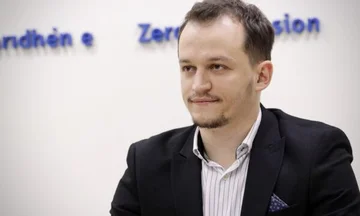
Valiant Ramosaj, is a newly graduated Kosovo youth at Pristina University, running “banking system”. He works at a bank, but his intentions for the future are other.
I've applied to Vienna University, economic IT and I've been accepted, and I'm waiting to get a visa to get out of here. I haven't found the prospect in Kosovo, I'm just a person who keeps looking, and I think that in Western Europe I can find myself. I have tried to find myself even in Kosovo, but not”.
Valiant says that during studies in Pristina, only theories are taught in universities, there is no kind of practice.
“Sheml, I'm an economist, the kind of credit we teach in universities has nothing to do with today's time, now it's different with technological developments”. I work at a bank in Pristina, but despite being an outstanding student, I think I've only been lucky that after my studies I've been employed by a bank, because I have many of my colleagues who have been distinguished students, but today they're unemployed. My intentions are to continue master's studies in Austria and remain there in the future. I don't think I'm going back to Kosovo. I speak German, I've been admitted to Vienna University, I think I can easily integrate, and I have no reason not to stay in Austria”.
The problem for Kosovo students continues to be getting a study visa. Despite many of these being accepted through various European Universities, visa delays have made it difficult for them. Valiant, 24.
A semester in Vienna has actually lost me because I don't have a visa yet because the demand for the term is very big, but the Austrian University has understood my position and given me a chance once I've settled in Vienna”.
Kosovo is the only country in Europe that does not enjoy freedom of free movement. Besfort Ahmeti, is another newly educated Kosovo youth, the IT engineer, but is unemployed. He says he has been looking for work in Kosovo for a year, but does not find.
So far I believe I applied for work in 30 different companies, but, at almost all costs, the work experience was. I certainly don't have experience, because I'm newly graduated and I need a job. And there was no acceptance. It's just in Kosovo you have to have a strong connection somewhere to get to work”.
The Besfort, in this disappointing situation for him, has found a scholarship, has decided to apply for continued master's studies outside Kosovo, with the aim of completing them, finding a job and not returning to Kosovo. He has been admitted to continuing postgraduate studies at a Vienna University.
I'm finishing my master's studies at Vienna University, so I think I'm more likely to get a good job in my profession. If I get a good job, I'm not going back to Kosovo. I've lived as a child for two and a half years in Germany during the war, have emotional connections for the German-speaking world, I think I'm easily integrated, and only if I can't, because otherwise I'm not going back to Kosovo”, says Besfort in full hope.
Besfort along with his parents and younger brother during the Kosovo war period has lived two years in Germany. “during 1998-99, together with the family, we have stayed in Germany and after the end of the war, Dad has voluntarily returned to Kosovo. But if you ask him now, Dad's sorry he's back. Then I was very young, Dad didn't ask me when he decided to return to Kosovo, but now that decisions about my future are made on my own, I've decided to prove my destiny in Austria, or why not Germany”.
But how do sociologists explain the phenomenon of leaving Kosovo youth, especially of educated quartads? Artan Muhharrier is a sociologist, professor at one of the Kosovo Universities.
“All Balkan countries have always faced migration trends, be they legal or illegal, but Kosovo in this midst is a specific case, for having the newest population in Europe and Kosovo institutions have no idea and have no capacity to deal with this potential of the new workforce. So there are no jobs, there are no foreign investments, and therefore there are no institutional answers to the demographic aspect of Kosovo”, says Artan Muhharrier.
In Kosovo every year about 30,000 young people enter the labour market, while 30 thousand new jobs are not being opened on the other side as well. That is why in Kosovo the unemployment rate rises, each year. For this reason, the opportunity to work legally in European countries is now huge, and this is a huge attraction for Kosovo youth. Kosovo institutions unfortunately remain only at the rhetorical level, there is no strategy that would be promising for youth that employment level will improve, so even legal migration is extremely tempting for youth”, Muharri says.
Unemployment in Kosovo has recently marked growth. In just nine months of this year's unemployment has increased by 2.9 percent, Kosovo's statistics agency notes. Kosovo's unemployment rate is estimated to be over 35 per cent. / DW/