11 minutes ago
Al Jazeera: 10 predictions for 2018

Periskopi(8 years ago)
(8 years ago)Francois begins not becoming president of France, and Theresa May called for early elections in Great Britain. Angela Merkel is evidently weaker, and Jeremy Corbyn was evidently more comfortable, wrote 12 months ago by “Alzeera” analyst Barnaby Philipps. And there never was any progress in [...]
10 predictions described below do not necessarily reflect Philip's political or personal preferences.
1) I spent most of my time reporting to Britain these days, so it hasn't happened yet. I believe that May will survive as prime minister until 2018, if only because its conservative Party cannot find someone else to gather and join in the fear of an election loss to the Corbin Labour Party, reports “Al Jazeera”, Periscope. In 2018, Britain and the European Union will talk about their future “relationship. Of course, this task would be easier if May gave us a clearer idea of what this relationship should look like. But the prime minister has decided, not carelessly, that constructive uncertainty about Brex is keeping her party together.
2) Perhaps the most predictable choice of the year will be held in Russia. Vladimir Putin's re-election is a formality, which means that by 2024, when his next mandate (and theoretically final) would be completed, it would be the dominant force in Russian politics, as president or prime minister, almost a quarter of a century. A high level of abstention would signal apathy and disappointment, but Putin remains popular and has a frightening propaganda machine on his side.
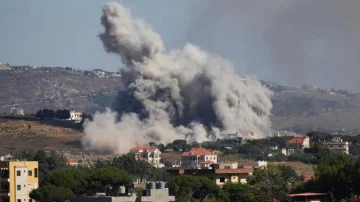
3) The dust that has been distributed in the Middle East is possible that the coming year will be more dangerous than usual. Saudi-Iranian tensions will escalate into a major regional war? I don't believe, but they will be ordinary people in Yemen, Syria and Lebanon who will pay a terrible price for their rivalry. What will be the impact of US President Donald Trump Jerusalem's recognition as the capital of Israel? Contrary to what the American president may think, this has made the prospect of a lasting solution between Israel and Palestinians more difficult to imagine. They expect much despair and frustration in Gaza and the occupied West of the West and the declarations of solidarity throughout the Islamic world, but little actual change for Palestinians.
4) The mid-term elections of the United States in 2018 will be a crucial test of Trump's authority. He has tried to impose any kind of legislative agenda and has argued with leaders of his republican party in Congress. However, we expect the Democrats to win both the House of Representatives and the Senate and take over at least one of them, even though they struggle to produce a convincing candidate to challenge Trump in the 2020 presidential elections.
5) Trump will also fight a number of foreign policy crises, including the growing war with North Korea nuclear weapons. Gradually, even if official politics does not accept so much, the United States will learn to live with the frightening reality of a possible North Korean nuclear attack by relying on its superior forces.
6) The decline of Robert Mugabes was one of the most dramatic, and it was a joyous event in 2017 for most Zimbabweans. Emmerson Mnagagaga will surely prove to be a better manager of Zimbabwe's economy than Mugabe, but there are many reasons to fear that he will be just as ruthless and undemocratic. His first cabinet selection gives little reason for joy. The big test will be the election in 2018. Can the opposition unite after a single candidate? Zimbabwes can at least count on international goodwill, while trying to rebuild their beautiful country.
7) Events in Zimbabwe and in Gambia earlier in the year were no doubt closely accompanied by other long - term African leaders with questionable democratic credentials. Yes, Paul Biya of Cameroon, where there are choices in 2018; Theodore Nguema of Equatorial Guinea; and Yovier Musveni of Uganda. The three will be prepared to use force to maintain their control in power. Another African country that will hold general elections will also be Angola. When Joao Laurenco was elected president in August 2017, the widespread suspicion was that he would be a puppet of his long predecessor, Jose Eduardo dos Santos. But the cleaning of the old guard at the end of 2017 suggested that Lourenco is his man, determined to lead Angola in a new direction.
8) One of the most interesting experiments in 2018 will be the ban on smartphones in elementary schools in France, which will begin in September. The children will complain, but President Emmanuel Macron will insist he is acting in their best interests. I predict that in the coming years, other countries will follow the example of France, as the most alarming evidence appears in relation to the effect on children's brains and the powers of concentration of many screens... (yes, I am a concerned parent).
9) The World Football Cup will be held in Russia. Instead, despite the absence of Italy and the potential of Brazil and Argentina, the tournament will be dominated by other traditional powers of Western Europe: Germany, France and Spain. Keepers, Germany, will be strong enough to keep their trophy.
10) Be prepared for a wide variety of media coverage of a marriage scheduled in May. Yeah, I'm talking about the marriage between Meghan and Harry./Periscopi/