26 minutes ago
Ratification of demarcation would unblock visa-free travel for Kosovo

Periskopi(9 years ago)
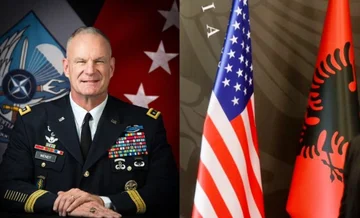
(9 years ago)US Deputy Assistant Secretary of State Hoyt Brian Yee called on the Kosovo government to ratify the border agreement with Montenegro and pave the way for the benefits citizens would have by moving visa-free to Europe. In an interview with our correspondent in Pristina, Leonat Shehu, he reiterated that Serbia [...]
Voice of America: Mr. Yee, let me ask you first, if I may, what is the purpose of your visit?
Hoyt Yee: The purpose of my coming to the region was to visit Pristina and Belgrade, to meet the leaders of both governments, meet parliament deputies, members of civil society and opposition representatives in both countries. It is part of normal trips to stay in the course of the situation in both countries and the region, and I had the opportunity to speak at the economic forum in Belgrade.
Voice of America: Kosovo's fragile government faces major challenges to tackling certain sensitive issues, including border demarcation with Montenegro. New Prime Minister Haradinaj has rejected the agreement in the past. Is there any way out of this situation without the approval of the agreement in parliament?
Hoyt Yee: First, I mean that Kosovo has a number of important opportunities it faces, which can be fulfilled next year, or perhaps even earlier. One of those possibilities is the border demarcation agreement already signed with Montenegro. I know from European Union colleagues that the border agreement, once ratified, will unblock Kosovo's path towards visa-free travel to the European Union. This, we believe, is extremely important for the people of Kosovo to be shown to be part of Europe, are not isolated, are welcome in Europe, and will give them lots of hopes, lots of courage in the government and abroad that the work they do, that the reforms they make, the difficult decisions they make, in fact, pay off. So we encourage the Kosovo government to seize this opportunity, where the last government was unable to exploit and ratify the agreement in parliament and benefit, with the consent of the European Union, from visa-free travel. We believe it is possible. We understand that agreements like this, issues involving borders, relations with neighbours, are sometimes complicated. But what we think is necessary is for the public to understand what they will achieve, benefits to it in everyday life by ratifying the agreement and then visa-free travel. It is also important for the leaders of this country to assume responsibility, to testify to the necessary leadership, to secure the necessary majority in parliament to ratify the agreement. So the combination of public consciousness, which is, of course, the responsibility of leaders, but also media, politicians, MPs, to make sure the public understands what they are talking about and then for leaders to assume responsibility as elected representatives of the people.
Voice of America: Mr. Yee, Kosovo has entered a new phase in its negotiations with Serbia, and Kosovo leaders have asked the United States to play a bigger role. So far, the EU has taken the lead role. Do we expect any change? Will the US be more engaged in dialogue?
Hoyt Yee: First of all, we are honoured to be partners of Kosovo, Serbia and other countries in this region. We believe it is in common interest, countries in the region and the United States. It is important for the United States that Europe is at peace, stable and progressive. When Europe is such, the United States is also. So our fates are connected. Our security is connected. Our economies are connected in many ways. So we feel that it is important for us to participate, to help work in Europe, including the Western Balkans. I am happy to say that the United States remains committed to helping Western Balkan countries deal with the issues they face, to achieve more progress in integration into European and Euro-Atlantic institutions, including the European Union, those countries that want to join NATO and can join NATO, we want to help them meet that goal. We already play a direct role in many initiatives in Europe. They are not always known because, according to the nature of diplomacy, it is not always advertised, but we have a strong enough role in negotiations between Serbia and Kosovo with the consent of the European Union, which naturally directs dialogue. We were there from the beginning. Our goal is to remain as long as the European Union wants us to be, and for now he wants it. And as long as both sides, Serbia and Kosovo want us to participate. We'll do our part. We think it is a partnership between the European Union, the United States, Kosovo and Serbia. The responsibility lies with all sides, and we will fulfill our obligations.
Voice of America: The United States urged Kosovo to refrain from creating its military without making constitutional changes previously. Critics say that while Serbia is being armed by Russia, Kosovo essentially, it is said that it cannot create an army, you should expect Belgrade's approval. How do you respond to this criticism?
Hoyt Yee: When you look at the overall mirror for Kosovo's security, from our point of view, there is a commitment from the international community, from NATO and NATO partner countries, to help preserve stability and security here in Kosovo. We have the NATO-led peacekeeping force KFOR, which is here for many years and intends to remain until no longer needed, which we hope will happen sooner than later. Certainly there has been progress and KFOR's presence has been reduced, but it still needs it. The first message I want to give is that the international community is clearly committed to Kosovo's security. Kosovo is not at risk of being conquered or attacked by any other country. Kosovo is not threatened by any major risk threatening national security. As a second message, I mean that we support Kosovo's right to have an army. Any sovereign country that has responsibility for national security, for border protection, for participation in international search for rescue operations or other initiatives, must have a form of military or armed force. But our strong faith and our message to the Kosovo government for a while is that there is a process for transforming the Security Force into the military. One process, which we have agreed with the government, which included the adoption of constitutional changes, to make it clear that institutionally, legally, this transformation has been made in such a way that it is completely transparent, that it has the support of all sides, and we think that the Kosovo government agrees, that the parties include all political parties in Kosovo, including the Serb minority parties. The cleanest and most appropriate way to legally transform the Security Force into the military is through constitutional changes, so that the whole world, partners and all of Kosovo's friends can see and even brave all parties that have an interest in security in Kosovo, participate, express their views and debate in parliament. And with the approval of the changes, it would be the best way to ensure the legality of the transformation process. So, let's say that we support the military, the transformation of the Security Force into the military doesn't mean we think it should happen arbitraryly, without the right steps ahead. We believe there must be constitutional changes. But, at the same time, we don't believe there should be a form of “tos” from a third party, from a third country or either side. It must be understood that our view is that if the government does everything possible to convince all sides that it must support this transformation and that, after well - intentioned and sustainable efforts, it is not possible, then other possibilities beyond constitutional changes must be considered. But, we have not yet arrived there, because we believe that the government should do everything that is necessary to prove that it has worked with all parties including the Serb minority, to convince it is also in their interest, that it is in the interest of the entire country and all sides for this transformation to occur.
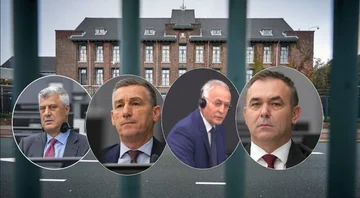
Voice of America: Mr. Yee, the Special Court for War Crimes in Kosovo, has already been created. What's going on with him? Are we expecting charges this year?
Hoyt Yee: We are strongly supportive of Kosovo's full integration into the international community and the closure of chapters of Kosovo's past that still remain open. We believe that special “rooms” are the way to closing this chapter, this painful chapter of Kosovo's past. It is absolutely necessary and we welcome those Kosovo leaders who were able to establish through law and constitutional changes these “dhoma special”>>> We strongly support their role. We and the EU, especially the EU, provide resources to help their work. We keep supporting them. It is not for America, or any European government to make decisions about whether there will be any charges this year, or whether there will be any charges. It is a matter of prosecutors in special rooms, for justice to make those decisions. What I can say is that we believe that it is important for all leaders in Kosovo to continue supporting the institution and its functioning, to have the environment needed for work, to have the necessary political support, for all Kosovo citizens to understand that this is something that everyone inside and outside Kosovo wants to succeed and end up as soon as possible.
Voice of America: Before you came to Pristina, you were in Belgrade where you claimed Serbia could not sit in two chairs, especially if those chairs are far away. Is that a sign of a change in U.S. foreign policy? Will more pressure be exerted on Serbia in the future for “selecting sides?
Hoyt Yee: What I've said, with my unperfect Serbian, quoting an old Serbian proverb, that you can't sit in two chairs at once. It is possible to sit in two chairs, but doing so at the same time is very difficult.
The question is that for a country like Serbia, or any other country intended to join the European Union, NATO, it is important that that country is fully committed to that goal. Not by word of mouth but by deed, by investing various sources, by investing time. Kosovo has similar decisions to make. Is Kosovo 100 per cent committed to normalising reports with Serbia, is 100 per cent committed to joining the EU? All governments face these choices.
My message to Serbia was that if it is working towards membership in the European Union, then it should focus on necessary reforms in order to achieve EU integration. It's very difficult, judged by the processes other countries have gone through that have managed to take such a step, such as Croatia or Slovenia. It is a very difficult, politically expensive process, expensive steps to take. And if there are countries, or parties, or organisations that oppose such a step, if there are countries that have a different vision of Serbia on its EU membership, then it is important that there is no strong connection with those countries.
It is important that there is no effort to satisfy both sides because there will be confusion in the opinion of where the country is heading, slowing down the process. Hence, if you try to sit on two chairs and please a country that opposes membership, while other countries are in its favour, it will be a poor approach. So, we do not oppose the ties Russia has with Serbia, of course Russia will always have ties with Serbia. Both countries have historical, cultural, religious, economic ties.
We're not against this. The United States also has ties to Russia, trade ties, political co-operation. Our view is that where our interests are similar to those of Russia, we will cooperate with Russia, such as the fight against terrorism, perhaps Syria, and there are other areas of co-operation. We also want Serbia to be able to co-operate with Russia, where interests are the same. But we also believe that where our interests are divided, where we aim to actually do different things between ourselves, where our visions differ a lot, then we, the United States, have to protect our interests, values and principles and those that are our allies.
It is in fact Serbia's election, Serbia is a sovereign state, and it makes its own decisions, but our recommendation for Serbia, as it is for Kosovo, is to make the two countries very clear what their priorities are, to make very clear what their policies are, so that those institutions which these two countries aim to join, whether NATO or the EU, understand Serbia's strategic elections, or even Kosovo's. There should be no dilemma, confusion, and this is the quickest way. You can sit on two chairs and reach your destination, but it will surely be a more awkward route.
Voice of America: In Albania, a former interior minister is accused of links to a drug trafficking group. What is your view of how his issue is being handled?
Hoyt Brian Yee: Let me say for Albania, that we are very satisfied with the progress Albania has achieved and are pleased that the United States has had the opportunity to contribute to reforms, including reforms in justice. Together with the European Union, the United States has helped Albania adopt legislation, adopt constitutional changes, with the aim of strengthening the justice system.
And this is about the fact that this is not only important for the rule of law in Albania and for the conditions in which its citizens live, but also for the fact that [reforms] are one of the key conditions for Albania's membership in the European Union. And in that very spirit, we have continued to support Albania's efforts to implement reforms in rule of law, and also in the fight against crime, against organised crime, against corruption... all of these serve to raise the living standard for the citizens of Albania, but also to help Albania progress towards membership in the European Union.
From here on, we are providing direct assistance, technical expertise, financial assistance, to building structures, to training judges and prosecutors, to help them do their job. Frankly, I cannot talk about individual cases, but we still believe in certain principles.
The first is that the law should be applicable to all equally, no one should be above the law, no one can enjoy immunity from law. We fully support prosecutors and judges, who pursue investigations, sentences, wherever they lead to high or following levels of administration. We do not believe individuals should be targeted for belonging to one political party or another, but the fundamental principle is that nobody should be above the law.
Second, we support the government, which sets the example. The government is one that has to provide an example and demonstrate before citizens that it is committed to fighting corruption, be it citizens, government officials, foreigners, Albanians... and that Albania is serious in its efforts to fight corruption.