3 minutes ago
Milosevic's Corps in Gazimestan, hero charged with war crimes

Periskopi(9 years ago)
(9 years ago)Naser Oric, a wartime Srebrenica defender who once worked as Slobodan Milosevic's bodyguard, is seen as a hero by many Bosniaks, but accused of war crimes by Serbs. Nine years after the war crimes sentence against Naser Oric was overturned by The Hague tribunal, the former Srebrenica commander is awaiting a [...]
Naser Oric, a wartime Srebrenica defender who once worked as Slobodan Milosevic's bodyguard, is seen as a hero by many Bosniaks, but accused of war crimes by Serbs.
Nine years after the war crimes sentence against Naser Oric was overturned by The Hague tribunal, the former Srebrenica commander is awaiting another verdict -- this time by the Bosnian state court in Sarajevo. The court will decide on Monday whether or not Oriqi is guilty of war crimes against three Serb prisoners of war killed in the villages of Zalazje, Kunjac and Lolici in Srebrenica and Bratunac in 1992.
Oric is seen as a hero by many Bosniaks for his role in protecting Srebrenica in the years prior to the 1995 massacres, but is despised by many Bosnian Serbs who accuse him of killing soldiers delivered into a Bosniak Army unit he headed. The former commander denies having committed these crimes.
I'm the one whose side I'm on. I love those who considered me an obstacle to the Drina River (at the Serbia-Bosnja border), which did not allow them to create a large Serbia”, Oric told BIRN. Before the war, when he was a policeman, he was an active participant in several important events as Yugoslavia's collapse approached. He even guarded Serbian leader Slobodan Milosevic when he gave a notorious speech at a rally in Kosovo in 1989, which is said to have helped fuel conflict in what was then Yugoslavia.
Oriq was also among the police forces who tried to disperse a major protest against Milosevic in Belgrade in March 1991, when street battles left two dead before the military was called to restore order. Oriqi was born in Potocari in the Srebrenica municipality, where the Memorial of genocide is now located in March 1967. After finishing the school, he enrolled at the Belgrade University Faculty of Metallurgy in Bor in Serbia, but left to begin military service with the Yugoslav People's Army.
When he completed his military service, he took a police course in the municipality of Belgrade in Zemun and began serving as a trained policeman in the Serbian capital. As part of Serbia's Ministry of Interior Special Duties Unit, he was sent to Kosovo from time to time and worked on how he led Slobodan Milosevic when he was asked to do so. He preserved Milosevic during the celebration of the 600th anniversary of Kosovo Battle in Gazimestan in Fushe Kosovo in June 1989, when the Serbian president delivered a nationalist speech to hundreds of thousands of Serbs.
In the speech, Milosevic called for unity among Serbs in what he said were the battles to come. “These are not armed battles, even though such things cannot yet be excluded”, he warned. Oric said he was the only Bosnian involved in the security of the event. By that time, I had no idea where all the things that happened were going to take you, he recalls.
I did my job at a high professional level. When I realized it was a big rally for Serbs in which they called for war, it became clear to me what would happen”, he added. In February 1989, he was also involved in the evacuation of Kosovo Albanian miners who were on strike and who were placed underground in the town of Trepca in what was then Tito's Mitrovica, amid strikes against removing Kosovo's autonomy from the Milosevic regime.
“Minaveries were shut down in 2,000 meters below ground level and threatened with explosives detonated. Thirteen of us went down to the pit and saved all the miners. On this occasion, I took a pistol with Slobodan Milosevic's inscription”, recalls Oric. His role as police meant he was also involved in the arrest of Serbian Renovated Movement opposition leader Vuk Draskovic, during the anti-Milosqi demonstration in Belgrade, which ended violently on 9 March 1991.
Oric says he didn't speak to Milosevic when he was guarding it. But years later, when the two men were on trial at the International Criminal Tribunal for the former Yugoslavia in The Hague, they met and talked. Oric said Milosevic was brought in “as Mr.”, wanting to show that the crimes he was accused of were related to. The former Serbian president even gave him gifts. I liked watching cowboy movies. Milosevic often gave me his DVDs with these” films, said Oric.
After Belgrade, Oric returned to his Bosniak hometown and began working with local police. In mid-April 1992, a territorial defence force was established in Srebrenica, and Oric became its commander. Bosnian Serb forces fired the city in April and May 1992, but Oric and his friends recaptured it on May 8th and 9th. He continued to lead the city's defense until 1995. “It made a maximum contribution to organising and implementing resistance. I think Nasser is a symbol of Bosniaks who love this country”, former colleague with police Zulfo Salikovic said. However, Oric was removed from command on May 29, 1995.
I got fired. In fact, Rasim Deliq of the Bosniak Army Main Staff relieved me of my duty. I was left unmarked by the army, but he never explained to me why this decision was made», Oric said. After being fired, Oric went to Tuzla, where he was on 11 July 1995, when the Bosnian Serb Army invaded Srebrenica and began the massacre of about 8,000 Bosniaks in the days that followed. After learning what was happening, Oriqi gathered a group of about 30 volunteers in an effort to rescue some of the Bosniaks who fled Srebrenica. After the war, he continued to live in Tuzla, where he led a gym until he was indicted by The Hague tribunal and arrested in April 2003.
The Hague prosecution charged him with criminal responsibility for the murder of seven Serbs held at the 1992-1993 police station in Srebrenica and the cruel treatment of 11 others, as well as for «unreasonable destruction ... not justified by the military imperative” of Serb homes during the village raids. Oric says that while he was on trial, he often associated with Serb defendants in the UN detention unit. My second home was the detention unit. Once I realized that, it was easier for me to face the” court procedures, he said. Serbia's constantly accused” I played football with former Yugoslav People's Army officer Veselin Sljivancanin. He's a confirmed communist. He arrived in prison as such and has not changed since then. He went on to say that he regretted”, he added.
Oric said he believes Bosnian Serb Army officer Momir Nikolic was the only true penitent of the defendants in The Hague, because he acknowledged that genocide was committed in Srebrenica. He didn't do that to put the prison sentence” down, Oric explained. Oric was sentenced in June 2006 for failing to prevent the murder and inhuman treatment of Serb prisoners and sentenced to two years in prison, but was released shortly after he had already carried out that sentence. The UN tribunal's appeals chamber later overturned the verdict and cleared it of charges in July 2008, and Oric returned to Bosnia.
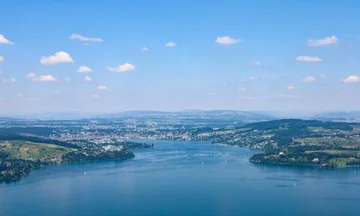
Oric says he has visited his hometown only once since the war, to attend a funeral, and has never entered his old home. In June 2015, he travelled to Switzerland along with then Srebrenica Mayor Qamil Durakoviq, and the deputy chairman of the Srebrenica Municipal Assembly, Hamdija Fejzic, to attend a memorial of the genocide. But he was arrested in Bern based on an arrest warrant issued by Serbia, which claims he has committed war crimes. The arrest sparked protests by his supporters and threatened to undermine the Srebrenica memorial that year.
But the Swiss authorities decided to extradite him to Sarajevo and not to Belgrade, because he was also being investigated for war crimes in his country a decision that caused anger in Serbia. A few months later, he was charged with war crimes by the Bosnian prosecution and brought to trial in January 2016. The trial began despite objections from the Oric defence, which claimed he was tried and acquitted of the same crimes charges by the UN tribunal in The Hague. But the UN tribunal said the indictment filed in Bosnia and Herzegovina was very different from the charges he was acquitted of. As the decision approached, Oric said that everything that happened to him over the years has been meant to happen. He was a better fighter than me. Unfortunately, many of them died”, he said. ” Judicial processes are proof of what Bosnians experienced during the war, and this is destined to prove at my trial”, he added.