7 minutes ago
Iran's threat goes beyond the Strait of Hormuz
Periskopi(17 hours ago)
(17 hours ago)Oil and gas producers in the Gulf region are aiming for alternatives to the Strait of Hormuz, while sea traffic is again facing attacks. Is Iran focusing on the pipelines as an alternative?
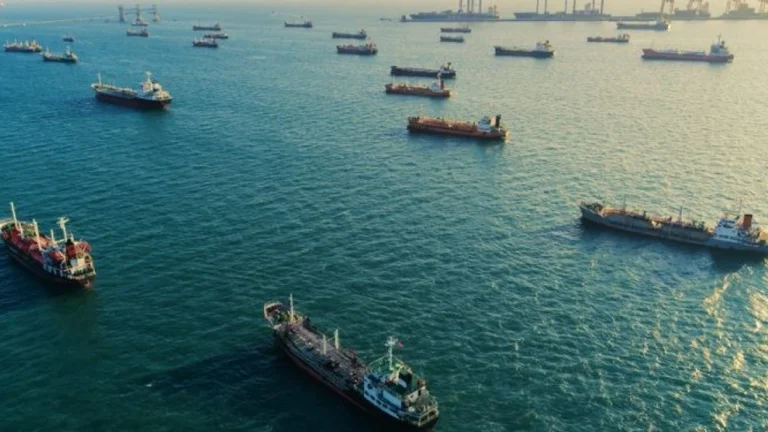
Oil and gas exports from the Persian Gulf are facing new disruptions as clashes between the US and Iran intensify. For both countries, the control of Hormuz Strait is of strategic importance.
Over the past few months, Iran has shown that it can control or at least hinder the functioning of Ngushtica, says Guntram Wolff, senior researcher at the Bruegel Research Institute and economics professor at Brussels Free University.
Several months of bombing have not removed Iran's ability to control Hormuz Strait”, Wolff said, underlining that the US still faces the challenge of gaining supremacy.
This week, traffic in the straits almost stopped again after Iran attacked tankers and launched fears and rockets at military facilities in Bahrain, Kuwait and Jordan.
The US carried out other attacks on Iran and resumed the Iranian ports' naval blockade. It also cancelled an exception to sanctions allowing Iran to sell its own oil openly, providing much-needed revenue for the country's economy.
Oil and gas bubbles via Hormuz prior to the war
Before the start of the war on 28 February, Hormuz Strait was an international water route without tariffs and served as a corridor for about 20% of the world's liquid natural gas (LNG), according to the International Energy Agency.
And about 20% of the world's oil was transported from the Persian Gulf through this road to the Arabian Sea and beyond. Most of these exports ended in Asia.
In recent years, this has represented an average of about 20 million barrels of oil per day, according to the American Energy Information Administration (EIA).
The circulation through Hormuz Strait dropped to about 14.6 million barrels a day in the first quarter of the year and has suffered significant decline since the conflict escalated.
A preliminary ceasefire agreement between the US and Iran, signed on 17 June, brought temporary relief for shipping, but is now out of force. Over the past few weeks, US forces have hit hundreds of Iranian military targets.
Analysts warn that further attacks on Iran could lead to countering oil and gas infrastructure in the Persian Gulf, including refinerys, ports and pipelines. This would make the war costly for the entire region and cause oil shortages in global markets.
The limited progress achieved after the June ceasefire has now been practically disbanded”, the Greek sea risk management company MARISKS warned following the escalation of the situation. “The possibility for a further escalation remains very high”.
Importance of Oil and Gas pipelines
Early in the war, it was reported that Iran was asking for $2m (about $1.7m) for each ship crossing this waterway. Recently, Iranian authorities have demanded that ships use a northern route through Iranian waters.
At the same time, the American Navy has escorted ships across a southern corridor off the coast of Oman across the opposite side of the strait.
Currently, Iran, Iraq, Kuwait, Qatar and Bahrain depend on Hormuz Strait to export most of their oil.
Although shipping remains the freest way to move oil, ships are being found at the centre of a geopolitical crash on the control of Ngushtica, and oil and gas producers are seeking alternatives.
Several countries, such as Saudi Arabia with the East-West pipeline (Petroline) and the United Arab Emirates with Abu Dhababi's Unworked Oil Pipeline, are already in charge of export routes that avoid the Hormuz Strait. However, according to the International Energy Agency, these pipelines can fully carry only 8.8 million barrels of oil per day.
New Roads, New Dangers for Gulf Exporters
Since existing pipelines cannot replace the normal volumes passing through Hormuz, expanding their capacities is one of the few remaining options. However, such projects require years and billions of dollars in investment.
Moreover, if these roads lead to the Red Sea, they too may become uncertain as the conflict expands beyond Hormuz.
The East-West of Saudi Arabia pipeline connects Abqai on the east coast of the Gulf to the port of Yanbu on the Red Sea.
But to reach the Arabian Sea and Asian markets, the tankers leaving Yanbu must pass through the Bab el-Mandeb Strait, another strategic and narrow spot, where Iran-backed Yemeni rebels Huth could conduct attacks.
This may not only create problems for these ships but also open a second battlefront and force other ships heading toward the Suez Canal to divert the road around the southern tip of Africa.
However, the United Arab Emirates, which can avoid both the Strait of Hormuz and the Red Sea, are investing even more in alternatives. According to some reports, they aim to expand the existing infrastructure and build a new port and container terminal on their eastern coast.
Several other pipelines in Iraq, Jordan, Kuwait and Turkey are in operation or developing, but their capacity remains limited and cannot compensate for a major traffic break in the Hormuz Strait.
For Iran, it seems to be everything or nothing
Referring to Saudi Arabia's East-West pipeline and Abu Dhabi's Unworked Oil Pipeline, M Company ARISCS warned that Iran's direct threat to alternative oil export infrastructure in the Persian Gulf could be “probably the most significant development” in the current situation, DW reports, broadcast Periscope.
Iran's “message is equally clear: either all regional energy producers can export, or no one will export. ”
Regardless of what may happen further, Iran has shown it is willing to increase the economic cost of any attack on its country by threatening global energy supplies through the deadlock of strategic waterways or by hitting oil and gas infrastructure in other Gulf countries as a measure of revenge. /Periscope/