7 minutes ago
Hykmete Bajrami: BEC report shows slow growth economy and rising inflation
Periskopi(an hour ago)
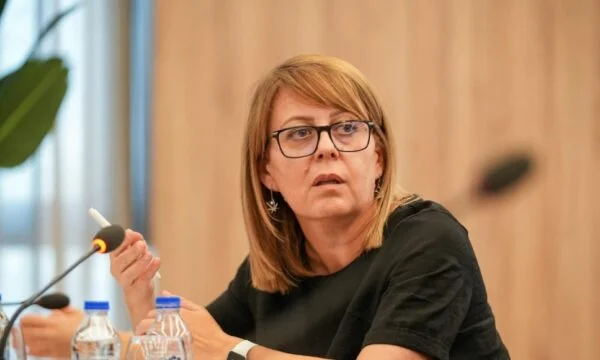
(an hour ago)Former Finance Minister Hykmete Bajrami has reacted after the publication of the Kosovo Central Bank's 2025 Annual Report, saying the report's data testifies that citizens and businesses are facing continued price hikes as the economy grows at a slow pace.
According to her, the report shows that Kosovo's economy has grown by only 3.6 percent during 2025, while inflation has reached 3.9 percent, mainly as a result of food and energy expensive.
Bajrami stressed that even more disturbing are projections for 2026, in which economic growth is expected to slow to 3.5 percent while inflation reaches 6.7 percent.
And despite the very careful language of the report and moderate interpretations these are figures that can't possibly be disguised. This is the clearest mirror of an economy that is being maintained by consumption, import and remittances that suffer from high inflation, insufficient economic growth, growing trade deficit, record import and declining export” Bajrami declares.
Full Posting:
And it clearly says the annual BQC Report for 2025, what we're saying, what citizens and businesses are feeling every day: prices are growing a lot, the economy is growing a little, while the dependence on import is growing year-on-year.
According to the CEC in 2025, Kosovo's economy has grown only 3.6%, while inflation has reached 3.9%, mainly because of rising food and energy prices.
But even more disturbing is the forecast for 2026, where, according to the CEC, economic growth is expected to be 3.5%, so even lower than in 2025, while inflation is expected to amount to 6.7%.
In other words: The economy is expected to grow more slowly, prices much faster add to the fact that Kosovo is importing too much and is exporting very little.
In 2025, imports of goods reached about 7 billion euros, while exports totaled only about 869m euros. So we imported about 8 times more than we exported.
The trade deficit has amounted to around 6.1 billion euros, with 12.5% growth compared to the previous year, the highest in post-war history, while exports have declined slightly to 0.2%, and import has increased by 10.6%.
Despite the overly careful language of the report and moderate interpretations, these are numbers that cannot be disguised. This is the clearest mirror of an economy being maintained by consumption, import and remittances that suffer from high inflation, insufficient economic growth, increased trade deficit, record import and declining export.
According to the CEC, the price of electricity has increased by 11.5%, and when energy increases, the cost increases for businesses increases, the price of goods rises, and in the end it pays citizens, and that is a very high cost than the 100 Euros the Government distributes in time of elections.
Kosovo needs economic policy that turns its attention to local production, export, energy costs reduction for businesses and job creation, because an economy that imports 7 billion euros and exports less than 1 billion euros is not a stable economy. /Periscope/