9 minutes ago
Banjska without epilogue: Pressure Increases, Opposition in Serbia Warns Effects
Periskopi(an hour ago)
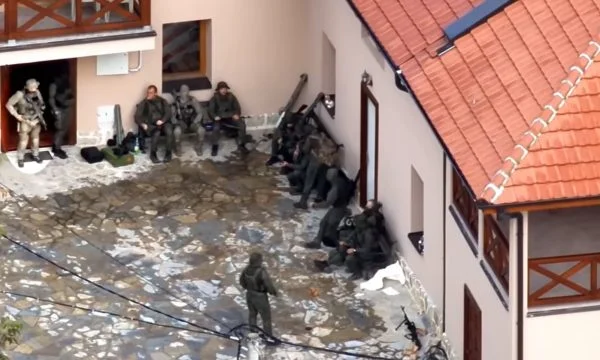
(an hour ago)Nearly three years after the armed attack on Banjska, Milan Radojic has yet to face a trial. The European Union and the United States of America continue to seek the determination of responsibility, while the opposition in Serbia warns that the Banjska case is turning into issues of Serbia's rule of law and European integration.
At the centre of the spotlight continues to be Milan Radociq, former vice president of the Serbian List, who has publicly claimed responsibility for organising the group that participated in the armed attack on Kosovo Police in Banjska. To him, at the Supreme Public Prosecution in Belgrade, procedure is under way, but without a judicial epilogue. Meanwhile, red arrest by Interpol has been issued against him, while Serbia's president, Aleksandar Vuciq, has declared that Radojic is not prosecuted for crime, but “because of Kosovo”.
At the time of the attack, Radoic was deputy chairman of the Serbian List, the largest party of Kosovo Serbs, which is supported by official Belgrade. After the events in Banjska, he resigned from this position.
Political Burdens
Opposition MP from the People's Movement of Serbia, Aleksandar Ivanovic, estimates that Banjska is no longer just a matter of relations between Belgrade and Pristina, but one of the key open issues in Serbia's reports with the European Union.
The Albanian “Pala in Kosovo as a priority issue presents Banjska and the extradition of all those who have participated in that attack and are located in Serbia”, Ivanovic has said.
He warns that the case presents a serious political problem for power in Belgrade.
“Banjska is currently a major obstacle to power in Belgrade. It is not easy to prosecute or extradite these people because they can become protected witnesses and speak not only about Banjska but also about many other cases. Therefore, Banjska is not only an obstacle to negotiations with the European Union, but also a huge burden to the citizens of Serbia”, Ivanovic has declared.
The European Parliament, in the draft report for Serbia, reiterates the expectation that Belgrade will fully co-operate with Kosovo, so that those responsible for the attack will be brought to justice, expressing regret that Serbia has so far not prosecuted the responsibilities, especially Milan Radojici.
Businesses of Indictees, Law Rule Issue
Banjska's case, however, does not end with Milan Radociqic. As the trial process is under way in Kosovo against more than 40 accused of armed assault, some of the suspects in Serbia continue their business activities.
Numerous media investigations and civil society organisations show that businessmen involved in the Kosovo indictment, including Radule Stevic, run companies operating in Serbia, participate in public tenders and possess assets of considerable value. For Radule Stevijqi, the opinion still has no answer whether the investigation is under way in Serbia or whether it is located on Serbian territory, as police and the High Public Prosecutor in Belgrade have not answered media questions.
Meanwhile, Stevic and Radoicsic are under sanctions from the United States due to allegations of links to organised crime and corruption. The American blacklist also includes controvers businessman from northern Kosovo Zvonko Veselinovic, a close associate of Radojici.
Opposition: Banjska is a test of rule of law
Free Citizens' Movement MP Vladimir Pajic considers that the very lack of responsible prosecution raises the issue of rule of law and the responsibility of state institutions.
The citizenship today is in trouble, because persons involved in the Banjska case are located in Serbia, here they are doing business and working. Hence, in our opinion, he is prevented from facing them. For years we have been attending the activity of Milan Radojici, and the fact is that he is absolutely protected in Serbia. It is no surprise, then, that this case is not a judicial epilogue. We consider Aleksandar Vuciq and the Serbian Progressive Party do not want this process to end and take responsibility for what happened in Banjska because they refuse to face responsibilities”, Pajic has declared.
Belgrade refuses extradition of indictees to Kosovo, arguing the procedures will develop local justice. Meanwhile, the European Union continues to consider Banjska's case as one of the key issues in relations with Serbia, while NATO, Quinti's countries and other international partners have repeatedly sought the full dawn of responsibility for the attack.
Pajik estimates the case has serious implications on foreign policy.
“The events in Banjska have seriously weakened Serbia's negotiating position and caused harm to the Serb community in Kosovo. Since there is no clear judicial epilogue and responsibility for what happened, this case will remain a major political burden for Serbia in relations with the European Union and international partners”, he has said.
Nearly three years after the armed attack, Banjska remains one of the main open issues in relations between Belgrade and Pristina, but also a test of Serbia's readiness to respond to international partners' demands in the area of rule of law.
While the European Union and the United States seek concrete results in the prosecution of the responsible, judicial epilogue in Serbia is still not on the horizon. / RTK