a few seconds ago
Beyond winners and losers, what are citizens saying to politics?
Periskopi(16 days ago)
(16 days ago)In the June 7th election, the number of voters on the Voters' List was 1,959,962, while the number of citizens who voted was 722,842. This translates into a turnout of only 36.88%, compared to 44.99% as much as turnout in the December 28th 2025 elections.
So we have a visible drop in election appearance and a clear message, a large part of citizens have chosen not to participate in the election process.
This data is from regular polling and does not include conditional votes, voting of persons with special needs and voting outside Kosovo.
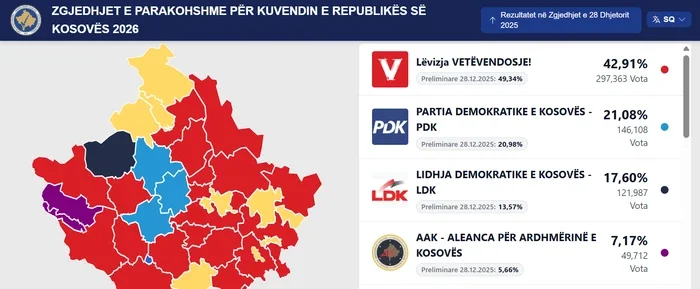
How did parties turn up according to CEC data?
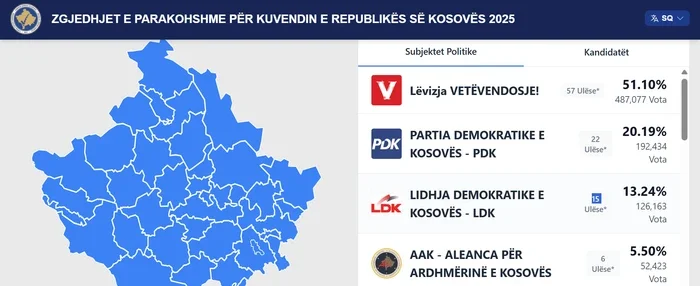
LVV
2026: 42.91%
2025: 51.10%
PDK
2026: 21.08%
2025: 20.19 %
LDK
2026: 17.60%
2025: 13.24%
AAK
2026: 7.17%
2025: 5.50%
What do these figures show?
According to current results, the LVV from 57 seats dropped to 48 seats; PDK out of 22 seats goes to 24 seats; The LDK out of 15 seats goes to 20 seats, while the AAK from 6 seats goes to 8 seats.
With diaspora and conditional vote counting, this ranking could undergo changes to the final outcome. However, it is now clear that forming the next government and resolving the president's issue will require co-operation, dialogue and compromise among political parties.
On the other hand, the biggest winners of these elections are the citizens of Kosovo, the Central Election Commission, the Kosovo Police, the Prosecutor's and other institutions involved in organising the process, which was conducted democraticly and without serious incidents, writes Telegrafi, broadcasts Periscope.
Hence, the question to be settled is not just who won and who lost, but why did so many citizens decide not to vote?
Are we tired of frequent elections, lack of confidence in politics, or the lack of political bids that manage to convince citizens that their vote can bring about change?