a few seconds ago
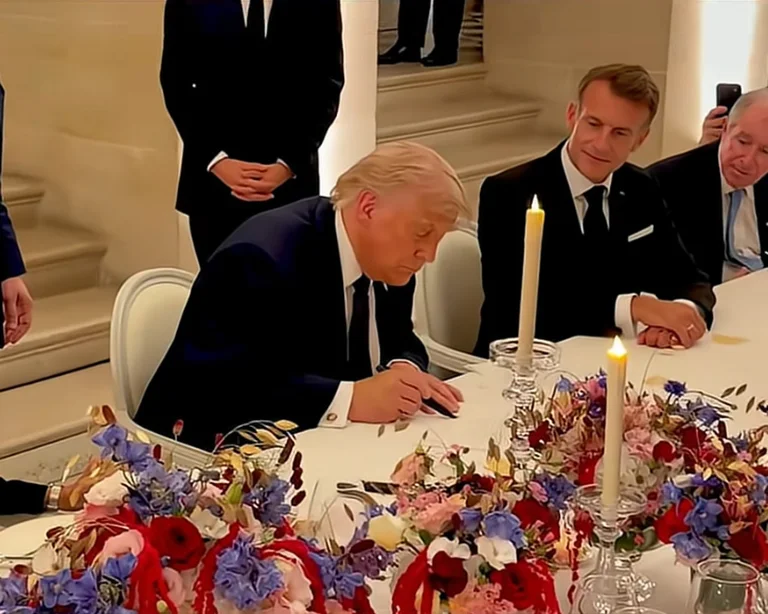
Trump signed the peace plan with Iran, claiming the deal prevents “global pressure”
Periskopi(a day ago)
(a day ago)Donald Trump has signed an agreement with 14 points with Iran, claiming that it brought a big <x0fit>” to the United States even though it made significant political and financial concessions to Iran to reopen the Strait of Hormuz and prevent a <x2-depression world”.
In outstanding comments Wednesday, Donald Trump passed through Iran's threat with a new wave of attacks on the suggestion that the country had fundamental rights to enrich uranium for civilian use, that it would not pressure Tehran to abandon its ballistic missile programme and that the US “they should return” billions of dollars in Iranian frozen assets, writes The Guardian.
These remarks, as well as the complete text of the agreement, which was welcomed by Hezbollah's chief, Naim Qassem, as a “Great Victory” is likely to stir up anger in Israel and among hardliners in the Republican party, who had asked Trump not to make a deal with Tehran, broadcast the signal.
Iran's president, Massoud Pezkian, signed the agreement Wednesday from Tehran. US Vice President JD Vance is also expected to sign the agreement at a more formal ceremony in Geneva on Friday.
Iran's chief negotiator, Mohammad Bagher Ghalibach, said: “The deal is a testimony to the US failure. People will see and judge”.
Defending the deal, Trump said no American president had ever been as tough on Iran as he was, and “There's nothing as smart as the market and the market loves it.“.
Trump said “The alternative would be global depression”, arguing that if he hadn't reached an agreement, “Hormuz's strait would never have been opened. They do not like billions of dollars ' ships floating up and down the strait when their missiles fly over their heads and there are mines everywhere”.
Senior administration officials said the agreement would help prevent Iran from being equipped with nuclear weapons, referring to an agreement to discuss the reduction of its 440kg of highly enriched uranium reserves, which could be further enriched to use in a nuclear weapon. Trump has said it was open to thin reserves within Iran under the supervision of the International Atomic Energy Agency.
The Trump administration had delayed publishing the complete text of the memorandum of understanding, which is essentially a 60-day ceasefire agreement with the aim of holding more comprehensive talks on nuclear and permanent weapons for peace with Iran. The 14-point plan was dictated to reporters during a preliminary briefing by senior administration officials, while Trump spoke at the end of the G7.
The deal would provide Iran with significant financial incentives, including the immediate removal of the US naval blockade to Iranian ports and the release of exemptions for Iranian crude oil to be transported abroad, as well as the possible removal of all international sanctions against Iran, the unblocking of billions of dollars in Iranian assets and plans to develop a $300 billion-pound reconstruction fund for Iran, financed by regional partners in the Persian Gulf.
Trump angrily dismissed suggestions that the US would contribute to the $300 billion fund, saying instead that payments from Gulf states would likely be conditional on Iran's good behaviour.
“Anyone you want can invest. What do you expect me to say: No one is allowed to invest? But we are not investing; we are not investing even 10 cents”, He said.
The ceasefire agreement included Lebanon, a key Iranian requirement that would prevent Israel from conducting military operations in the country, according to a senior administration official. It also included a clause providing “Territorial IntegrityLebanon's”, although an administration official, when questioned, did not confirm that this meant that Israel would be forced to withdraw from the section of the country that occupied it as a “buffer zone” against Hezbollah.
In exchange, Iran would agree to restrain its foreign allies, including Hezbollah in Lebanon, and “reaffirms that it will not provide or develop nuclear weapons“.
The deal would also allow free ship passage for 60 days through the Strait of Hormuz, but on Wednesday Ghalibaf said Iran would set tariffs for ships travelling via water route at the end of the period specified in the memorandum of understanding.
In an interview aired on state television, Ghallibahf said The Hormuz shell will not return to prewar terms” Adding: “Iran has the right to sovereignty over the Strait of Hormuz and of course we will receive a fee for” services.
Suzanne Maloney, deputy head of foreign policy programme at the Brookings Institute, said: “In reality, the level of expertise and details required to solve even the nuclear part of this issue seem insurmountable to an administration that is flying very fast in these negotiations”.
So many things are in advance loaded for Iranians... they will be able to export oil without the sanctions regime, which is almost surreal at this point. They're going to make a lot of money very quickly”.
Trump backed a joint statement by G7 leaders who welcomed the agreement, but said a follow-up agreement was needed to curb Iran's ballistic missile programme, an issue not addressed directly in the memorandum of understanding.
They must have some because other people have some. You must have some”, Trump said.
What am I gonna do? I will allow Saudi Arabia to have missiles, but they cannot have” he added, referring to earlier discussions with consultants on Iran's missile arsenal.
France's president, Emmanuel Macro, called it a “Very good deal”,adding that US allies in G7 support him Because it is an agreement that ends a situation of great instability that had terrible consequences for our economies”.
But the G7 proposal for further talks with European leaders about Iran's ballistic missiles and support for the middle forces will surely be rejected by Iran. Tehran has negotiated exclusively with the US and considers Europe largely insignificant.
Iran will likely also reject France and Britain's plan for a task force to escort ships through the strait, a proposal based on the G7 leaders' statement.
G7 leaders said the agreement offered “a historic opportunity to prevent Iran from being equipped with any nuclear weapons and facing threats related to its regional and ballistic activities. We support and are willing to contribute to its implementation”.
Trump also issued a conciliatory note for the return of frozen assets to Iran, a condition of the Joint General Administration Action Plan, which he had attacked in 2015.
“We have received much of their money”, Trump told reporters. “It's not our money, it's their money, and we freeze it at a certain moment. I think we'll have to give it back, you know, if we didn't bring it back, no one would ever invest in dollars again.”.
Trump claimed that the price of an oil barrel had fallen to 72 dollars of crude oil Brant fell below $80 on Tuesday and would soon fall below the pre-war level.