4 hours ago
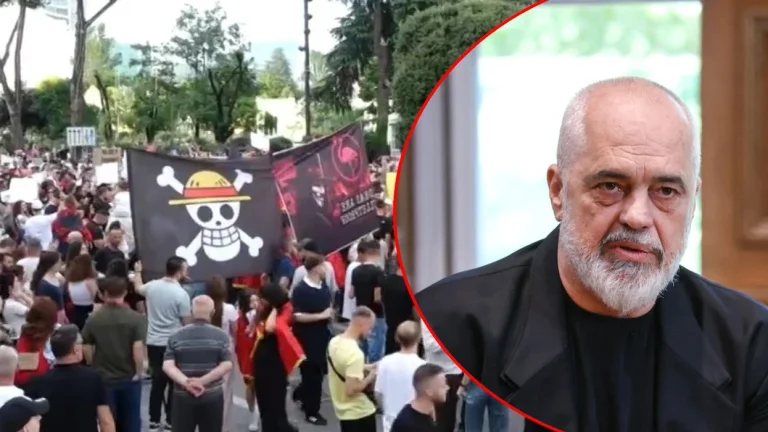
Rama speaks on CNN: How can a local protest be transformed into an international spectacle?
Periskopi(6 hours ago)
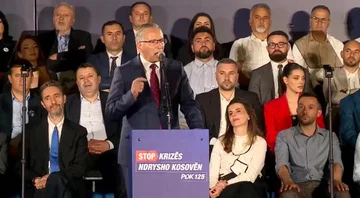
(6 hours ago)Albania's Prime Minister Edi Rama has reacted this evening to the “X” platform, stating that anti-investment protests in Zvrinec have had about 2,000 participants, citing this as the lowest figure so far. Rama added that even at its peak, the protest did not exceed 8,000 participants.
In a message directed CNN and other international media that have reflected the protest, Rama raised questions about how the protest was presented in the media and social networks,
The prime minister writes that often the perception created does not match reality on the ground.
According to Rama, there is currently no final project, no construction permits and no work in the area mentioned, but only a vision and plan for developing high-level tourism and improving the environment.
Rama stressed that any ideas would be subject to public review, assessments and transparent debate.
The prime minister warned of the risk of deinformation and manipulation in social networks, citing the spread of anonymous accounts and manipulated content that, according to him, affect the amplification of public debate and the creation of confusion.
Rama's reaction:
For @ CNN International and for all the endless media, large and small, along with all the well-earned content producers of Facebook, X, Instagram, TikTok and every other platform that now shapes global conversation, I would very much like to pass the following post:
As we speak, today's protest has attracted approximately 2,000 participants. It is the lowest turnout yet, but even at its peak, turnout never exceeded 8,000 people. So how can what most of the world has seen during the last days seem so great, so dramatic, so overwhelming? At one point, when the digital hysteria designed for these days has passed and the emotions have cooled, the democratic world should take a closer look at how the gap between reality and its representation got so big.
Not only as a matter of this particular case but as a symptom of something far greater. How can a small country become global news for reasons so disconnected from reality on the ground? How can a local protest involving several thousand people be transformed into an international spectacle? How can facts, narrators, true decisions, and speculations be made before fundamental facts were determined? And perhaps more importantly, what does this say about our information ecosystem when perception can travel around the world faster than reality itself?
Because the reality is that there is still no project. Still no building permit. Still no construction. There is still no final project. There is only one vision and one plan: to transform Albania into the most attractive destination of high-level tourism in this part of the world, while simultaneously creating a positive environmental development that, according to the current vision, would ultimately result in approximately 25% more trees and green spaces than there are today, along with measurable improvements in numerous indicators of biodiversity.
Ambition is not simply to build. The ambition is to show that development and environmental improvement can go hand in hand. That is why some of the world's leading experts in ecology, biodiversity, landscape architecture, environmental engineering and sustainable tourism are working on these concepts and parameters. Whether they succeed or fail, it is an issue for future assessment, science, public review and transparent debate.
But presenting it as an environmental catastrophe of something that still does not exist, is not yet designed, has not yet been allowed and whose stated objective is actually to produce positive environmental results, is not a serious contribution to public discussion. Yet, this simple reality produced a digital hysteria hurricane, apocalypse titles, fabricated anger, and comprehensive conclusions presented as defined facts. On the way came deepfaces, manipulated images, fabricated claims, coordinated amplification, anonymous networks and online behavior that carry many of the characteristics of the hybrid war of information that increasingly shape public debate in all democratic societies.
Even more surprising is that social media platforms registered an explosion in activity around the subject, with Albanian-language engagement increasing several times within just a few days. A considerable part of this sudden increase seems to have been prompted, not by an organic expansion of public participation, but by the rapid spread of newly created profiles, anonymous accounts and pages with little or no identifiable history, raising legitimate questions about artificial amplification and digital moment production.
But perhaps the most revealing detail is the simplest. An extraordinary number of reports neither differentiate between an island and a private plot of land on the continent. The protest itself involves the latter. Not the first one. In fact, there is currently no significant public controversy in Albania over the island itself. However, countless articles, posts, and comments unite both in one story, creating confusion where accuracy and emotion should prevail. The dispute is legitimate. The criticism is legitimate.
Questions are legitimate. Environmental concerns are legitimate. Public consideration is legitimate. What is not legitimate is replacing facts with assumptions, certain assumptions and security with collective anger. What is not legitimate is dealing with accusations as facts, speculation as evidence, and fear as conclusions. And when highly respected media stop making fundamental differences, when they no longer share what exists from what doesn't exist, what is proposed by what is approved, what is disputed by what is simply imagined, they do not disinform simply. They contribute to the erosion of reality itself. And that should disturb any democracy.
Because that is how trust in institutions gradually breaks down. So trust in mainstream politics erodes. Thus, the grounds are prepared for demagogues, charlatans, and professional anger merchants. So calls for the destruction of political opponents normal. That's how the screams of “travers”, <x2-enemy enemies of the people” and even the requests for death and revenge are emplified and legitimized. That's how old fanatic ghosts return dressed in new digital clothing. Here's how resuscitation itself for the era of algorithms. Albania will survive this.
We will continue our journey. We will continue to transform our country into an excellent destination for high-level tourism, a stronger democracy and a proud member of the European family. But this story should matter beyond Albania. Because others can see in it a spark of what is coming. We live in a time when democratic societies are investing billions to protect themselves from long-range missiles, fears and external threats.
And that's smart. But protecting our countries from rockets will make very little sense if we fail to protect the souls of our countries and our young minds from industrial manipulation, hatred and lies that come from a far shorter distance every day than any rocket can travel: The distance between the screen of an intelligent telephone and the human mind. Because if we lose that battle, we can eventually find that we have protected our land borders, allowing the foundations of our democratic societies to collapse from within. And then there may be very little worth protecting.