25 minutes ago
Rama compares Zrvenec to Costa Navarino: Albania may have Mediterranean's most attractive destination
Periskopi(24 days ago)
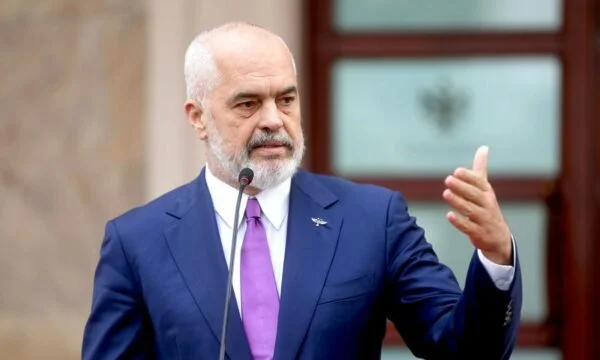
(24 days ago)Albania's prime minister, Edi Rama, has brought to attention the example of the Costa Navarino tourist project, naming it as evidence that major development projects can transform a territory without damaging the balance between nature and the community.
In a long post, Rama recalled that prior to the construction of Costa Navarino there were warnings of environmental disaster, destruction of biodiversity and concrete of the area, but according to him, the reality proved otherwise.
He stressed that today Costa Navarino is one of the most prestigious tourist destinations in Europe, generating billions of euros for the economy, thousands of jobs and development for local businesses.
Linking this example to Albania, he said the country could have its “Csta Navron” in Zvrinec.
Full Posting:
Good morning and with this true story from our southern neighbors, I wish you a good day
Costa Navarino may otherwise be called the common history of disaster publishers, those who do not dream are prejudiced against the dreams of others; they are not judging the projects of others; they do not build up those who build up.
The greater their dream of prejudice, the more ambitious their project, the greater the disaster warned, the more construction the more terrifying the slander of those who build.
It happened in Greece. Costa Navarino.
Before it was built, it was said that the end of the world was coming.
Nature was said to be destroyed.
It was said to eliminate biodiversity.
He told them that golf fields would drink the water of generations to come and Messinia would return to the desert.
One of the Mediterranean's most beautiful landscapes was said to be buried under the conquest of concrete.
Petitions.
Protest.
Objection.
Debate.
Apocalypse.
In short, the common Reperator of those who find it easier to wear a pin for the end of a country than for its transformation.
But in the end, the project was built.
And today?
Today, Messina is not a symbol of disaster.
It is a symbol of the transformation of a beautiful dream into an impressive reality, thanks to a very ambitious project.
One of Europe's most prestigious tourist destinations.
A region located as a rare gem in the crown of world tourism.
Thousands of well-paid jobs.
Billions of euros generated for the economy.
Many local businesses that grew up around.
Property that's earned value.
An entire territory that has changed dramatically without losing its balance between nature and community.
And in this spectacular transposition, here's some hard-headed facts:
75% less operational carbon emissions compared to 2019.
Over 185,000 cubic metres of water recycled and reused only during 2024.
72% less single-use plastic.
100% electricity from renewable sources.
Let's get together! This beautiful story of the neighboring country does not mean that any big investment is automatically good. Not even that any concern is worthless. On the contrary. But it means that development can never be strictly denied. A coexistence project with nature can never be judged arbitraryly. Because if the chorus of those who say “had always been heard, it wouldn't have become”, mankind would still be discussing whether the wheel was worth making.
There would be no airports.
There wouldn't be any ports.
There would be no highway.
There would be no modern cities.
We would not have the very Europe we know today.
Costa Navarino is not just the story of one more resort. It is proof that when vision, design, capital, technology, and responsibility are united in a big dream, they can change the fate of an entire territory.
What about Albania? Could it have its “Costa Navarino”? Of course it is, even more globally radiant there, in Zrinec, but since this has nothing to do with the history of this post, but the history of an ambitious project to create the most attractive destination of this Mediterranean side. /Periscopi