12 hours ago
How to Exercise Safely in Hot Weather
Periskopi(3 days ago)
(3 days ago)Scientists warn that high temperatures can endanger people's long - term health by preventing them from practicing. Here's how you can keep going when things get hot.
Staying active in hot weather can be challenging. This is one reason why players at the 2026 World Cup in the United States, Canada and Mexico are being given additional hydration, but controversial, which ends 22 minutes in each part. And with record temperatures coming this summer thanks to a powerful El Niño weather model, it's probably a hard time to practice.
Pressing forward during a race or football match in extreme heat can not only be unpleasant but also dangerous, putting us at risk of being hit by heat.
“ecja, cycling, natural exercise, and even daily routines such as walking on foot become more physically and less comfortable when temperatures are high”, says Christian García-Witulski, an environmental lifestyle epidemiologist at Argentina Catholic University, writes BBCKlankosova broadcast.tv.
But if we reduce our physical activity whenever it feels too hot to exercise outside, it can contribute to long - term health risks.
García-Witulski and his colleagues have recently warned in a new research that rising temperatures due to climate change may cause people to move less due to heat and result in about 470,000 to 700,000 premature deaths a year by 2050.
Why do you tire faster in the heat
As you train, your muscles contract and generate heat. Your body then tries to cool off by sweating and diverting blood to your skin.
But this creates a compromise because the same blood is necessary to supply the oxygen muscles, says Ollie Jay of Sydney University. Your skin is essentially stealing muscle blood, so you can't give them that much oxygen. ”
In hot conditions, this may lead to fatigue very quickly, as your body tries to provide sufficient oxygen for your muscles, but it can also exert an additional load on your heart as it tries to meet demand.
So how do you protect your long - term health by staying active when it's too hot? Here are some of the strategies that researchers say can help you stay fresh while you stay active:
Exercise Early
The most influential change that most people can make is to exercise when it is cooler, both in the morning and in the evening, if that is possible.
You can also choose times when the area you like to practice is in the shade instead of being completely bright from the sun. “This change may be up to 12-15 °C (22-27°F) higher than the shadow air temperature”, says Ollie Jay, director of the Research Center for Hotness and Health at Sydney University, broadcast Klankosova.tv.
Check moisture
Boasty also matters. Your body's primary way to lose heat is through the sweat that evaporates from your skin, which helps reduce body temperature. But in humidity, this process is affected because the evaporation that cools your body decreases.
There's more moisture in the air and that's why the moving force [of evaporation] is pale”, Jay says.
Wind speed also plays a role, so operating in closed spaces with little air flow makes stress a greater risk of heat.
Cut your session or reduce intensity
On days when you cannot avoid the heat, you may consider exercising for shorter periods of time and taking more vacations.
Sometimes a shorter walk in the morning, or an easy move inside, is safer and more realistic than trying to solidify the same routine”, says García-Witulski. “The hottest conditions create more thermal tension. People get more tired, sweat more, feel foolish or embarrassed, often get worse sleep, and the daily movement simply becomes less attractive and, in some cases, less secure. ”
Lowering body temperature before exercise gives you a greater heat buffer before conditions become dangerous.
Rebecca Stearns, a Chinese biologist at the Korea Stinger Institute at Connecticut University, says that while taking a vacation from exercise, find a cooler environment, whenever possible. “If you can access an air - conditioned environment, or even simply shade with cold water and a fan, take time to start refreshing”, she says.
(For those who want to control the potential risk of heat stress, Jay and his colleagues at Sydney University have developed a free heating tool that covers over 40 sports, which is based on local weather data. )
Calm down more wisely
When it comes to colding methods, it may be tempting to use an ice pack. But Stearns says that while ice packets feel cold in their skin, they actually have an amazingly low cooling rate because they tend to cover only a small part of their skin.
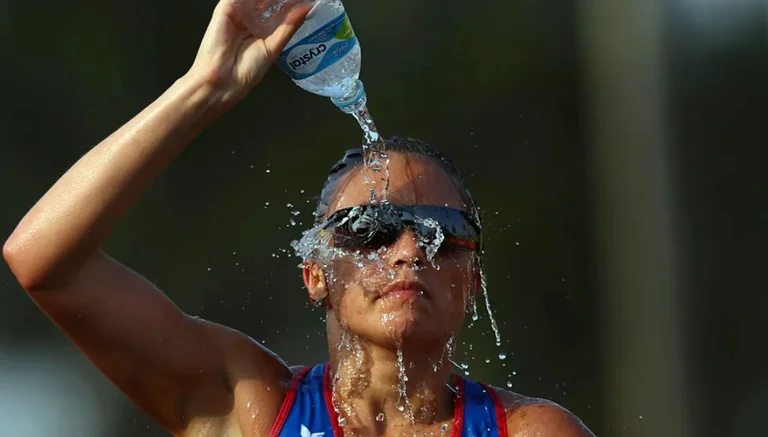
Drowning can be a better way to cool off. Here dip parts of your body (such as hands and forearms) into cold water. As an alternative, you can pour water on yourself.
If you take water and apply it to the surface of your skin, and then that water evaporates, it actually does the sweat work without having to sweat”, Jay says. This means that your body can direct more blood into your muscles to give oxygen.
Similarly, a cold wet towel often rolled over your arms, legs, and bust also helps you cool off, says Stearns.
Pray Before
Prudence before you go out is also helpful. Research indicates that lowering your body temperature before exercise gives you a greater supply of heat before conditions become dangerous. A slight decrease in body temperature before entering the heat will give you a longer time before it becomes dangerous”, Stearns says.
This can be done by consuming icy water, which has been found to refresh the body and improve exercise performance.
Let your body fit
The gradual increase in the amount of exercise you do in hot weather will allow your body to get used to it, a process called heat aclimate.
In general, says Stearns, after seven to 14 days of regular exercise in the heat, your basic calm temperature falls, your perspiration rate increases, and your blood plasma volume increases. You have this enormous request for blood flow. And the blood is ultimately the one that will be able to supply and support all these physical functions in heat”, she says.
This adjustment helps your body respond better, she adds, helping to improve performance and reduce the risk of stress from heat.
But this answer is <x0 passer”, Jay says. If you don't use it, you'll lose it... If you do not expose yourself to heat, then your adjustments will be gone. ”
You know when to stop
As deaths from exercise in heat are relatively rare, heat fatigue is becoming more common.
And if you practice too much, it doesn't necessarily provide protection against heat fatigue.
elite athletes may be at a higher risk of being hit by heat than resortors, because they've already learned to push themselves “beyond their biological boundaries”, says Stearns. This can be dangerous because the intensity of exercise is the main cause of the body's internal temperature.
Hence, it recommends that “listen to your body and deliberately withdraw from the rhythm is your main line of defense”.
If we adapt, adjust our pace, and exercise early, we can stay active even when the temperature increases. Hot - related diseases are still a danger, so signs you need to be careful about include dizziness, nausea, fatigue, and palpitations. If any of these appear, stop immediately and relax.