12 minutes ago
US changes strategy for the Balkans: Kosovo remains focus of security, partnership
Periskopi(a month ago)
(a month ago)The United States of America is moving away from the policy of building state and direct interventions in the Western Balkans, focusing already on stability, strategic partnerships and common economic interests. This is reported in the US State Department report to Congress on American politics to the region.
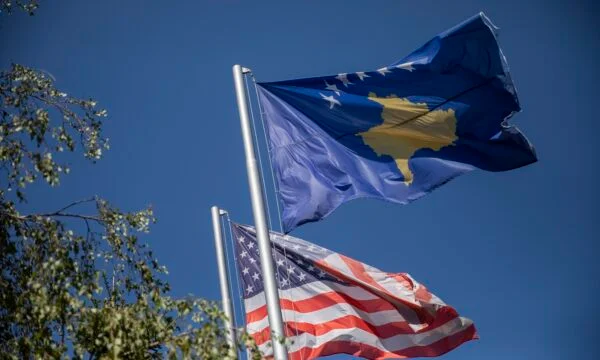
In the part dedicated to Kosovo, the report stresses that American forces continue to be part of NATO's mission, KFOR, which is considered key to preserving a safe environment and freedom of movement in Kosovo. Similarly, the US continues to support the transformation of the Kosovo Security Force into a professional territorial and multiethnic defence force.
The report underlines that the US will continue to encourage Kosovo and Serbia to advance in the process of normalising relations, aimed at reaching a stable and acceptable agreement on both sides.
The document says that “the constructionpoque of states under US leadership has completed” and that the new American policy in the Western Balkans no longer targets “rescue or reconstruction”, but mutually beneficial stability and partnerships, reports Express, broadcast Periscope
The US administration aims to empower local actors to solve their own challenges, while the US will provide support only where American involvement is considered necessary and in its strategic interest.
The report estimates that American investments in the region over the past few decades have produced concrete results and have developed strong relations with all six Western Balkan countries: Albania, Bosnia and Herzegovina, Kosovo, Montenegro, Northern Macedonia and Serbia.
In addition to regional stability, the US identifies both Russian and Chinese influence as top priorities, strengthening economic and trade co-operation, investments in energy and infrastructure, and fighting organised crime.
The report says the region remains of direct importance for US economic and security interests, while malicious actors “ ”, such as Russia and China, are trying to exploit corruption and instability to increase their influence.
As for Bosnia and Herzegovina, the US reaffirms its dedication to the Dayton Agreement, the sovereignty and territorial integrity of the country, seeking to avoid destabilising and divisive actions.
The report also highlights military co-operation with NATO countries in the region, including Albania, Montenegro and Northern Macedonia, while warning continued security co-operation with Serbia “in ways that advance American interests”.
Economically, the US aims to expand the presence of American companies in the Western Balkans, supporting strategic infrastructure projects, energy and trade. The report also cites American interest in liquid natural gas, nuclear energy, and renewable energy sources as alternatives to Russian gas addiction.
Southern gas pipeline between Croatia and Bosnia, Serbia's Macedonia gas interconference, hydropower development in several countries in the region, as well as the energy links of the Western Balkans to the European market, are mentioned among the priority projects.
The report concludes by stressing that the US will continue weapons control programmes, military training, peacekeeping operations and mine removal in the Western Balkans, but with focus on concrete results and direct American interests. /Periscope