11 minutes ago
Kosovo's first in the region with the rate of youth in prison - What are the reasons?
Periskopi(2 months ago)
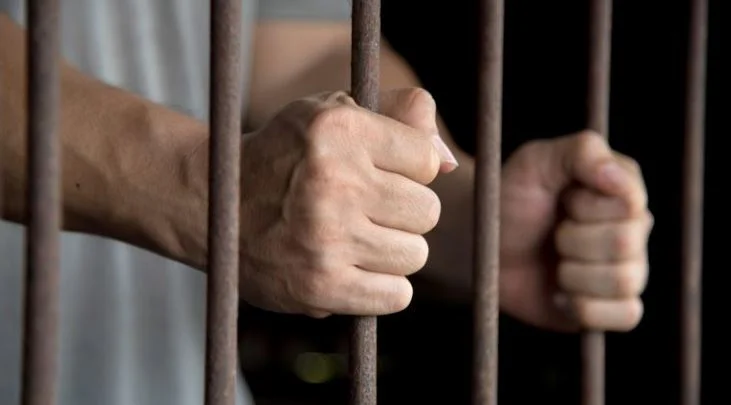
(2 months ago)More than any third imprisoned in Kosovo is under the age of 30, writes Radio Free Europe.
The data, released in late April under the Youth Participation Index, shows that Kosovo has the highest percentage of young people in corrective service throughout the region.
A year earlier, Kosovo was second, after Albania.
For Ferid Mursel from the Democracy Organisation for Replacement (D4D) that collected the official data on Kosovo for this report, these figures do not only indicate the penal system.
In our country, every day we say that this country has youth, the future is future, but this actually shows exactly where youth is, whether in the political, social or economic dimension”, he tells Radio Free Europe.
“Bruges are reflecting a deeper social problem”
In addition to the high rate of young people in prisons, Kosovo ranks poorly on other indicators related to youth life.
About 35 percent of young people in Kosovo are out of education, labour and training -- the highest level in the region.
Kosovo also has the lowest level of youth participation in the workforce.
“ “If you have high unemployment, then it is more likely that young people are involved in negative”.
He argues that institutions should invest more in educational reforms, career orientation, professional schools and community activities for young people.
There should be more functional youth centres, sports, cultural and artistic events so that young people can be offered positive alternatives”, says Murseli.
Even sociologist Donika Gashi of the Musine Kokalari Institute sees this statistics as a result of deeper social factors.
This figure cannot be read as simply a criminal issue, but as a symptom of economic uncertainty, educational failure and social marginalisation”, it tells Radio Free Europe.
According to her, many youths go into conflict with the law because they fail to find stable jobs, psychological support, or community services.
“If a young man is not in work, is not in education and sees no way for progress, the system is in place too late, when he has already entered into conflict with law”, Gashi says.
“Young people are treated as numbers”
Radio Free Europe has asked the Ministry of Justice if there is any plan to deal with this phenomenon, but, until the publication of this article, there is no answer.
Similarly, neither has Kosovo Correcting Service given REL is a visiting permit at the Mytur corrective Center, located in Lipjan.
During a visit several years earlier, two young men had shown their lives within the walls of this institution in isolation.
Both looked forward to the release and return to society, but psychologist Fjolla Ibrahimi had suggested that such a return may not be very hospitable.
“The main challenges facing the former prisoners in reintegration are incompatibility with others in the circle where they will live, finding a permanent job that brings revenue, their mental health after their release from prison, and prejudice, which comes from others”, had told Ibrahim about Radio Free Europe.
The negative effects that bring young people's isolation at an important time for their development, as in adolescence, cause the American organization Juvenile Law Center to seek the disappearance of such institutions for minors.
Kate Burdick, a lawyer in this organisation, tells Free Europe Radio that isolation, continued control and separation from family support directly affect the emotional development of young people.
We're talking about kids and young people whose brains are still developing. This is a period when they need support, not extra trauma”, Burdick says.
According to her, even in institutions where there is no physical violence, family and community separation is problematic.
“They are treated as numbers and separated from people who make up their identity and support”, Burdick says. The most often heard requests are: How can I talk more to my mother?
According to her, the most effective option is community programmes, mentoring, therapy and restorative justice.
“Research shows that alternatives to imprisonment are more effective in reducing genocide than in isolating youth in institutions”, Burdick says.
Kosovo does not hold statistics for the degree of recivilism in the country.
More punitive than preventative?
According to Donika Gashi, on paper, Kosovo has preventive policies. But in reality, she says, the system continues to function differently.
“This means that institutions are activated after the damage occurred -- police, prosecution, court and then correctional system”, she says.
True prevention, according to Gashi, should occur much earlier: in schools, families, centers for social work and mental health services.
We have to go from logic to reason to interrupt the cycle, Gashi says.
She argues that more alternative measures, such as working in behalf of the community, handling addictions, and turning to education, should be used for the first time.
“Justice does not end with punctuation, but with ensuring that the person does not repeat the same work”, she says.
“should have real connections to the labour market, mentoring and psychological support”, according to it.
It warns that, on the contrary, prison risks strengthening young people's “criminal identity”.
“Prohibitation is cheaper than sentence”
For experts, investment in education, employment and community services is seen as the most effective way to reduce recivilism.
Burdick also argues financial resources can be better used outside closed institutions.
The “is much more effective and less costly that support is offered to young people in the community than in prison”, she says.
For Mursel, the figures should serve as alarm for institutions. He warns that, without long-term policies and serious investment in youth, problems could deepen.
If we keep going on like this, we'll have even bigger problems in the future”, Murseli concludes.