8 hours ago
Why doesn't gold rust? Scientists detect “atomic reasoning” following the endurance of precious metal
Periskopi(a month ago)
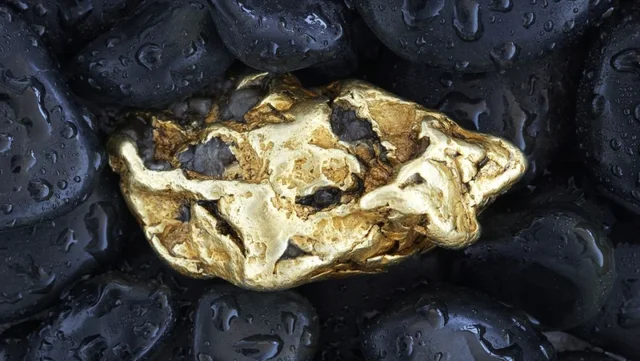
(a month ago)There are several reasons why gold is considered one of the most precious metals in the world, and one of the most special is that it does not rust, stain, or erode easily. Unlike many other metals, it preserves its yellow glow for thousands of years.
In chemistry, this property is called <x0) chemical capacity”, which means a very low activity with other substances, especially oxygen, which is the primary source of rust in normal metals.
Scientists had long known that gold is too inert, but it was not quite clear why it happens at an atomic level. A new study by two chemists, Santu Biswas and Matthew M. Montemore from Tulane University in the United States offers a deeper explanation.
According to them, the secret lies in how atoms are listed on the surface of gold. On gold surfaces, atoms tend to be organized into a very compact and orderly structure, usually hexagonal.
This structure is very stable and it creates a “that saves the natural” that makes it difficult to interact oxygen molecules with the metal surface. In practice, this means that oxygen cannot easily be divided into individual atoms to start the oxidation process, which is the first step of rusting.
Researchers found that if this surface structure is changed, gold can become much more reactive. When atoms are not lined up in the usual dense way, but in more open or square structures, oxygen molecules can be much easier to break down.
In some cases, this occurs billions to trillions of times faster than on normal surfaces of gold. This explains an interesting paradox, the reason why mass - shaped gold is so inert, while its nano parts can be very reactive.
On the nano scale, gold is not always able to form its usual compact structure, leaving areas more open and more active chemically. These areas can interact more easily with oxygen and activate it for chemical reactions.
This discovery is important not only to understand the nature of gold but also to practical uses. Because of its inertity, gold is a good candidate for chemical catalysts, which help speed up reactions without consuming itself.
However, its low inactivity has always been a restriction. The new research suggests that by changing the surface structure of gold, scientists can create more efficient catalysts for reactions such as converting carbon monoxide into carbon dioxide.
In essence, the resistance to rust is not a key “strategy”, but a simple consequence of its more stable atomic structure. And that same endurance, which makes it immortal to erosion, can also be the key to new uses in chemistry and technology.