4 hours ago
How should Europe react to Ebola's recent explosion?
Periskopi(a month ago)
(a month ago)Ebola's recent explosion in the Democratic Republic of Congo (RDK) and Uganda has led the United States to take a 180-inch turn in their generally relaxed approach to public health measures.
On Monday, steps were announced to prevent the spread of the virus, including the control of air travellers coming from affected regions, and, in some cases, entry restrictions broadcast Clankosova. tv
The next day, Dr. Tedros Adhanom Ghebraesus, the director general of WHO, said he was “andly concerned about the scale and speed of the” epidemic. So how concerned should Europeans be? What about citizens of countries with regular direct flight lines to Kinshasa, like Belgium?
The situation in the RDK is serious and should be treated decisively there. Brussels has direct ties to Kinshasa, which justifys vigilance”, one of Belgium's best virologists, Steven Van Gucht, told Euronews.
Brussels Airport, located in the heart of Belgium, is the main European gateway to travel to and from RDK.
Brussels Airlines operates daily flights (seven times a week) to and from Kinshasa. The company has no accurate figures on the number of travelers, but the Airbus A330 aircraft used on this route can transport about 290 passengers.
“at the same time, experience from previous bombings shows that the risk for Belgium and Europe is low”, Van Gucht added.
This was reflected by Brussels Airlines. We are monitoring the situation closely, in line with our standard procedures. We are in touch with all relevant authorities and will adjust our operations if this is necessary”, High Relations Manager for Media told Euronews Jolle Neeb.
“currently, all flights are operating according to plan and there are no additional safeguard clauses.” However, Brussels Airlines crews follow specific guidelines on health and security issues, such as infectious diseases.
Our operations are trained in this direction. Among other things, they monitor for possible symptoms, apply hygienic measures such as regular hand disinfectation, and limit contact when necessary. If required, they also co-operate with medical services and health authorities. ”
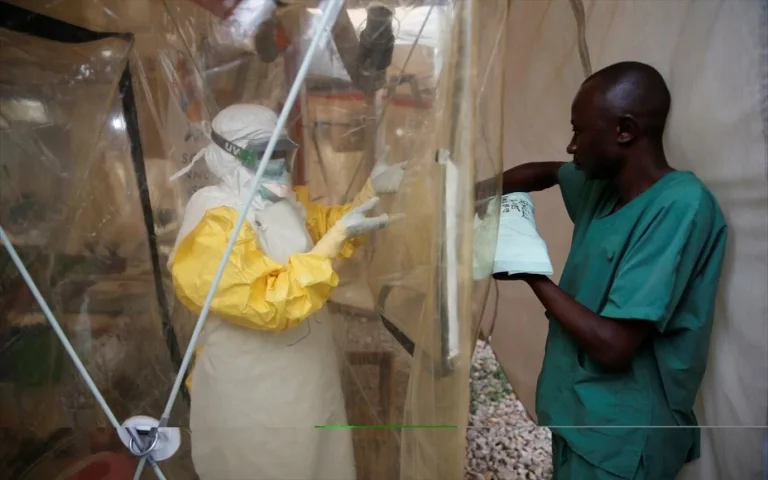
The latest Ebola blast has been declared a public health emergency with international concern and has caused at least 131 deaths and 500 cases.
Doubtful Effects of Measures
Ebola spreads exclusively through direct contact with the body fluids of a symptoms patient, not through air, explained Van Gucht, which means it can be contained relatively easily. It is also important to note that humans are contagious only after showing symptoms, not before. ”
The period of incubation could vary from 2 to 21 days. This specific factor: the incubation period is just what limits the effectiveness of temperature control in arrival, as will be done in the United States.
A traveler in the Incubation period has no fever yet and therefore will not be revealed”, Van Gucht said.
This was supported by Celine Gossner, an expert at the European Centre for Disease Prevention and Control, who told Euronews that, at this stage, he is not recommending measures for entry into Europe. “Control at the airport requires considerable resources, but has limited effectiveness. ”
Both Gossner and Van Gucht noted that the exit control in affected countries is a more effective measure. However, argued Van Gucht, entry control could “serve as an early warning system and help preserve public confidence”.
African Centers for Disease Control and Prevention (CDC) said that “takes note of” US restrictions and recognises every government's responsibility to protect its people's health and security”. However, they consider that travel restrictions should not be used as a primary tool of public health during explosions.
The “Location of Africa's Centre for Disease Control and Prevention (CDC) is clear: overall travel restrictions and border closures are not the solution to the” bombings, the agency said in a press release.
The European Centre for Disease Prevention and Control (ECDC) is also not proposing travel restrictions, unlike the United States, which have imposed entry restrictions on non-American passports that have travelled to Uganda, the Democratic Republic of Congo (RDK) or South Sudan in the last 21 days.
Van Gucht has also dismissed the idea of stopping flights from countries affected in response to the blast. “Such measures have little epidemiological benefit, disrupt humanitarian aid and supply chains and can lead to slower reporting of explosions”, he said.
Belgium's recent foreign affairs ministry council stated that, due to confirmed Ebola cases in the northern provinces of Ituri and Kivu, all trips to these provinces “officially decouraged”. The ministry cannot officially stop travel towards a specific location.
What's going on?
Van Gucht stressed that it is essential to have clear procedures for sick passengers on board and for tracking other passenger contacts if a case is identified.
A spokesman from Brussels Airport stressed that he has established such protocols.
“If an infected passenger arrives with an infectious disease, he is evacuated from an ambulance specialised by the military hospital. “ “In such situations, Brussels Airport takes the necessary measures based on Public Health Ministry recommendations. Until today, we have not received any instructions or guidelines on this subject”, he added.
The Belgian Health Ministry's “Youth Management Group” did not answer Euronews's questions about additional measures that might be considered to control the spread of the virus in Belgium by the time of publication.
ECDC's Gossner noted that, in any case, travelers returning from affected areas and showing symptoms such as fever, headache or general mistreatment within 21 days of return should seek medical assistance immediately and inform health care providers of their recent history of travel.
“This early warning system is more important than measuring the temperature of all travelers who come to”, Van Gucht said.
“Priority should be keeping alert within our health systems and supporting the response on the ground”, he concluded.
The ECDC is sending experts to the RDK to support co-ordination and operational planning. The European Commission has received no request for assistance through any of its international aid mechanisms, a Commission spokesman said Tuesday.