4 hours ago
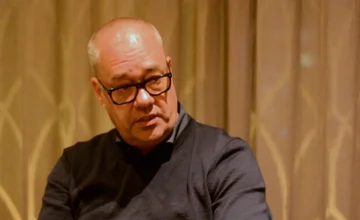
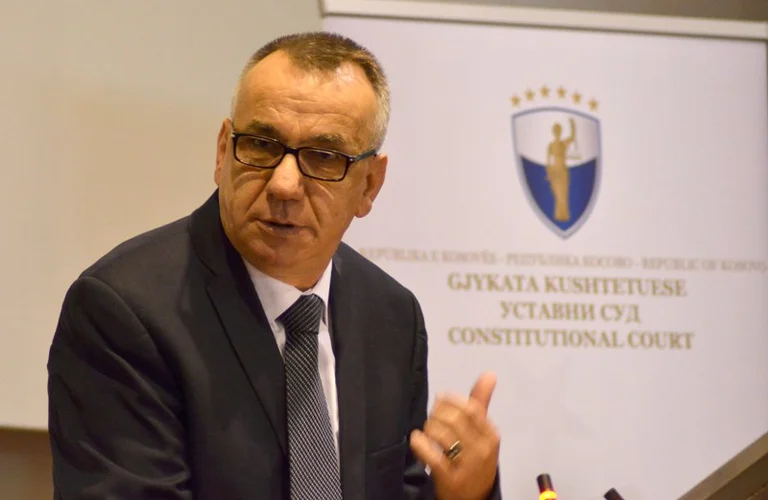
Enver Hasani: Kurt's Gendarmerie campaign and plan to create a personal play structure against him
Periskopi(a month ago)
(a month ago)Albin Kurti surprised many when last week he announced that there are plans to create a new security force in the country gendarmerie.
A day after Kurti's statement, Svechla went to work saying he had signed the formation of a task force to create this mechanism.
People close to Kurt echoed the actions, “the divider is becoming” said in posts.
Enver Hasani, professor of Law and International Relations and former Constitutional Court chairman, linked Kurti's move to elections, but also with his plans for creating a vital structure personally to him. His views on Gendarmerie, Hasani, expressed Friday, answering three questions of the Gazette Express, which we are publishing today.
Express newspaper: Prime Minister Albin Kurti, on the eve of the June 7th elections, announced that there are plans for establishing the gendarmerie, another security force in the country, for which we are not exactly known if we need to. What are Kurt's motives based on your observations?
E. Hasani: There are two reasons Kurt does this at this time. The first is that the word “ager” communicates well with the ignorant voter, who views him as a receptional structure that can be used against the old “guard that he stole”, that is, an instrument for obtaining property acquired without merit. This is classical propaganda, directed at uneducated and politically immature voters.
The second reason relates to the fact that Mr. Kurti does not have full control over the KSF, because there is a big role there in Kosovo's international friends, while Kosovo Police see it as not fully reliable and linked to past governments, so he hardly considers it to be a force that can be fully played against it. For this reason, it aims to create a new structure, filled with militants and personally portable people against it.
Express newspaper: Svechla immediately took action to operate Kurti's idea. In your opinion, is there a legal basis for the creation of such a force, does the Constitution allow it?
E. Hasani: Of course, no new security facility, which is not envisioned with the Constitution of Kosovo, can be formed. Not only in Kosovo, but nowhere where there is gendarmerie, or equivalent force, such a thing is provided with the national constitution. It is not the work of the Minister of Internal Affairs or of the ministry he runs the formation of gendarmerie. This is propaganda.
To be serious initiative and that its formation does not seem to appear to be aimed at creating a parapolitical and extra-dedicated force, the process has had to begin in the Kosovo Assembly, with the participation of all political forces and security experts from Kosovo and abroad, as well as a powerful evolution of non-US communities and constitutional experts from the country and Europe.
Express newspaper: NATO and the EU said they are expecting more details on this initiative of the prime minister in office, while Kurti himself said the gendarmerie is not “substitute” for KFOR, but KFOR's associate. Do you expect any reaction from the international community on this issue?
E. Hasani: It is Kosovo's constitutional obligation expressed in the provisions of the Kosovo Constitution that everything related to the country's serious security, such as the border issue, must be co-ordinated with international relevan factors. This constitutional obligation is also international obligation, anchored in Resolution 1244 and in the last paragraph of the Declaration of Independence.
For these two reasons, the reaction of NATO and the EU are careful. So it's about forming a security structure that has strong regional implications, constitutional implications as long as a constitutional and international path is not followed, as long as it doubles the competencies for which the final responsibility currently belongs to KFOR.
In contrast, unless proper security standards are followed, which Kosovo is not asked as much as one from the government can think, constitutional standards requiring constitutional changes, as well as international standards related to Resolution 1244 Where Kosovo is practically out of the game and should rely on the US and allied Security Council member states for the neutralisation of the obstacles this document creates in the field of defence and security then cannot be talked about, except for a present propaganda project.
Even if pushed forward without close co-ordination with the US and its allies, it could lead to confrontation and serious crisis, reopening many related issues with Kosovo.