7 hours ago
Chancellor Merz demanded accelerated procedure, EC welcomes discussion on Balkans, Ukraine approaching EU
Periskopi(a month ago)
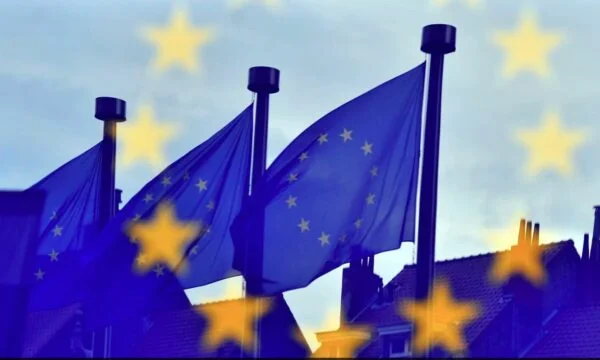
(a month ago)The European Commission confirmed that it has accepted German Chancellor Friedrich Merz's letter, through which he proposes that Ukraine be granted the status of its associate member, while the countries of the Western Balkans have observer status.
European Commission spokesman Guillaume Mercier said the institution he represents welcomes the fact that this discussion is taking place among member states and encourages continued debate at the level of EU leaders.
“This shows that there is a strong commitment of member states to become a reality as soon as possible. It is increasingly clear that enlargement is geostrategic investment in our prosperity, peace, and security. Ukraine's membership in the European Union is also substantially linked to the security of our bloc”, Mercier said at a media conference.
He added that it is equally important to achieve the goal of completing the EU with all candidate countries, which have been working towards membership for many years.
All innovative solutions should be guided by a process based on merit. Looking forward, we must make sure that our approach to enlargement is appropriate for the goal aimed at”, spokesman Mercier said.
Therefore, according to him, the European Commission will continue to co-operate actively with member states and candidate countries to find the best solutions that would make the European Union stronger and safer.
In a paper made public on 21 May, German Chancellor Friedrich Merz proposes privileged access to the common European market and closer ties with European institutions in the daily decision-making process for the Western Balkans and Moldova.
The common European market is space, consisting mainly of 27 EU member states, enabling free movement of goods, services, capital and people, without border regulations or customs duties.
Merz also proposes granting observer status to Western Balkan countries in all relevant European Union institutions, as well as holding joint European Commission or European Parliament meetings with representatives of the region on issues directly related to it.
“gradual integration can be realised through building blocks that would serve as the basis for full implementation of relevant policy areas, and would then be accompanied with greater support in implementing EU laws. In addition, we can advance institutional integration on the basis of real progress. All this could significantly bring candidate countries closer to us and spur a new ambition for further reforms towards full membership”, the German Chancellor's letter said.
“Stand by for the promise that the countries of the Western Balkans and Moldova can join the European Union, as defined in the Copenhagen Criteria and the Thessaloniki Agency of 2003. Our goal has not changed: completing the European Union through the inclusion of all candidate countries”, the letter notes.
Of the Western Balkan countries, Albania, Montenegro, Serbia, Bosnia and Herzegovina and Northern Macedonia are membership candidates, while Kosovo is not.
On the other hand, for Ukraine, it proposes considerable rapprochement with the European Union and its main institutions, “without impacting continued membership negotiations, but promoting and supporting this process”.
The head of the German government believes these proposals do not require changes in the framework.