4 hours ago
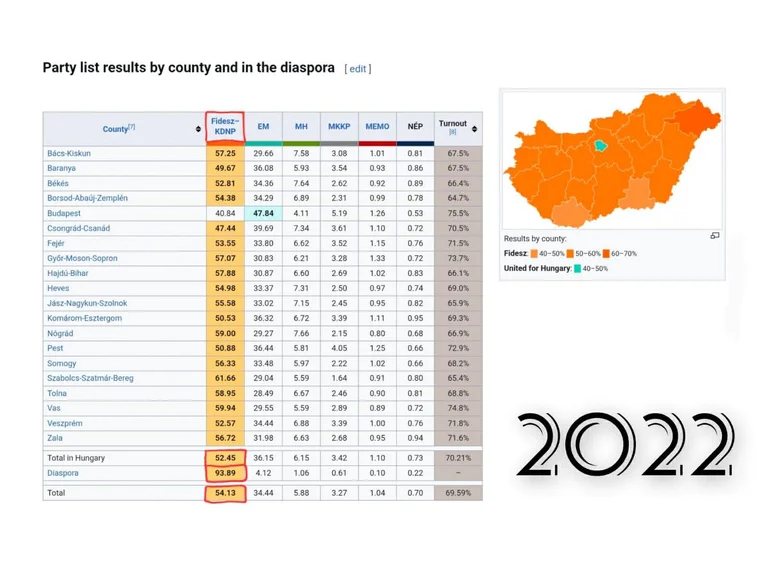
Victor Orban received the greatest support from the diaspora, often up to 93%

Periskopi(3 months ago)
(3 months ago)The Hungarian diaspora was one of the strongest electoral pillars for former Prime Minister Viktor Orbán. The vote of Hungarians living abroad often amounted to overwhelming support, such as it was in the 2022 parliamentary elections. Although the diaspora's exact vote in recent elections is not known, given support [...]
The vote of Hungarians living abroad often amounted to overwhelming support, such as it was in the 2022 parliamentary elections.
Although the diaspora's exact vote in recent elections is not known, given support from past elections for Orban, it is not expected to have fluctuated much for him when it comes to the diaspora.
So, for example. by official data, Fidesz joint list ) KDNP in the 2022 elections had received 93.89% of the votes from the diaspora, a result that had exceeded their score within Hungary's territory, where it had secured about 52.45%.
So the results showed a sharp margin between voters within the country and outside.
So, in Hungary at the time, Fidesz. Orban's KDNP had received 52.45%, while in diaspora 93.89%.
Even in Hungary, this gap between diaspora vote and resident residents had sparked debate over the diaspora's role and influence in Hungarian politics.
Local oponists linked this support, almost unanimous, to some key factors, such as B.C. The citizenship policies, where the Government of Orbán had facilitated the granting of citizenship to ethnic Hungarians outside borders, then nationalist Narrativa as well as limited diaspora exposure to domestic policies, meaning that diaspora is influenced more by symbolic messages than by socio-economic reality within Hungary.
Opposition discontent and critics of the Orban party argued that the diaspora vote does not reflect the reality of life in Hungary, distorted the final outcome and gives disproportionate weight to non-living voters.
Meanwhile, supporters of the Orban government viewed this as an expanded national legitimacy. They insisted that any Hungarians, regardless of the settlement, have the right to influence the country's political destiny.
In a Europe where the role of policy detectors has marked growth, Hungary's case is seen as one of the most extreme examples of this phenomenon.