4 minutes ago
The unanimous power rejects demand to reduce excise and abolish T V U.S. for oil
Periskopi(3 months ago)
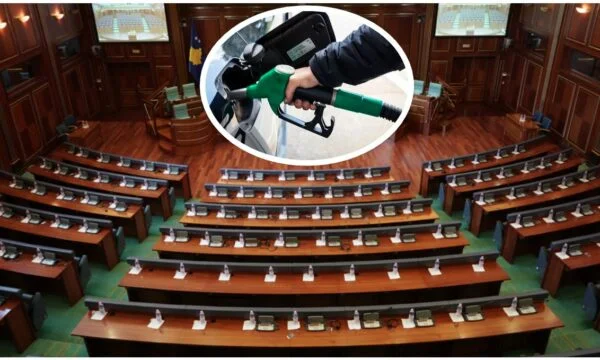
(3 months ago)Members of the government's cabinet have rejected opposition demands for lowering the excise and removing the State Value Trust (TVSH) for oil during a parliamentary debate Friday, at a time when fuel prices have increased dramatically as a result of the Middle East war. Democratic League of Kosovo (LDK) presented [...]
The Democratic League of Kosovo (LDK) submitted a resolution to this in the Assembly, through which it also requires the Government to find ways to subsidise the price of oil for agriculture, public transportation and local producers.
The resolution, which is being supported by the other two opposition parties -- the Democratic Party of Kosovo (PDK) and the Alliance for the Future of Kosovo (AAK) -- target preventing the economic and social crisis in the country as a result of the high price of oil.
The text of the resolution requires: lowering the excise from 36 cents per litre to 20 cents per litre until prices are stabilised in international stock exchanges and the temporary reduction of VAT in fuels from 18 per cent to 8 per cent to sustainability of prices.
The demand for this resolution comes at a time when the huge increase in the price of fuels in the country has sparked fears of price-riding increases, especially basic ones.
Within just a few weeks, the price of an oil liter at gas stations in Kosovo has reached as much as 1.79 euros, compared to 1.33 euros as it was on March 3rd, three days after the launch of attacks by the US and Israel against Iran.
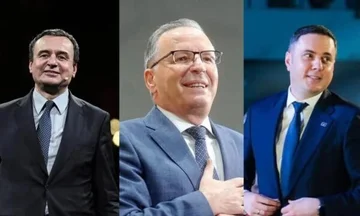
LDK parliamentary group chief Jehohna Lushaku Sadriou said the continued increase in the price of oil “is not simply on the move in the market, but is the basis of a direct impact economic crisis on every family and every Kosovo business”.
It has criticised authorities for not interfering to do something about it, saying “the government dares not stand as a spectator and benefit from tax hikes on these products”.
Chairman The PDK, Bedri Hamza, criticised the government for not taking into account the “impact of this phenomenon on worsening citizens' standard of living”.
This Government is not taking care of economic development and standard of living, but it is doing actions only to convert to vote. Buying votes through public money”.
While the AAK parliamentary group's chief, Besnik Tahiri, said the current government “is not capable of” facing crises.
We should clearly say that the crisis we have today in Kosovo is the biggest burden for Kosovo citizens and that this crisis is turning into an opportunity to play numbers, allegedly for economic development”, Tahiri said.
However, the opposition resolution and claims were rejected by members of Prime Minister Albin Kurti's cabinet, who argue their recommendations are not a solution.
Industry, Trade, Trade and Innovation Minister Mimoza Kusari '%a argued how, according to her, the excise cut or VAT removal are not a solution, saying they would affect the state budget and therefore in additions to citizens.
Now what are you proposing, to remove the excise, remove the VAT? So which of the masses do we take away? An extension for the lechos? Child extensions? Which of the specific categories do you think we should put down to compensate for the reduction or removal of VAT or excise”, Kusari said to the opposition.
Finance Minister Iron Murati accused the opposition of wanting these measures “not for citizens, but for businesses supporting your parties”.
He argued that lowering the excise would not affect citizens when they buy oil.
The 16-center excise seat for a family that spends 50 liters of oil a month translates to 8 euros. Do you remember when we started additions to 10 euros, these [possess] said they were years, and now their proposal is to sit down on the accysis to save 8 euros a month, and for the state this translates into 10m euros less income per month”, Murati said.
Kosovo's government aims to raise prices through a law on ceiling prices, the bill it is expected to submit to the Assembly soon after adopting it at a meeting Friday.
About a week after the rise in prices began when the United States and Israel began shelling Iran on February 28th, and Tehran responded by hitting Israel and Gulf countries that host American bases .ʹ The government of Kosovo imposed safeguards on the price of derivatives.
Under the decision, the maximum trade margin allowed for sale in large quantities will be up to 2 cents per litre, while in retail of up to 12 cents per litre.
This decision is in effect only until April 4th.