an hour ago
Reuters: Satellite data shows that the earth is getting brighter at night
Periskopi(3 months ago)
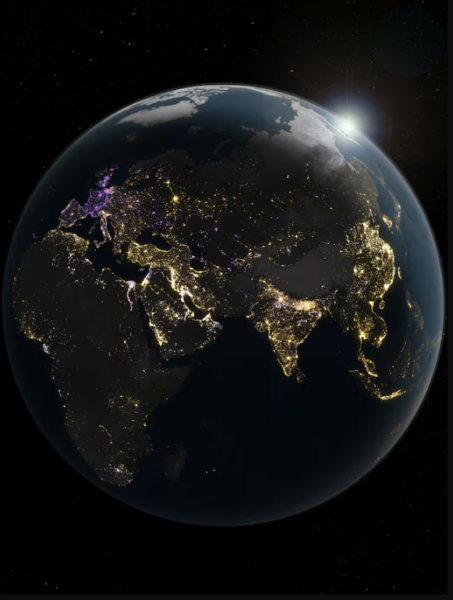
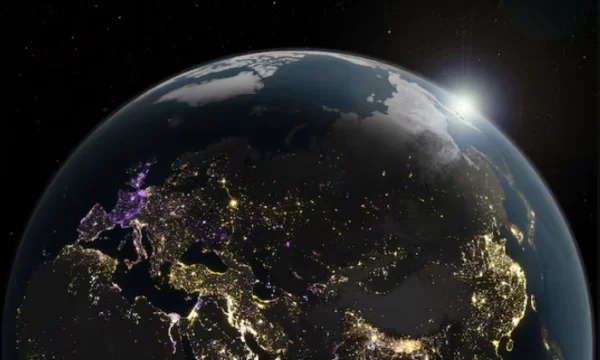
(3 months ago)Daily satellite surveys have revealed a steady increase in nightlights on a global scale due to artificial lighting, with important regional variations, including a rapid increase in sub-Saharan and Southeast Asia, in addition to a deliberate decline in Europe driven by energy management concerns and pollution [...]
Researchers documented a net increase of 16% of global light during the night from 2014 to 2022, but they showed that it was not a sustainable lighting, but rather a mosaic of regional growth and reductions of light formed by numerous factors. The United States in 2022 had far removed the highest light from any other country, followed by China, India, Canada, and Brazil.
It was found that increased lighting is driven mainly by rapid urbanization, infrastructure expansion and the electrification of rural areas.
Zbeja, however, had two very different drivers. The immediate setback was usually caused by natural disasters, failed electricity, and armed conflicts. The gradual landing was often deliberate, guided by government regulations, moving to LED light with energy efficiency and efforts to reduce light pollution.
For decades, we have maintained a simplified view that the Earth is simply getting more bright as the human population and economies grow”, said Zee Zheu, professor of teledesection and director of the Global Environmental Teledetectation Laboratory at the University of Connecticut, the lead author of the study published on Wednesday in Nature magazine.
We discovered that the Earth's night landscape is actually very unstable”, Zhu said. The planet's “Light crimes are expanding, contracting, and constantly changing”.
Researchers used more than a million daily images taken from a U.S. government land surveillance satellite and processed by NASA. Previous global studies relied mainly on compounds of annual or monthly satellite images.
The most dramatic increase in lighting occurred in emerging economies, especially in sub-Saharan Africa and Southeast Asia. It was led by Somalia, Burundi, and Cambodia, followed by several African countries, including Ghana, Guinea, and Rwanda.
This is not just urbanization. It's a massive expansion of energy access”, Zhu said. “These figures represent a profound change as entire regions shift from almost total darkness to parts of the global electricity grid”.
Major light loss was recorded in countries such as Lebanon, Ukraine, Yemen and Afghanistan, where light became the victim of armed conflict and infrastructure collapse. Similar declines were observed in Haiti and Venezuela, where the decline was more related to prolonged economic crises and uncertain energy supplies.
“in Ukraine, we noticed a strong and sustainable decline in lighting that coincided fully with the escalation of the conflict in February 2022”, when Russia began the war, Zhu said.
“Shouting similar immediate darkness over regions of the Middle East during the period of conflict”, Zhu said.
Europe experienced a net drop of 4% light radiation at night, mainly due to technological advances and environmental policies.
It is driven by a wide transition from old lightlights, less efficient like high-pressure sodium lamps towards new LED systems with controlled direction, as well as strict national obligations for energy efficiency and efforts to preserve the dark sky”, Zhu said. “Europe is interesting because it represents a highly structured image of fade”.