6 hours ago
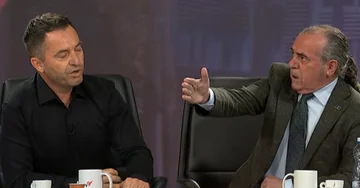
President or choice? What are the odds?
Periskopi(3 months ago)
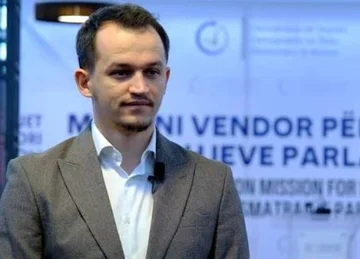
(3 months ago)The odds exist, but they're limited. Thus, they comment on the possibilities for reaching a political agreement on the election of Kosovo's new president, representatives of civil society, Mejidie Demoli from Movement Fol and Emir Abrashi from Democracy Plus. Kosovo Prime Minister Albin Kurti, leader of the ruling Vetevendosje Movement, held this week [...]
Thus, they comment on the possibilities for reaching a political agreement on the election of Kosovo's new president, representatives of civil society, Mejidie Demoli from Movement Fol and Emir Abrashi from Democracy Plus.
Kosovo Prime Minister Albin Kurti, leader of the ruling Vetevendosje Movement, held a meeting this week with Democratic League of Kosovo leader Lumir Abdixhiku, and warned talks with the leader of the Democratic Party of Kosovo.
Kurti and Abdixhiku declared after the meeting that they have not reached any agreement, but said they will continue talks to avoid new parliamentary elections.
Free Europe Radio contacted Prime Minister Kurti's Office to ask what expectations there are of these talks and whether the political solution is on the horizon, but received no answers.
Democratic Party of Kosovo spokesman Faton Abdullahu confirms that the leader of this largest opposition party, Bedri Hamza, will respond to Kurti's invitation when the proposal is specified, respectively, when it is clear what will be discussed.
This concrete “would help us examine it in our higher bodies, for example at the PDK Steering Council, and then, after review, come up with concrete answers”, Abdullah says.
Kurti must secure the broader support of members of the Kosovo Assembly by 28 April. The deadline set by the Constitutional Court for electing the president.
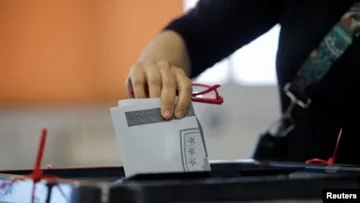
If no agreement is reached, Kosovo will go to early parliamentary elections, which should be held within 45 days.
President Vjosa Osmani's mandate expired on April 4th and the position of presidential taskman took over from Parliament Speaker Albulen Haxhiu, as defined in the Constitution of Kosovo.
What do the numbers say?
According to the Kosovo Constitution, the presidential candidate must secure two-thirds of the vote in the Assembly with 120 deputies ʹ so at least 80 votes.
If in the first two rounds no candidate gets the necessary votes, a simple majority of at least 61 votes will be present in the third round, provided at least 80 MPs are present.
The Vetevendosje movement has 57 mandates and has formed the Government with the support of nine deputies from non-partisan communities.
The Democratic Party of Kosovo has 22 seats in the Assembly, the Democratic League of Kosovo 15, while the Alliance for the Future of Kosovo 6.
Kurti has said earlier that she intends to secure more than 80 votes so that the president's election is guaranteed.
What are the odds of a deal?
Demolli says all political parties have expressed a desire to avoid new elections and that the meeting between Kurti and Abdixhik has left room for continuing negotiations.
However, it underlines that certain conditions must be met for reaching a consensus: Vetevendosje Movement to accept a non-party candidate, The PDK or AAK not boycott the hearings and secure the quorum, while the LDK and its 15 deputies play the role of “ure” between the parties.
The options for these three conditions to be met within three weeks are small, but not impossible, especially if there is external pressure, especially from international partners like the EU and the United States”, Demolli says.
Abrashi estimates there has been no serious negotiations with PDK and AAK, while talks with the LDK have not produced concrete results.
If this situation continues, it is most likely that the deadline will expire without a solution, and then follow another shifting political maneuver of responsibility to the opposition”, Abrashi says.
He adds that the Vetevendosje Movement, like the largest party in the Assembly, should facilitate the consensus's achievement.
“This could mean accepting some opposition demands to avoid early elections”, Abrashi says, adding that failure could indicate a lack of real will for solutions or efforts to maintain control over the president's post.
Who can be a compromise candidate?
Abrashi estimates that a nonpolitical figure can provide consensus, as the president, according to the Constitution, is defined as “ibol to national unity”.
In this context, he adds that a candidate is needed that guarantees institutional neutrality, stability and credibility.
In view of deep polarisation, it is difficult to imagine that one of the existing political elite can effectively carry out this function. The most real way is to select a prominent and non-party figure”, Abrashi says.
On March 5th, the Vetevendosje Movement named Glauk Konjufka and Fatmire Kolcak for the president's position, but the process was not completed due to lack of quorum.
A day later, former President Osmani issued a decree on the distribution of the Parliament, but the Constitutional Court annulled it on the grounds that it had no legal effect.
Is the election process being abused?
Demolli estimates that the Vetevendosje Movement is trying to present itself as a constructive party, but adds that in practice there is not enough progress towards a solution.
According to her, even the opposition has often used construction, making boycotts of almost routine responses, which has also damaged parliamentary culture.
“Finally, we have two sides claiming to want stability, but each sees it through its dominance. This means that it is no longer just a constitutional crisis, but a crisis with common political intent”, Demolli says.
Abrashi estimates the opposition is showing readiness for dialogue, while Kurti's approach and Vetevendosje is less flexible.
“expects the opposition to support the power candidate, which is not sustainable in a parliamentary system requiring co-operation”, he explains.
He adds that Kurti, earlier, had access to a broader agreement, including the re-election of Vjosa Osmani, but that this did not happen.
The Speaker of the Parliament and Acting Office of President Albulen Haxhiu said on April 7th that she is ready to assist in the process of electing the president.