4 hours ago
Kusari-Lila wishes to stabilise the price of oil, says its mechanism yielded results
Periskopi(3 months ago)
(3 months ago)Minister of Industry, Intervention and Trade (MINT) Mimoza Kusari-Lila said he hopes oil prices will stabilise in the coming days after reaching a ceasefire agreement between the United States and Iran. On the evening of April 7th, the US and Iran agreed to ban hostilities for two weeks and to open up the Strait [...]
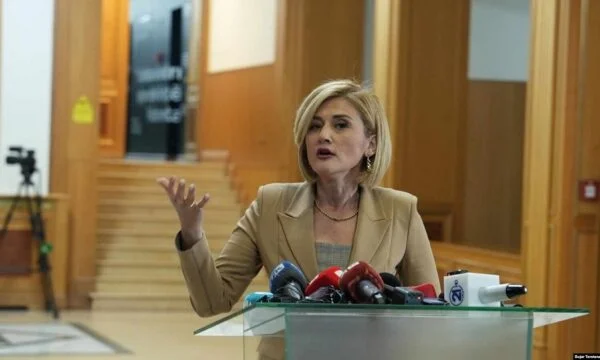
Minister of Industry, Intervention and Trade (MINT) Mimoza Kusari-Lila said he hopes oil prices will stabilise in the coming days after reaching a ceasefire agreement between the United States and Iran.
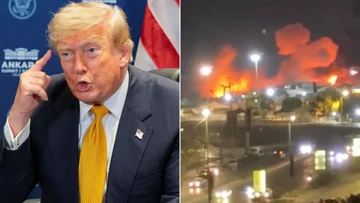
On the evening of April 7th, the US and Iran agreed on the ban on hostilities for two weeks and the opening of the Hormuz Strait, a key sea route through which some 20 percent of the world's oil and gas are passed.
I hope that the stabilisation of the oil price and derivatives will continue the following days. This will all depend on the circumstances in the Middle East. It is very important that this ion mechanism so far has given its results perhaps not 100 percent, there have been price movements, but however, that in the situation where there will be free circulation in the Hormuz Strait and no impact of the amount or price at the international bell, then even in Kosovo will be removed the demarcation mechanism”, Kusari-Lila told reporters on April 8th.
She added that it would take a few more days to know exactly whether the situation has returned to normality or whether there is room for instability.
Currently, protection measures for the price of derivatives are in force in Kosovo, as oil prices have increased since the conflict between the US and Israel began with Iran on February 28th.
The safeguards are meant to set the maximum profits allowed for retail and majority sales and not allow uncontrolled growth, but does not mean there will be no price hikes, as this depends on import prices.
Under the decision, the maximum trade margin allowed for sale in large quantities will be up to 2 cents per litre, while in retail of up to 12 cents per litre.
Opposition parties have called for other measures, such as lowering the excise and removing the State Value Tax (TVSH), but these measures have been rejected by the government.
Kusari-Lila was asked about these additional measures the opposition has requested, but she said that the sector's success has been secured in the current situation, and “has not gone to extremes rising prices against the movements that took place in the international bergas”.
However, she said the state could intervene in the transport and agriculture sector.
We consider that in the situation as we do, we are seeing the possibility of intervention in the transport and agriculture sector as two sectors affecting the most sensitive categories, while in sectors that still have the potential to operate over and over again, it remains to be seen for another circumstance. But, I still hope that with the arrival of the ceasefire at the time when there is supply in the market and there is no interruption of the price of oil and its derivatives will gradually stabilise”, Kusari-Lila said.
Price increases began a few days after the United States and Israel launched a military operation in Iran, and Tehran responded with attacks on Israel and other US allies in the region.
After reaching a two - week ceasefire, however, ships have sailed through the Strait of Hormuz on April 8th. / REL/